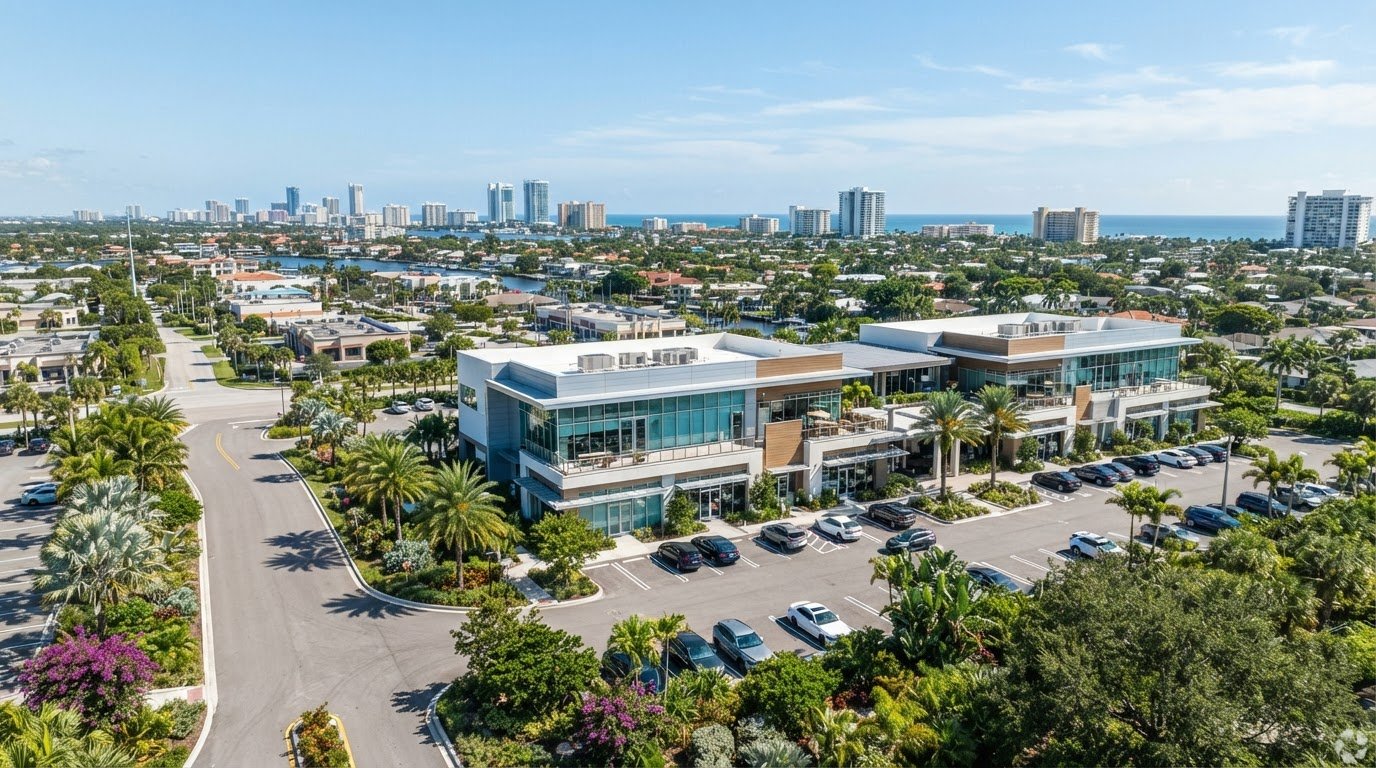
Florida ranked fifth in the country for commercial real estate development, making it a market worth exploring when buying commercial property in Florida. Begin by comparing properties across major and smaller markets, then assess each site’s location, zoning, condition, size, and growth potential against your plans.
It’s natural to focus on the property itself, but the surrounding market and deal terms matter just as much. A promising building must support your intended use and fit your budget, timeline, and investment goals.
This guide covers where to search, what transaction support and lease negotiations can involve, and how to assess permitted uses and building versus buying. It also offers a practical framework for comparing locations and properties, helping you move from a broad search toward a more confident decision.
Key Takeaways
- Compare locations by customer access, visibility, property condition, and potential for growth, not just asking price.
- Prepare for negotiations by reviewing purchase terms and, for leased properties, examining tenant history, renewal options, and rent increases.
- Look beyond major cities: smaller Florida markets may offer different property types and growth prospects, so weigh local demand and vacancy risk.
- Confirm that local zoning allows your intended business use before committing to a property or development plan.
- Compare building with buying against your budget, timeline, location needs, market conditions, and the property’s inspection findings.
1. Searching for Commercial Property in Florida?
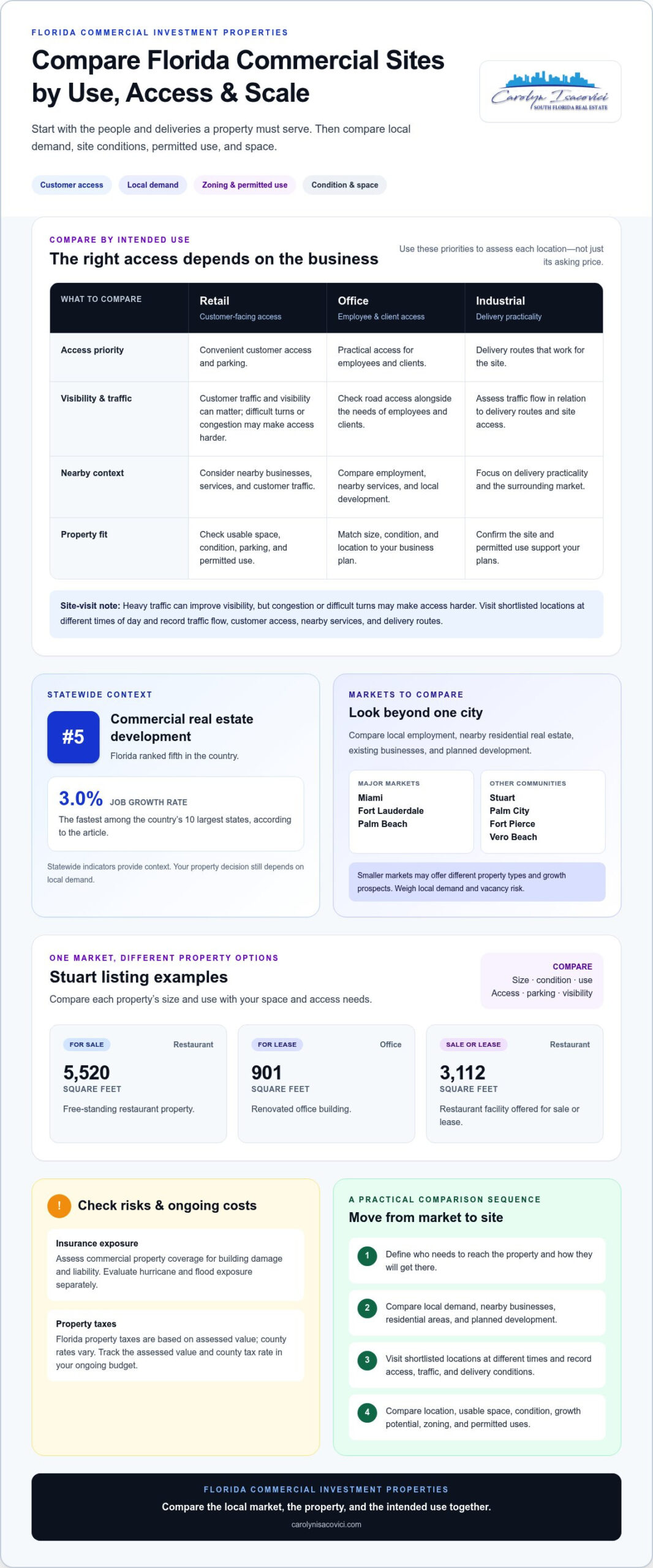
Start by defining who needs to reach the property and how they’ll get there. Compare visibility, parking, road access, delivery routes, nearby employers, and customer traffic. Heavy traffic can improve visibility, but difficult turns or congestion may make access harder. Industrial sites need practical delivery routes, while retail spaces benefit from convenient customer access. Office buyers can prioritize access for employees and clients.
Then compare local markets with your business plan. Florida ranked fifth in the country for commercial real estate development, and its job growth rate was 3.0 percent, the fastest among the country’s 10 largest states. These statewide indicators provide context, but your decision depends on local demand. Compare employment, nearby residential real estate, existing businesses, and planned development in places such as Miami, Fort Lauderdale, Palm Beach, and Stuart.
Look at specific properties as well as neighborhoods. Stuart listings include a 5,520-square-foot free-standing restaurant property for sale, a 901-square-foot renovated office building for lease, and a 3,112-square-foot restaurant facility offered for sale or lease. These examples show different property sizes and uses within one market. Compare each with your space needs, customer access, visibility, parking, and delivery requirements before arranging visits.
Visit shortlisted locations at different times of day. Note traffic flow, customer access, nearby services, and delivery routes. In Stuart, compare a restaurant site with an office location, considering whether nearby businesses and access suit your customers. Record your observations alongside each listing’s size, condition, and intended use.
What insurance is needed, including hurricane and flood coverage? Assess commercial property coverage for building damage and liability, and evaluate hurricane and flood exposure separately. The property’s location, construction, intended use, and policy terms affect which protections fit its risks.
How do commercial property taxes and reassessments work after a purchase? Florida property owners pay annual taxes based on assessed property value, and rates vary by county. Track the assessed value and county tax rate when planning ongoing expenses, and update your budget when assessment information changes.
Before making an offer, compare your strongest candidates using a written checklist: location, access, usable space, condition, and growth potential. Check zoning and permitted uses for each parcel, since a convenient address may not suit your business. Comparing markets such as Miami, Palm Beach, and Stuart helps identify which properties warrant closer review.
2. Commercial real estate transaction support and lease negotiation
A sound transaction starts before you make an offer. Set your purchase criteria, review the property’s financial records, and compare its income potential with operating costs. Commercial real estate lenders may assess your creditworthiness, business plan, and the property’s income potential. Loan applicants typically provide detailed property information, including its value, along with a strong credit profile, business plan, and down payment.
Plan for capital beyond the purchase price. Commercial real estate investments generally require higher startup costs than residential investments, while financing often requires a down payment of 20-30% of the purchase price. Budget for inspections, closing fees, taxes, and possible renovations. A realistic budget also accounts for ongoing expenses such as insurance, maintenance, utilities, and property management.
Negotiate the purchase price and the terms that affect your total commitment. If the property has tenants, review each lease, tenant history, renewal options, and rent escalation clauses. With a triple net lease, the tenant may pay property taxes, building maintenance, and insurance. Understand which costs fall to the tenant and which remain yours before assessing projected income.
Should you buy through an LLC or another business entity? Choose an ownership structure based on liability considerations, tax treatment, financing, and how the property fits your broader estate or business plans. Because the right structure depends on these factors, have an experienced attorney review the entity choice and purchase agreement before signing.
What closing costs and taxes apply? Budget for closing fees, inspection costs, taxes, and potential renovation expenses, as well as annual property taxes based on assessed value. Florida county tax rates vary, so the property’s location affects the estimate. The sale agreement and transaction details also determine which closing expenses apply.
Use a support team with clearly defined roles. A commercial real estate agent can help compare properties and negotiate transaction terms; a financial advisor can assess investment performance; and a property manager can address operating needs. An experienced real estate attorney should carefully review purchase and investment agreements, including deadlines, contingencies, and obligations that continue after closing.
What are the steps to buy? Define your objectives and budget, identify suitable properties, review financial records and leases, assess condition and permitted use, negotiate an offer, complete due diligence, secure financing, and close after agreement terms are satisfied. A practical starting point is to organize your acquisition criteria before touring properties. For commercial property transaction support, focus on matching the property, terms, and investment objectives.
3. Commercial property in smaller Florida markets
Florida’s local markets include major centers and communities such as Miami, Stuart, Palm City, Fort Pierce, and Vero Beach. Compare the business activity and customer base around each property with its intended use. Retail spaces, offices, and industrial buildings serve different tenants and customers, so local demand matters more than assuming one market suits every investment. Assess each location as a distinct opportunity.
Apply the same criteria across locations. Record each property’s use, size, occupancy, access, condition, and income potential, then compare it with similar nearby properties. A site in Stuart may suit a different customer base or tenant profile than one in Miami or Palm Beach. Consider nearby employers, businesses, and residential areas to understand who may support the property’s use.
What are typical commercial property prices and cap rates by Florida city and property type? Prices vary with location, property type, condition, and income. A cap rate compares net operating income with purchase price. Compare relevant local properties, income, and operating expenses to judge whether an asking price fits the investment, rather than applying one statewide benchmark to Miami, Fort Pierce, or another market.
Growth potential should reflect observable local activity. In Palm City, consider how nearby businesses, residential development, and transportation access relate to the property’s intended use. Apply the same approach in Fort Pierce or Vero Beach: identify likely customers or tenants, review competing spaces, and assess whether the property can serve demand beyond its current occupants. Local context makes growth assumptions more useful.
Vacancy deserves a property-specific review. A particular type of commercial real estate in a Florida market can have a vacancy rate of 30% or more, but that figure does not describe every city or building. For retail spaces, examine nearby storefront occupancy, tenant turnover, and customer activity. For offices or industrial buildings, assess the local tenant mix and demand for the property’s features before estimating future income.
What risks affect buyers, including hurricanes, flooding, and insurance costs? Hurricane and flood exposure can affect a building’s condition, operating continuity, and insurance costs. Consider these risks alongside vacancy, maintenance needs, and income when comparing properties in coastal markets such as Miami Beach, Fort Lauderdale, or Vero Beach.
Compare locations before deciding. Note each property’s use, occupancy, income, expenses, and local growth factors, then identify which assumptions need further review. A real estate attorney can review purchase agreements and related terms, while market analysis helps test income expectations. This process can uncover opportunities without treating Florida cities or property types as interchangeable.
4. Zoning, permitted uses, and development requirements
Zoning determines which uses a property can support, so make it an early purchase filter. Florida zoning rules vary by city, and local regulations distinguish areas for residential, industrial, and commercial properties. A commercial address alone doesn’t establish that your planned business can operate there. Before making an offer, identify the exact use you need and compare it with the property’s local zoning designation.
Describe the activity, not just the business label. A retail shop, restaurant, warehouse, and professional office can have different operating needs. Specify how customers, employees, deliveries, equipment, and outdoor areas would use the site, then compare those activities with local zoning rules. If the property has several spaces, consider whether each proposed use fits the applicable designation.
Check the zoning designation for the actual parcel, not a nearby property or the general neighborhood. Local regulations can shape how a site affects surrounding structures, public spaces, and streets. This matters when considering vehicle access, loading areas, outdoor operations, or building changes. Record the parcel’s designation alongside the intended use to keep your review specific to the property.
Next, assess whether the existing building and site support the permitted use. Converting a warehouse to retail, for example, may require changes to customer access, parking, or interior spaces. Don’t assume a use allowed in one part of a city is permitted across an entire district. Review local zoning information for the parcel and identify requirements relevant to your proposed activity.
Development plans need the same careful review. If you’re considering an addition, redevelopment, or change of use, assess how the proposal relates to the property’s zoning and surrounding area. Local rules may govern effects on streets, public spaces, and neighboring structures. A site that suits today’s operation may not support future expansion, so include your growth plans in the review.
Make the review practical. Write down the proposed business activity, required spaces, expected deliveries, and planned exterior changes. Compare that list with the local zoning designation and applicable use rules. Resolve mismatches before relying on projected income or committing to redevelopment. This helps distinguish a property that looks suitable from one whose permitted uses align with your operating plan.
Finally, connect permitted use with day-to-day property management. A multi-tenant commercial building may house different businesses, but each space still needs a compatible use. Consider how tenant activities, shared access, and building operations fit the property’s zoning. For example, an industrial tenant’s delivery pattern may affect how the site functions alongside other occupants. Assessing these details early supports a more informed purchase decision.
5. Building versus buying commercial property
Building gives you control over layout and features; buying may provide an existing site and structure. Compare both options against your budget, timeline, market conditions, location, and zoning. A business needing specialized floor space may value a custom design, while an existing building could suit a faster move. Neither choice works on assumptions alone. Assess what the site can support and what changes your plan requires.
Start with a side-by-side comparison. For each option, list purchase or development needs, expected work, building features, and fit with your intended use. Consider how planning and construction time compares with adapting an existing property. For projects involving ground-up builds or extensive retrofits, engaging an owner’s advisory firm like Hodge Construction Management & Consulting can help navigate the complexities of oversight, scheduling, and cost control. Location and zoning matter either way: a new building needs a suitable site, while an existing building may require changes to match your operation.
For an existing building, factor inspection findings into your decision. Commercial property inspections assess structural components, building systems, exteriors, sprinkler systems, and accessibility features. Inspectors also look for code violations. Have structural integrity, electrical systems, and plumbing assessed before purchase. The findings help identify repairs and maintenance needs, and whether the building suits your operations.
Include an environmental assessment in due diligence. Review it alongside property condition reports and other records, so potential environmental concerns inform your purchase decision. This is especially useful when comparing redevelopment with continued use: the site’s condition can affect the work needed before it supports your intended business.
Downtown Stuart offers examples of existing office buildings in different sizes. A renovated, free-standing office building there has 901 square feet and is listed for lease. A professional office building at 1115 SE Ocean Blvd has 4,916 square feet and sold. These examples illustrate available building types, not a direct comparison of purchase options. Buyers should assess the specific property’s condition, layout, systems, and fit.
For a building under consideration, connect inspection results to maintenance planning. An aging roof, electrical system, plumbing, or exterior can shape the work required after purchase. Sprinkler systems and accessibility features also affect how the building functions. Compare these findings with the features a new project would include, and account for the time and coordination needed to address them.
Choose by weighing the full project, not just the structure. A buyer comparing an existing Stuart office with a new site should assess zoning, condition, location, timeline, and required improvements together. That comparison helps clarify which path aligns with business priorities. To explore commercial property options, bring your intended use and building requirements into the search.
Florida Commercial Investment Properties: Commercial Property Sales
Florida Commercial Investment Properties can help you move from evaluating options to pursuing a commercial property purchase. Its Commercial Property Sales and Investment Property Sales services suit buyers comparing acquisitions, assessing a property’s suitability, or seeking an investment holding. Bring your priorities to the discussion, including intended use, location preferences, building needs, and investment goals, to keep the search focused on your decision.
If you’re ready to explore commercial property opportunities in Florida, contact Florida Commercial Investment Properties to discuss your goals and next steps.
Turn your property criteria into a clear next step
Turn your priorities into a focused acquisition brief. Identify the business purpose, preferred location, property requirements, and investment goals that matter most. This brief gives your search direction and helps you compare opportunities consistently, rather than reacting to each listing on its own.
Florida Commercial Investment Properties offers Commercial Property Sales, Residential Real Estate Sales, and New Construction Homes. If your plans include an investment acquisition or a move between property types, keep those goals central to the conversation. A considered next step can bring clarity to your search and help you move forward when an opportunity fits.
Contact Florida Commercial Investment Properties to discuss your property goals and explore the next step. A clear plan can make Florida property decisions feel more manageable and purposeful.
Frequently Asked Questions
Searching for Commercial Property in Florida?
Start by choosing the property type, intended use, and Florida markets that match your business or investment goals. Compare listings by location, access, usable space, occupancy, and fit with local demand. Buyers exploring Miami, Fort Lauderdale, Stuart, or Melbourne can create separate shortlists instead of treating the state as one market. This makes buying commercial property in Florida a more focused search, with clearer criteria for deciding which properties merit closer review.
What due diligence should buyers conduct before purchasing commercial property in Florida?
Review the property’s financial records, current leases, condition reports, and environmental assessment as parts of one decision. For an occupied building, compare rent records with lease terms and verify renewal provisions and expense responsibilities. For a vacant site, focus on its physical condition and intended business use. Organize findings by their potential effects on income, operating needs, and planned improvements, so unresolved issues are visible before you finalize the transaction.
What zoning, land-use, and permitting rules apply to commercial property in Florida?
Local zoning rules determine whether a proposed commercial activity fits a particular parcel, and requirements vary between cities. Describe the actual operation, including customer visits, deliveries, equipment, and exterior changes, rather than relying on a broad business label. In Miami, Stuart, or Palm Beach, assess the parcel’s local designation and how the planned use could affect nearby buildings, streets, and public spaces. Review development proposals against relevant local requirements as well.
How can buyers finance commercial property in Florida, and what are typical loan terms?
Commercial financing commonly involves a down payment of 20-30% of the purchase price, while lenders may assess creditworthiness, the business plan, and the property’s income potential. Florida lenders may offer fixed-rate and adjustable-rate options, but the terms depend on the borrower, property, and financing structure. Prepare detailed property information, including its value, and show how projected income relates to operating expenses. These details help frame a financing request and compare available loan structures.
What environmental assessments are required for Florida commercial real estate purchases?
Commercial property due diligence should include an environmental assessment, along with reviews of financial statements, leases, zoning, and property condition.
What are typical commercial property prices and cap rates in Florida by city and property type?
Prices vary by location, property type, condition, and income. A cap rate compares net operating income with purchase price. Compare similar local properties, their income, and operating expenses rather than relying on one statewide benchmark.
Leave a Reply