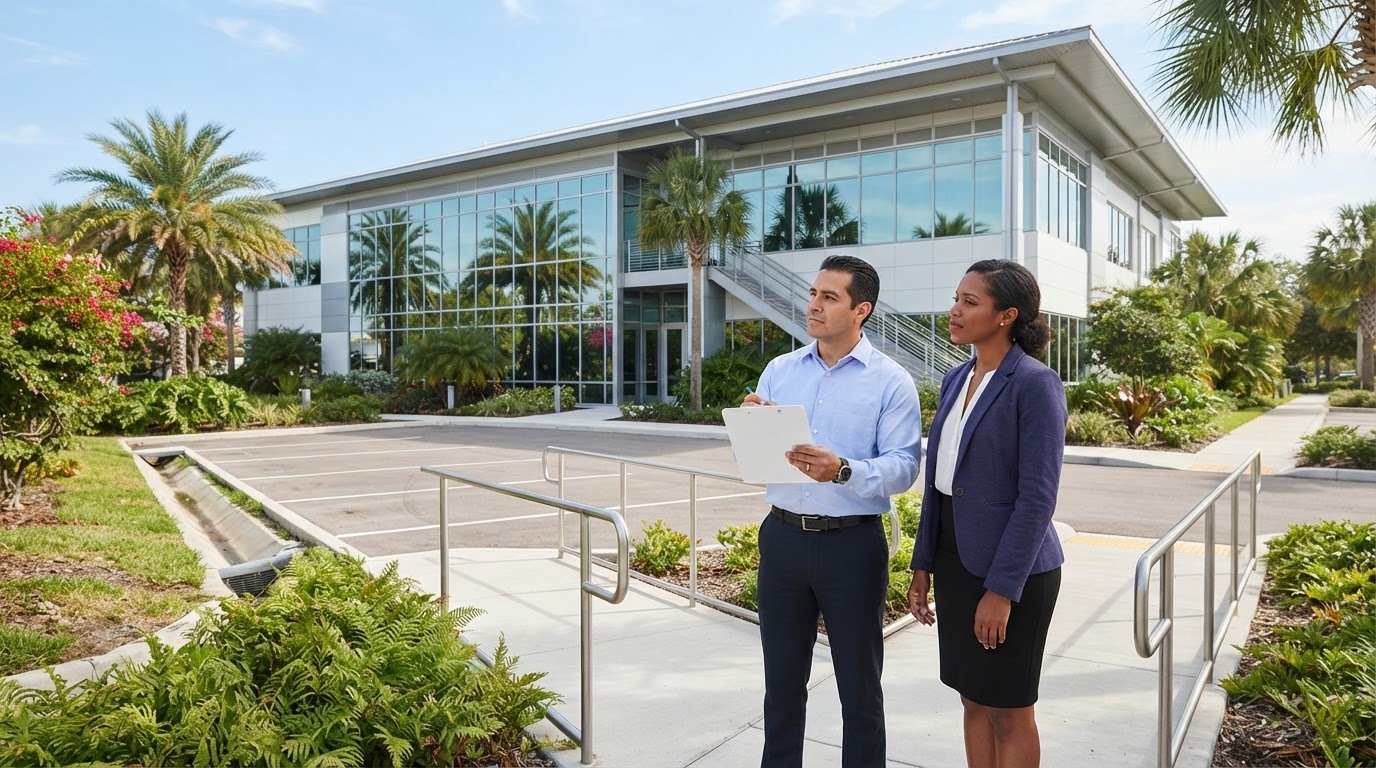
An inspection can’t guarantee that a Florida commercial property has no problems. Its findings depend on the agreed scope, access and conditions on the inspection day, and concealed issues may remain undiscovered. A commercial property inspection checklist for Florida helps you spot visible concerns and set a clearer scope for professional review.
Before making a major property decision, you need a clear picture of the building’s condition. A checklist helps you identify areas for closer review and prepare focused questions before moving forward.
This guide explains when to arrange an inspection and what to review across the building and site, including accessibility, drainage, paving, and other improvements. It also covers how to prepare and use findings to guide your next steps.
Key Takeaways
- Set the inspection scope around the property’s age, use, known repair history, and your decision timeline so the review focuses on relevant concerns.
- Look beyond the building interior: access features, parking, sidewalks, grading, drainage, and paving can all affect how the site functions.
- Gather maintenance records and prior inspection reports, and make sure the assessor can safely access the areas included in the inspection.
- Use the findings to identify issues that may need closer evaluation and to make a more informed property decision.
When should I ask about commercial Property Inspection Checklist?
Arrange a commercial inspection before a purchase, after a defect is reported, or when planning maintenance. Use a checklist to flag areas for closer review and define the inspection’s scope.
How do Florida commercial property inspections differ from residential inspections? Commercial inspections are tailored to a building’s use, such as an office, restaurant, or warehouse. They may cover specialized equipment, life-safety systems, and site features beyond the systems typically found in a residence.
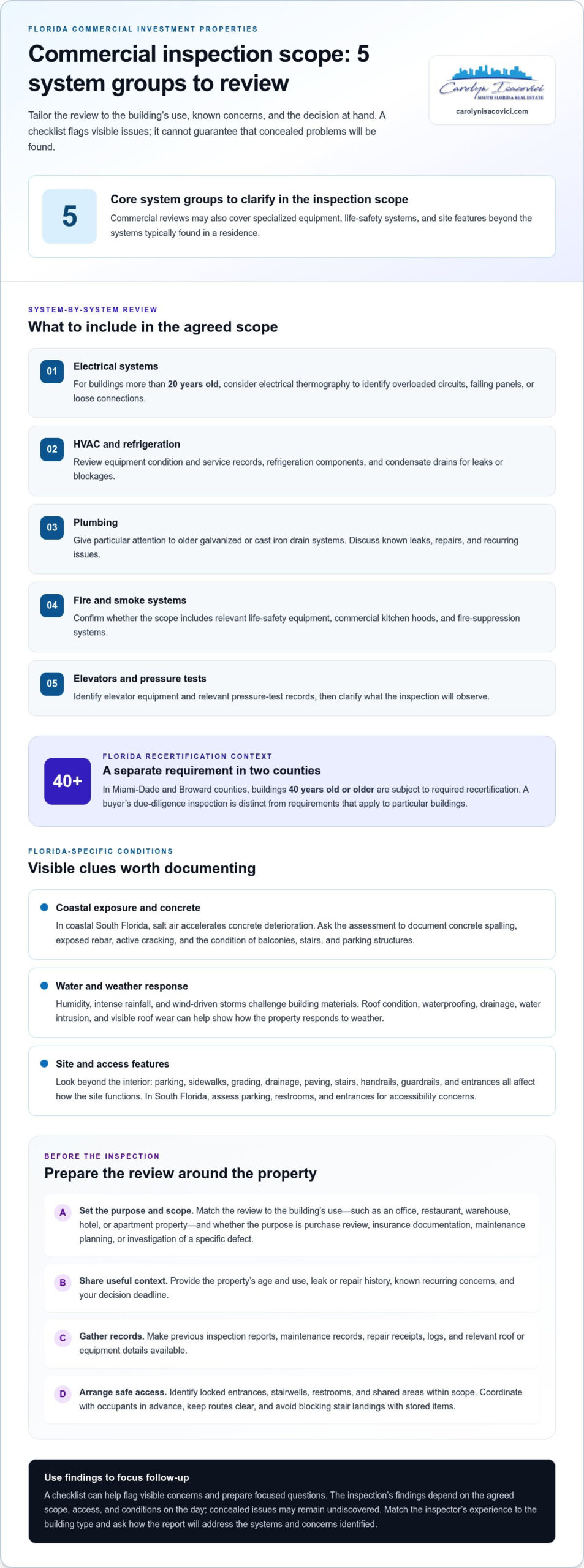
- Review electrical systems: For buildings more than 20 years old, consider electrical thermography to identify overloaded circuits, failing panels, or loose connections.
- Check HVAC and refrigeration: Review equipment condition, service records, refrigeration components, and condensate drains for leaks or blockages, or consult a local specialist such as Ultra Air Heating and Cooling if major climate control issues are suspected.
- Assess plumbing: Older galvanized or cast iron drain systems deserve particular attention; discuss known leaks, repairs, and recurring issues.
- Include fire and smoke systems: Confirm the agreed scope covers relevant life-safety equipment, commercial kitchen hoods, and fire-suppression systems.
- Review elevators and pressure tests: Identify elevator equipment and any pressure-test records relevant to the property’s systems, then clarify what the inspection will observe.
How do you choose a licensed commercial property inspector in Florida? Match the professional’s experience to the building type and requested scope. Property condition assessments may be conducted by licensed architects, engineers, or experienced building inspectors. Ask how the report will address the systems and concerns you have identified.
Is a commercial property inspection required by Florida law? A buyer’s due-diligence inspection is distinct from requirements that apply to particular buildings. In Miami-Dade and Broward counties, buildings 40 years old or older are subject to required recertification.
How much does a commercial property inspection cost in Florida? Cost depends on the property’s size and complexity. Reviewing records alongside the technical inspection usually adds to the cost. The amount is provided after a quote request.
Before scheduling, share the property’s age and use, its leak or repair history, and your decision deadline. Provide safe access, previous inspection reports, maintenance records, and details of recurring concerns so the review can focus on the right systems.
Stairs, handrails, guardrails, and accessibility features
Walk from the parking area to the entrance and through shared spaces. Note steps, uneven surfaces, narrow passages, and missing handrails for the inspection scope. Look for visible damage or instability in stair treads, handrails, guardrails, and landings. Record each concern’s location, such as a loose rail beside the main entrance.
Review accessibility deliberately. In South Florida, assess parking, restrooms, and building entrances for ADA compliance. Renovation permits after purchase may trigger path-of-travel upgrades. Consider the route as a connected system: parking, sidewalks, entrances, and interior facilities all affect how people reach and use the property.
- Review stairs and rails: Note loose handrails, damaged steps, obstructed landings, or visibly incomplete guardrails for closer attention.
- Trace the accessible route: Walk from parking spaces to entrances and common areas, noting abrupt level changes or blocked paths.
- Check shared facilities: Observe restrooms and other areas used by tenants or visitors, recording features that may need accessibility review.
- Inspect parking and sidewalks: Look for accessibility barriers along these routes, since site access can affect how occupants enter and move around.
Access also affects inspection quality. Before the visit, identify locked entrances, stairwells, restrooms, and shared areas within the agreed scope. For occupied properties, coordinate access with tenants or occupants and notify them in advance. Keep routes clear so the assessor can observe features, and avoid blocking stair landings with stored items.
Record concerns by location. Specific notes help buyers connect observations to the report and plan follow-up during a transaction. A walkthrough can identify visible barriers, while accessibility concerns may need a more focused evaluation.
Property condition assessment and property condition reports
A property condition assessment gives buyers a structured view of visible building conditions. For due diligence, its scope can cover the building envelope, accessible structure, roof, electrical distribution, plumbing, mechanical systems, and observed maintenance concerns. First define the purpose: purchase review, insurance documentation, maintenance planning, or investigation of a specific defect. Each purpose may call for a different report format or specialist credentials.
Florida’s conditions shape what merits attention. In coastal South Florida, salt air accelerates concrete deterioration, while humidity, intense rainfall, and wind-driven storms challenge building materials. Ask the assessment to document concrete spalling, exposed rebar, active cracking, and the condition of balconies, stairs, and parking structures. Roof condition, waterproofing, and drainage also show how the building responds to weather.
- Set the scope: Match the review to the building’s use, such as an office, restaurant, warehouse, hotel, or apartment property.
- Review visible systems: Note roof wear, water intrusion, structural concerns, and equipment-room disorder that may signal maintenance issues.
- Prepare records: Gather repair receipts, maintenance logs, prior reports, roof or equipment details, and recurring-problem notes.
- Plan access: Make included areas accessible, identify known issues, and avoid covering stains or damaged materials before the visit.
A thorough report describes observed conditions, not every hidden defect. Its limits include the agreed scope, access, conditions on the day, and methods used; concealed problems can remain undiscovered. A commercial property condition assessment in Florida can take from a few hours to several days, depending on the property. Licensed architects, engineers, or experienced building inspectors conduct these assessments.
After reviewing the report, group findings by urgency: safety concerns, active water intrusion, maintenance needs, and issues requiring specialist evaluation. A visible crack or leak may need closer assessment by an engineer, qualified contractor, or another specialist. This turns observations into a practical repair and maintenance plan without treating the inspection as a guarantee of a problem-free property.
Site grading, drainage, landscaping, paving, and right-of-way improvements
Walk the site perimeter and trace rainwater from the building edges toward drains and streets. Note ponding, blocked inlets, eroded soil, and paving that slopes toward entrances. These observations help buyers assess whether grading or drainage could contribute to water entering the building or interfere with site use.
How should inspectors assess Florida-specific risks such as hurricanes, flooding, mold, and termites? Review visible storm damage, drainage, signs of water intrusion, moisture, and wood deterioration. Record concerns by location and note where a specialist assessment may be appropriate, such as consulting Fire Industry Restoration Experts when storm or water issues require dedicated remediation.
- Review paving and access: Note cracks, uneven surfaces, parking-lot striping, driveways, sidewalks, culverts, and right-of-way improvements.
- Observe landscaping: Check whether trees or planting materials obstruct drainage or could create site problems as they grow.
- Compare site work with plans: Review grading, elevations, paving, and drainage features against available approved plans and project records.
- Include utility systems: Confirm the inspection scope addresses visible site utilities and review available records for testing of sanitary, storm, and water distribution systems.
For a purchase, review available permits and records alongside visible site conditions. Utility installation and testing records can help clarify whether site work passed its required inspection stages. Site observations alone do not establish whether permitted work or system testing is complete, so organize relevant records with the property’s due diligence materials.
A Phase I Environmental Site Assessment can help identify potential contamination risks through a review of historical uses, surrounding land uses, and environmental records. If it identifies potential concerns, additional testing may be recommended. Keep this assessment distinct from a visual property inspection, since each addresses different questions about the site.
Use inspection notes to organize follow-up: identify where water collects, which paving or drainage features need attention, and what utility or environmental records inform occupancy and maintenance planning. Explore commercial property opportunities with those site findings in view.
Florida Commercial Investment Properties: Commercial Property Sales
Florida Commercial Investment Properties provides commercial property sales services for buyers and sellers assessing a property after due diligence. Inspection findings can clarify which visible conditions need attention and which questions matter as you consider a transaction. Use the report alongside your investment goals to weigh the property’s condition and potential next steps.
Seek commercial property sales guidance when evaluating an acquisition, preparing to sell, or considering how inspection observations affect your decision. A clear understanding of the property can help you approach the next stage with purpose.
To discuss a commercial property transaction, visit carolynisacovici.com.
Turn Inspection Findings Into a Clear Next Step
An inspection is most useful when it informs a decision, not just a file. Use your commercial property inspection checklist in Florida to organize questions around your plans, then consider how the property’s condition fits your investment goals and intended use.
Florida Commercial Investment Properties also handles residential real estate sales and new construction homes. If your next move involves evaluating a property or considering a purchase, connect your inspection findings to the broader real estate decision ahead.
Contact Florida Commercial Investment Properties to discuss your next step. A thoughtful review can help you move forward with greater clarity and confidence.
Frequently Asked Questions
Does an inspection guarantee that there are no problems?
No. An inspection documents conditions observed within its scope, but it cannot rule out every defect. Concealed areas, limited access, and conditions on the inspection day can affect what is visible. For example, a leak may not be active during the visit. Treat the report as a decision-making tool, and consider further evaluation when a finding points to an issue requiring specialist review.
What Is a Property Condition Report?
A Property Condition Report records observed conditions and findings for a defined purpose. A buyer may use one to understand a building’s condition during a transaction, while an owner may use it to plan maintenance. The report’s focus depends on the assignment, so clarify whether it covers general due diligence, insurance documentation, maintenance planning, or a specific concern.
What should I do after receiving the report?
Sort findings into safety concerns, active water intrusion, routine maintenance, and items needing specialist evaluation. For example, distinguish a dripping fixture from a structural crack requiring closer assessment. Gather relevant repair records and compare recommendations with your priorities and transaction timeline. If follow-up work is needed, document the finding and next action so progress can be tracked clearly.
What does a commercial property inspection in Florida cover?
Coverage depends on the property’s use and agreed scope. A review may examine the roof, accessible structure, building envelope, electrical distribution, plumbing, mechanical systems, and observed maintenance concerns. A restaurant, warehouse, or office may have different inspection priorities. For a commercial property inspection checklist in Florida, use the building’s operations and known concerns to decide which areas need attention.
What Florida building codes and local regulations apply to commercial property inspections?
Applicable requirements depend on the property’s location, use, and work history. Buyers should review certificates of occupancy, renovation permits, fire-safety compliance, accessibility, and local building and safety requirements. In Miami-Dade and Broward counties, buildings at least 40 years old are subject to required recertification. Local zoning also affects permitted use, parking, density, signage, and development plans.
What should inspectors check in a commercial property’s roof, structure, and exterior?
Inspectors should assess visible roof and exterior conditions, accessible structural elements, drainage, and signs of water entry. In coastal South Florida, look for concrete spalling, exposed reinforcing steel, active cracks, and deterioration around balconies or parking structures. Record where a roof stain or exterior crack appears, then compare it with related interior signs. These details help focus any follow-up that may be needed.