A promising property can be the wrong purchase if its zoning doesn’t support your intended use. Before buying commercial property in Florida, confirm that local zoning permits your business plan; lenders often expect a down payment of at least 20-30% of the purchase price. The right choice also depends on the property’s location, condition, and potential to generate income.
It’s natural to focus first on the asking price, but buying commercial property in Florida involves more than the purchase figure. Your goals, the local market, and the costs of financing and ownership all shape whether a property fits your plans.
This guide explains how Florida’s market and zoning affect a purchase, how to compare property types with your investment goals, and what lenders may consider in an application. You’ll also learn how loan documents, inspections, and valuation fit into the process, helping you assess opportunities and choose your next step.
Key Takeaways
- Match the property type to your investment goals and the income or use you expect from it.
- Build a clear financing file around your business plan, credit profile, and the property’s earning potential.
- Use valuation and inspections to assess both the asset’s financial fit and its physical condition before moving forward.
- A structured purchase process helps you compare opportunities and make a confident decision at each stage.
Florida commercial property market and zoning
Commercial listings across Florida vary by location, property type, and condition. Individual listings are not statewide benchmarks. Compare each candidate’s location, physical condition, and local growth potential with your intended use. Apply the same site-specific approach in Miami, Fort Lauderdale, and other Florida markets.
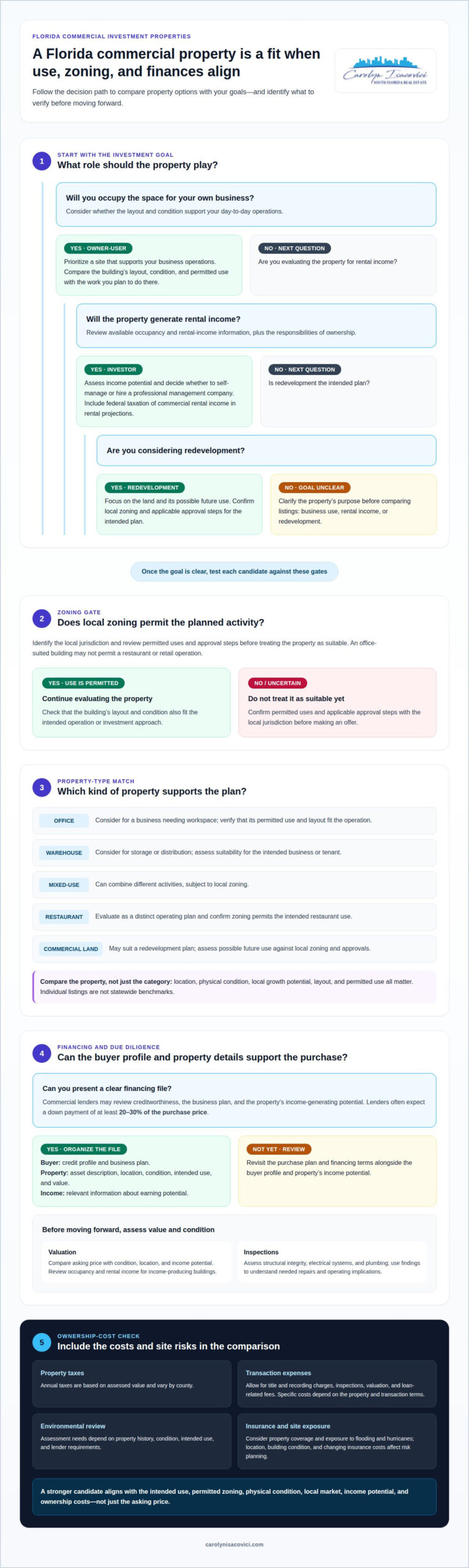
Before making an offer, identify the local jurisdiction and review zoning rules for your planned business activity. A building suited to office use may not permit a restaurant or retail operation. Confirm permitted uses and applicable approval steps before treating the property as suitable.
Should buyers purchase through an LLC or another business entity? Consider your ownership goals, tax considerations, and financing terms when evaluating an LLC or another structure. The right fit depends on how these factors align with the purchase.
What environmental assessments are required? Assessment needs depend on the property’s history, condition, intended use, and lender requirements. Include environmental review in due diligence to identify potential site concerns before closing.
What are Florida commercial property taxes and local tax rates? Owners pay annual property taxes based on assessed value, and rates vary by county. Include the property’s assessed value and location in your ownership-cost planning.
What closing costs and fees should buyers expect? Budget for transaction expenses such as title and recording charges, inspections, valuation, and loan-related fees. Specific costs depend on the property and transaction terms.
What insurance is needed, including hurricane and flood coverage? Consider property coverage and the site’s exposure to flooding and hurricanes. These risks and changing insurance costs can affect ownership expenses. Include the location, building condition, and intended use in your risk planning.
These considerations work together when comparing commercial properties across Florida. Weigh each property’s location, zoning, and condition alongside the local market and potential for growth, rather than treating any one factor as decisive. Compare permitted use and physical condition with the surrounding market to assess whether a property fits your plans. Keep these points in view throughout your search.
Investment goals and property types
Define the property’s role before comparing options in Miami, Fort Lauderdale, Palm Beach, or another Florida market. An owner-user needs a site that supports daily operations, while an investor evaluates income potential and ownership responsibilities. A redevelopment buyer may focus on the land and its possible future use. These priorities determine which listings merit a closer look.
Compare property types against those priorities. Offices can suit businesses needing workspace, warehouses may support storage or distribution, and mixed-use buildings can combine different activities, subject to local zoning. Restaurant properties and commercial land serve different plans. For each candidate, consider how its layout, condition, and permitted use align with your intended operation or investment approach.
Clarify your investment goals with a practical comparison. Will you occupy the space, lease it, or pursue redevelopment? Consider how income may be generated and what ongoing responsibilities ownership involves. In the United States, income from commercial rentals is subject to federal taxation, so account for that obligation in rental projections.
Use these criteria to narrow your choices:
- Set the purpose: Identify whether the property will support your business, rental income, or redevelopment.
- Compare suitable types: Consider offices, warehouses, mixed-use buildings, restaurant sites, or land.
- Review operating needs: Match the building’s layout and condition to the work or tenant activity planned.
- Choose a management approach: Owners can self-manage or hire a professional management company.
A written comparison helps distinguish a property that simply looks appealing from one that fits your plan. For example, an investor considering a warehouse can assess its suitability for the intended tenant and management approach before advancing. For guidance comparing opportunities with your objectives, explore commercial property investment guidance.
Loan documentation and property valuation
Commercial lenders assess both the buyer and the property. In Florida, they may review your creditworthiness, business plan, and the property’s income-generating potential. Build an application that connects your financing request to a clear purchase plan. Explain the intended use and how the property supports your business or investment goals.
What due diligence should buyers perform before purchasing commercial property in Florida? Review the property’s value, condition, use, and income potential alongside financing terms. Arrange inspections that assess structural integrity, electrical systems, and plumbing, then use the findings to understand needed repairs and their operating implications.
Valuation matters because lenders need information about a property, including its value. Compare the asking price with its condition, location, and income potential. For an income-producing building, examine available information about occupancy and rental income. For an owner-occupied site, assess how the layout and condition support your planned operations. These details help explain the asset’s role in your application.
Organize your file so the buyer profile and property details are easy to review:
- Buyer information: Present your credit profile and the business plan for the purchase.
- Property information: Describe the asset, its location, condition, intended use, and value.
- Income details: Include relevant information about the property’s income-generating potential.
- Inspection findings: Record structural, electrical, and plumbing observations for your review.
A clear file also helps reveal gaps between the purchase plan and the property’s performance. For example, projected income should reflect the building’s actual condition and intended use, not just an optimistic estimate. If an inspection identifies repairs, factor those findings into your evaluation and financing discussions.
Prepare early, before finalizing an offer. Keep the business plan, property details, valuation information, and inspection results consistent across your materials. This gives a lender a clearer basis for reviewing your capacity and the asset together, and helps you assess whether the financing fits.
What are the steps to buy commercial property in Florida?
A clear sequence helps you compare Florida properties without losing sight of your goals. Treat each stage as a decision point: proceed when the site, financing, intended use, and condition fit your plan. Keep written notes to compare each candidate consistently.
- Set purchase criteria. Define whether you need an owner-occupied site, rental investment, or redevelopment opportunity. List the location, property type, and operating needs that matter most. For example, a warehouse buyer may prioritize loading access and usable space.
- Research candidate properties. Compare location, condition, and local market potential. Review each listing against your criteria, then remove properties that don’t support your intended use or investment goals.
- Assess permitted use. Identify the local zoning rules that apply to each site. Compare those rules with your planned business activity before proceeding. A property’s existing use doesn’t by itself establish that your intended use is permitted.
- Evaluate the financing fit. Prepare your business plan and property information for lender review. Include the property’s value and income-generating potential, then consider how financing terms fit your purchase plan.
- Complete due diligence. Arrange inspections of the property’s structural integrity, electrical systems, and plumbing. Compare the findings with the building’s condition and your expected use. Record issues that could affect operations or your evaluation.
- Review the purchase details. Read the transaction documents carefully and compare the agreed terms with your financing and inspection findings. Keep property details and valuation information consistent across your records.
- Prepare to close. Bring together the final purchase documents, financing information, and due diligence records. Confirm that the key details match the property and terms you intend to acquire.
For example, if an inspection identifies electrical or plumbing concerns, use those findings in your final evaluation before advancing. To discuss a Florida commercial property search, explore commercial property opportunities.
Florida Commercial Investment Properties: Commercial Property Sales
Florida Commercial Investment Properties handles commercial property sales for buyers ready to turn their research into a focused property search. Once you’ve clarified your intended use, financing approach, and priorities, the firm’s commercial real estate brokerage can help you consider opportunities that fit your investment goals.
Turn to Florida Commercial Investment Properties when you’re ready to explore a commercial purchase or investment property acquisition in Florida. A clear brief covering property type, location, and intended use gives your search a practical starting point. The firm also handles residential real estate sales and new construction homes, while commercial buyers can keep the conversation centered on their acquisition goals.
To discuss your next commercial property step, visit Florida Commercial Investment Properties.
Turn Your Property Criteria Into a Clear Next Move
Turn your priorities into a practical decision framework. Decide which property qualities are essential, which can be flexible, and what conditions would make you pause. This helps prevent a compelling listing from distracting you from the purpose of your purchase. As you evaluate options, record why each one merits further attention so your choices stay tied to your plans.
A disciplined approach to buying commercial property in Florida gives you room to act with purpose rather than urgency. If you’re ready to explore a commercial purchase, connect your criteria with a focused property search and a clear conversation about your goals with Florida Commercial Investment Properties.
Contact Florida Commercial Investment Properties to discuss your next step. Your research can become a thoughtful path toward the right opportunity.
Frequently Asked Questions
What are current commercial real estate prices in Florida by city and property type?
Commercial property prices vary by city, property type, condition, and location, so a single statewide figure would not describe options in Miami, Fort Lauderdale, or Palm Beach. Compare similar properties within the same market and category, then weigh condition and intended use. A warehouse, office, and restaurant property serve different purposes, so direct price comparisons are less useful unless the assets are alike.
What zoning, land-use, and building regulations apply to commercial property in Florida?
Local zoning and land-use rules determine which business activities a site can support. In Miami, Palm Beach, or another Florida community, identify the property’s jurisdiction and compare its permitted uses with your plans. For a renovation or change of use, consider applicable building requirements and approval steps. A site’s current operation alone does not establish that a different activity is allowed.
How can buyers finance commercial real estate in Florida, and what are typical rates and down payments?
Florida buyers may consider fixed-rate or adjustable-rate commercial loans, and lenders often expect a down payment of at least 20-30% of the purchase price. Loan rates depend on the financing structure and lender assessment. Applications may be evaluated using the buyer’s creditworthiness, business plan, property value, and income potential. Prepare these details to help present a coherent financing request.