
What if the most beautiful home in your Miami search isn’t the right one for you? When comparing luxury residential real estate Miami offers, the best fit depends on more than impressive finishes or a striking view. A waterfront house, a Coral Gables home, a Coconut Grove residence, and a Brickell condo can each support a very different daily life.
Listing photos rarely answer practical questions about a home’s condition, coastal exposure, building responsibilities, or available records. Those details matter alongside design and location. A clear comparison process helps you weigh them before deciding which properties deserve a closer look.
This 2026 buyer’s guide explains how to compare Miami homes and condos, assess neighborhood trade-offs, and organize your search around the way you plan to use a property. It covers property type, location, ownership considerations, and the steps from setting priorities to preparing an offer.
Key Takeaways
- Compare Miami neighborhoods by daily rhythm, residential character, waterfront setting, and the property formats available.
- Look beyond listing photos at condition, building records, shared responsibilities, and property documentation.
- Separate must-haves from preferences, including location, home type, privacy, and intended use.
- Follow a consistent buying process, from defining priorities and shortlisting areas to reviewing records and preparing an offer.
- Local brokerage guidance can help connect your priorities with residential and new-construction opportunities through the transaction.
What Makes Miami Luxury Residential Real Estate Different for Buyers?
Luxury is personal. Miami luxury residential real estate is a home or condominium whose quality, setting, and ownership demands align with a buyer’s priorities and preferred way of living. That definition is more useful than a price label: two properties with similar finishes can offer very different experiences. Privacy, maintenance, building type, and coastal exposure all affect what ownership is like after move-in.
Miami’s character adds another layer. Its economy, population, and role as a major metropolitan area help shape how residents use different parts of the city and what they value nearby. For broader context, explore Miami’s economy and demographics, then consider how a particular property fits your own routine.
Which Miami property types suit different lifestyles?
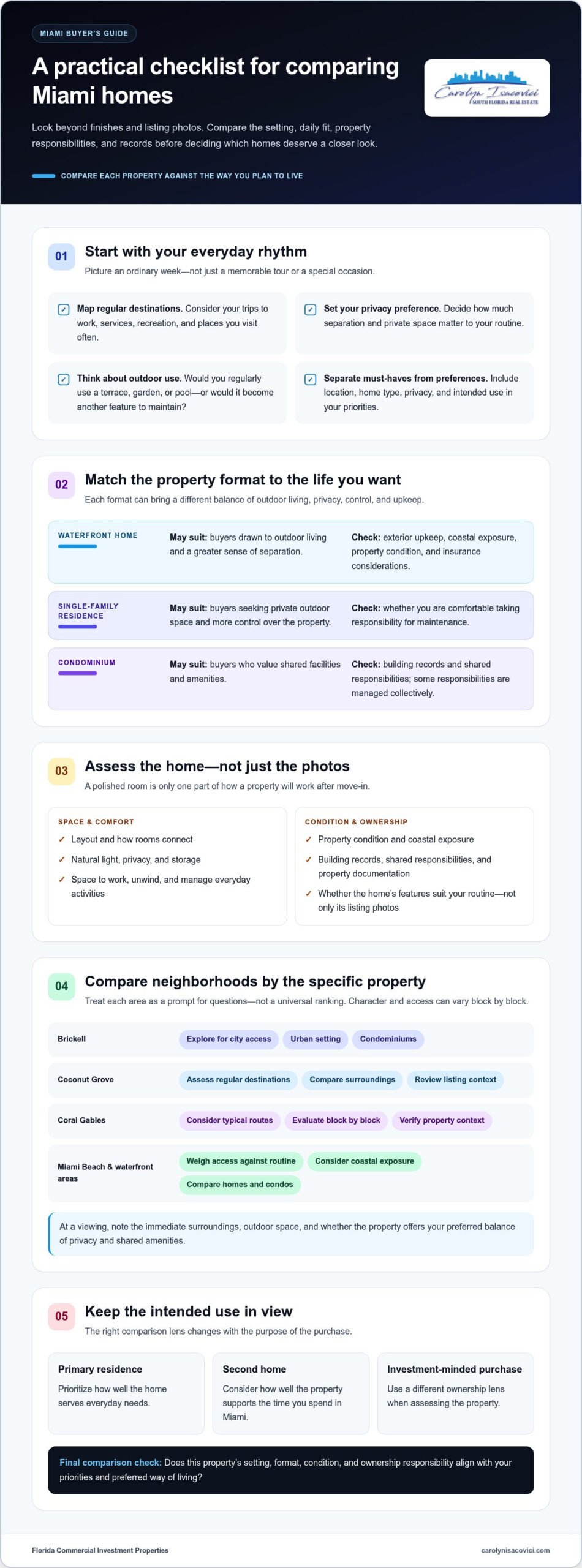
Start with the rhythm you want. A waterfront home can connect daily life with the outdoors and offer a greater sense of separation, but exterior upkeep and coastal exposure deserve attention. A single-family residence may provide private outdoor space and more control over the property, along with responsibility for its maintenance. A condominium can offer shared facilities and amenities, with some responsibilities managed collectively.
Think about ordinary days, not only special occasions. Would you regularly use a terrace, garden, or pool, or would it become another feature to maintain? Would shared amenities make life easier, or would you rather have more privacy and control? The right format depends on intended use, household needs, and how much time you want to devote to upkeep. For a condominium, review building records and shared responsibilities as part of your comparison.
What does “luxury” mean beyond finishes?
Look past the first impression. A polished kitchen or carefully styled living room may catch your eye, but also assess the layout, natural light, privacy, condition, storage, and how well the space supports everyday activities. Notice how rooms connect, whether there is a quiet place to work or unwind, and whether the home’s features suit your routine rather than simply photograph well.
Location is part of a property’s value to you. Consider the actual trip to work, services, recreation, and other places you expect to visit often. A home that feels ideal during a tour may be less convenient if its setting does not match your daily pattern. A luxury label or listing description is a starting point, not independent proof of quality or suitability.
Be clear about the purpose of the purchase. A primary residence needs to serve everyday needs; a second home may be judged by how well it supports the time you spend in Miami; an investment-minded purchase calls for a different ownership lens. Identify what matters most for your intended use, then compare each property, setting, and responsibility against those priorities.
How to Match Miami Neighborhoods and Homes to Your Lifestyle
Choose a setting by imagining an ordinary week there. How often do you want to walk to city destinations, spend time outdoors, or have a private place to unwind? Brickell, Coconut Grove, Coral Gables, and Miami Beach offer different settings to explore, but none is a universal best choice. The right match depends on how a home’s location and format support your routines.
How do Brickell, Coconut Grove, and Coral Gables differ?
Brickell is worth exploring if condominium living and city access are priorities. Coconut Grove and Coral Gables merit separate consideration: compare the residential character, housing formats, and everyday destinations around each property rather than treating the areas as interchangeable. Neighborhood character can change block by block, so assess the specific address and its surroundings.
When should buyers consider Miami Beach or waterfront areas?
Miami Beach and other waterfront locations may suit buyers who value coastal access and outdoor living. Balance that appeal against your preferences for privacy, routine, and property upkeep. For a waterfront home, include property-specific condition and insurance considerations in your review. Use current listing details and neighborhood information instead of assuming every property in a coastal area presents the same considerations.
Use the table as a starting point, not a ranking. Property formats and nearby amenities vary by block and listing, so treat each row as a prompt for questions about the specific home.
| Setting | Urban convenience | Residential character | Waterfront context | Common formats to compare |
|---|---|---|---|---|
| Brickell | Explore for city access | Urban setting | Check the individual location | Condominiums |
| Coconut Grove | Assess access to your regular destinations | Compare the property and its immediate surroundings | Review listing-specific context | Compare available home formats |
| Coral Gables | Consider your typical routes | Evaluate block by block | Verify property-specific context | Compare available home formats |
| Miami Beach | Weigh access against your routine | Assess the exact location | Consider coastal exposure | Compare homes and condominiums |
Make the comparison practical by listing the places you visit regularly, then consider how each property’s location affects those trips. At a viewing, note the immediate surroundings, outdoor space, and whether the home’s format fits your preferred balance of privacy and shared amenities. For more context as you compare locations, read this Miami real estate market trends guide.
To focus your search, review residential property options in Miami against the way you plan to use the home. That keeps your search for luxury residential real estate Miami grounded in practical priorities.
How to Evaluate a Miami Luxury Home Beyond Its Listing Photos
An impressive listing is a starting point, not a complete property assessment. Photos can show finishes and views, but they cannot establish current condition, reveal every maintenance concern, or explain shared building responsibilities. A careful review brings the visible features together with property records, building information, and ownership details that matter to your intended use.
In Miami, assess a property alongside its surroundings, because the setting can shape upkeep, insurance considerations, and the everyday ownership experience. This is particularly relevant for coastal and waterfront properties, where property-specific information is more useful than broad assumptions about an area.
What should buyers examine in waterfront and coastal properties?
Start with the address. Use the FEMA Flood Map Service Center to review current flood information for the specific property, and include applicable local records in your due diligence. Flood maps are one source of information, not a complete prediction of how a property will perform or what coverage may be available.
During a property review, note visible maintenance, drainage, and building condition. Property-specific inspections can examine concerns that are not apparent during a showing. Review current insurance information for the property rather than assuming coverage or cost based on nearby homes. Do not draw conclusions about storm outcomes or resilience from photographs, marketing language, or location alone.
What should buyers review in condominium buildings?
A condominium purchase involves more than the unit. Review available association documents, budgets, meeting records, maintenance plans, and information about assessments. These materials can clarify how the building is managed and which responsibilities are shared. A walkthrough can also show how the amenities and common areas fit your intended use.
Focus on practical details: which facilities are shared, how building responsibilities are organized, and whether rules could affect your plans for the home. Keep questions tied to the documents and property. Legal interpretations and document-specific legal questions require legal advice; a real estate review is not a substitute for it.
For a consistent comparison, organize your review around four areas:
- Condition: Note what you can observe, including maintenance concerns and areas that need closer review.
- Records: Compare listing claims with available property or association documentation.
- Setting: Consider flood information, coastal exposure, and the property’s immediate surroundings.
- Ownership: Identify shared responsibilities, amenities, and information relevant to insurance.
Keep a written list of questions as you compare properties, and distinguish verified details from assumptions. This turns an appealing showing into a clearer picture of what ownership may involve and helps you weigh the home’s presentation against the information available for a well-informed decision.
A Practical Miami Luxury Home-Buying Checklist
A clear sequence makes a broad search manageable. Use this checklist to move from general preferences to a considered offer while keeping property-specific questions visible throughout the process.
How can buyers create a focused property shortlist?
- Step 1: Define priorities. Separate must-haves from preferences. Note the location, home format, privacy level, intended use, and daily amenities that matter most. For example, outdoor space might be essential for a primary residence but less important for a second home used occasionally.
- Step 2: Shortlist areas. Identify neighborhoods that fit your routines and preferred setting. Consider access to regular destinations and whether a house or condominium better suits your approach to upkeep and shared facilities.
- Step 3: Compare properties consistently. Use the same criteria for each home, such as layout, condition, functionality, setting, and ownership responsibilities. Record what the listing shows, what you observed in person, and what still needs clarification. Do not let polished photography or standout finishes outweigh your core requirements.
- Step 4: Review records and property-specific considerations. Examine available disclosures and relevant property or association records. For coastal properties, include current flood information and insurance considerations in your review. For condominiums, note building documents, shared responsibilities, and details that may affect your intended use. If you are considering a newly built home, learn about the purchase process in this Florida new-construction homes guide.
- Step 5: Prepare an offer. When the property and its records align with your priorities, discuss offer terms and current transaction timelines with your real estate representative. Keep unresolved questions in view as you decide how to proceed.
What should happen before making an offer?
Review the documents available for the specific property and, for a condominium, the relevant association records before committing. The review should reflect the home’s type and condition. Suitable inspections and professional assessments can help examine areas that are not clear from a showing or the available paperwork.
Keep your comparison notes and questions together so you can distinguish confirmed details from items still under review. Legal interpretations require legal advice; a real estate checklist cannot provide it. Your real estate representative can help organize the property comparison and discuss offer terms and transaction timing in context.
To focus your search around your priorities, review Miami residential property options and define the criteria that matter most.
Buying Luxury Residential Real Estate in Miami With Local Brokerage Guidance
A well-guided search connects what you value in a home with properties and locations that may suit those priorities. For buyers exploring Miami’s luxury residential real estate, local brokerage guidance can bring structure to a broad search, whether you are considering an established residence or new construction. It also helps keep practical questions in view as you move from browsing to comparing properties and preparing an offer.
How does a buyer-focused search become more efficient?
Start with a useful brief, not a long list of listings. Define your intended use, preferred areas, home format, privacy needs, and essential daily conveniences. A focused brief gives the search direction while leaving room to adjust when a property reveals a new priority.
As you view candidate homes, compare them against the same criteria. A condominium with shared amenities, for example, may fit your routine differently from a private residence that requires more individual upkeep. Local context can help frame questions about a specific block, building, or property. As your preferences become clearer, refine the search rather than continuing to consider homes that no longer fit.
What can buyers expect from residential brokerage support?
Residential brokerage guidance can support the process from property discovery through offer preparation, transaction steps, and closing coordination. It can help organize property comparisons, keep track of questions, and connect your priorities with residential and new-construction opportunities. The aim is a considered process, not a promised outcome; you remain in control of the decision at each stage.
Different questions call for different expertise. Brokerage guidance helps keep property details and transaction milestones organized, while legal interpretations, lending advice, inspections, and insurance advice require specialized expertise. Keeping those roles clear helps distinguish property-focused questions from matters that need specialized review.
Local context is especially useful when a listing raises questions about its surroundings, building type, or ownership details. A real estate representative can help frame those questions around the particular property and keep the search aligned with your priorities. Transaction coordination also helps maintain a clear view of next steps as the purchase progresses.
Before beginning, write a short brief that names your must-haves, flexible preferences, intended use, and open questions. It gives listing conversations a practical starting point and makes it easier to recognize when a property deserves a closer look. Update the brief as you learn from viewings and document reviews.
If you are ready to bring your priorities into focus, explore residential real estate guidance and start a conversation with Carolyn Isacovici about your Miami home-buying goals.
Take Your Miami Home Search Forward
Your next step does not have to be choosing a property immediately. Start by clarifying what you want daily life to look like, which trade-offs feel acceptable, and what questions need answers before you move ahead. That gives each conversation and property review a clear purpose.
For buyers considering luxury residential real estate in Miami, a locally informed perspective can help turn those priorities into a focused search. Florida Commercial Investment Properties handles residential real estate sales and brokerage, including residential and new-construction transactions. Its local markets include Miami, Miami Beach, Hollywood, Fort Lauderdale, Palm Beach, Palm Beach Gardens, Stuart, Jupiter, Palm City, Port St. Lucie, Fort Pierce, Vero Beach, and Melbourne.
Explore Miami residential real estate guidance with Carolyn Isacovici and start shaping a search around what matters to you.
Frequently Asked Questions
Is Miami a good place to buy a luxury home?
Miami can be a good fit if its lifestyle, location, and ownership responsibilities align with your plans. Decide whether you are buying a primary residence, a second home, or a property for another purpose, then consider how often you will use it and what ongoing ownership involves. A thoughtful decision weighs personal fit and property details rather than relying on broad claims about the market.
Which Miami neighborhoods are popular for luxury homes?
Brickell, Coconut Grove, Coral Gables, and Miami Beach are among the areas buyers often compare when exploring luxury homes. Popularity alone does not determine whether a specific property suits you. Compare the address, nearby destinations, property format, and your daily travel patterns. If possible, review the block at the times you expect to use it, not only during a showing.
Are Miami luxury condos or single-family homes a better choice?
Neither is automatically better; the right option depends on how you want to live and manage the property. A condominium may suit someone who values building amenities and shared responsibilities, while a single-family home may appeal to a buyer seeking more private space. Consider how often you will be in Miami, who will use the home, and how much responsibility you want for its upkeep.
What should I check before buying a waterfront home in Miami?
Review current flood information for the exact address, including resources from FEMA, and examine available property records. Consider the home’s visible condition, drainage, and maintenance history, then arrange suitable property-specific inspections. Insurance needs depend on the individual property, so do not assume nearby homes have the same coverage or terms. Keep a record of what has been verified and what still needs review before deciding whether the waterfront setting works for you.
Can I buy a Miami luxury home remotely?
A buyer may be able to complete a Miami home purchase while living elsewhere, depending on the transaction and the buyer’s arrangements. A local real estate representative can help coordinate property discovery, comparisons, offer steps, and closing communications. For a remote purchase, request clear property information and use appropriate qualified professionals for inspections and specialized advice. Plan how you will review documents, resolve questions, and make decisions before transaction deadlines.
Do luxury condominium buyers need to review association documents?
Yes. Association documents can explain building operations and shared obligations that may not be apparent during a unit tour. Review available budgets, meeting records, maintenance plans, assessment information, and rules relevant to your intended use. Note unanswered questions and how they could affect your plans for the unit or its amenities. Legal interpretations of governing documents require legal advice, not a real estate summary.
How do I compare Miami luxury homes beyond their asking prices?
Use a consistent comparison sheet for each property. Along with the asking price, record condition, expected maintenance, insurance considerations, property taxes, association assessments if applicable, and the features that matter to your routine. Then compare the home’s layout, privacy, location, and intended use. This broader view helps distinguish a property that looks compelling online from one whose ownership profile and everyday function fit your priorities.
Leave a Reply