Is it possible that the most lucrative time to enter the South Florida market is exactly when others are whispering about a “cool down”? While headlines focus on the 3.15% dip in median condo prices, seasoned investors recognize this shift as a strategic opening. Finding a high-yield residential investment property Miami in 2026 requires moving past the noise and looking at the data with a steady hand.
You’ve likely felt the pressure of rising insurance premiums or the sticker shock of established hubs like Brickell. It’s natural to feel that the most profitable days are behind us. However, with insurance rates finally showing a 14% reduction for many homes and single-family home sales showing five consecutive months of annual gains, the opportunities are simply migrating to new corners of the city.
This guide provides a clear framework to help you identify and secure assets that balance appreciation with cash flow. We’ll examine the 2026 tax landscape, evaluate the impact of post-Surfside condo regulations, and highlight the specific neighborhoods where demand remains relentless. You’ll gain the insight needed to transform market uncertainty into a well-timed strategic advantage.
Key Takeaways
- Understand why Miami’s 2026 landscape offers unique growth opportunities by decoding the market signals that point toward sustainable long-term demand.
- Learn how to choose between land-rich single-family homes and managed luxury condos when selecting your next residential investment property Miami.
- Master the 2026 financial framework by calculating a realistic ROI that accounts for the latest property tax rates and stabilized insurance premiums.
- Discover high-growth neighborhoods beyond the city center, including the strategic expansion into Hollywood, Fort Lauderdale, and Palm Beach County.
- Identify how to leverage professional brokerage networks to uncover off-market residential deals that aren’t visible on public listing platforms.
The 2026 Miami Residential Market: Strategic Context for Investors
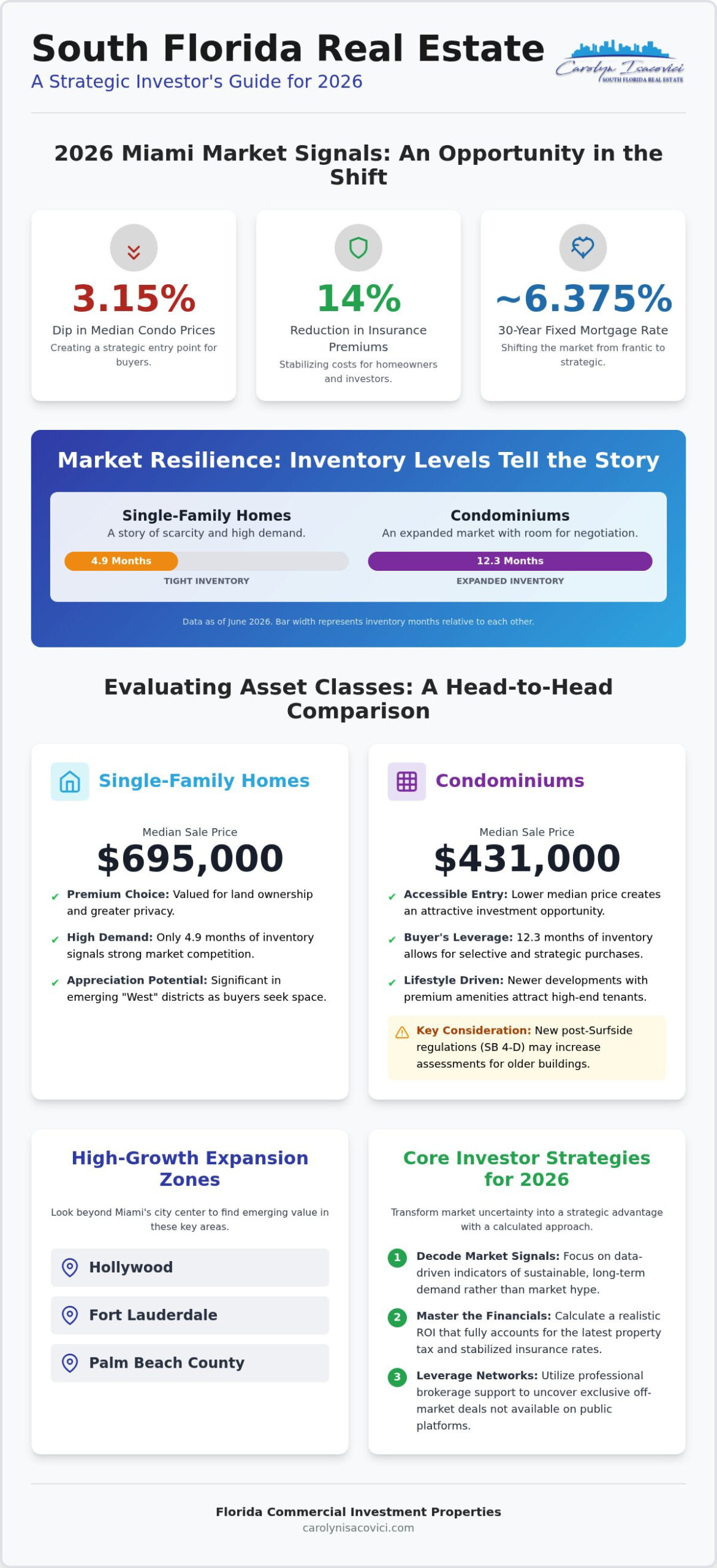
Why does Miami continue to attract record-breaking capital even as other global markets face uncertainty? It’s a question many investors ask when looking at the 2026 horizon. The answer lies in a fundamental shift from seasonal tourism to a year-round economic powerhouse. While the post-pandemic “gold rush” has matured into a more stable phase, the underlying demand for a residential investment property Miami remains robust, supported by a diverse economy and a favorable tax climate. With interest rates stabilizing around 6.375% for a 30-year fixed mortgage as of August 2026, the environment has transitioned from frantic to strategic, rewarding those who prioritize data over hype.
Economic Drivers and Population Growth
The “Wall Street South” phenomenon isn’t just a catchy headline; it’s a permanent fixture of the local economy. Corporate relocations are driving a consistent need for high-end rentals that cater to a sophisticated workforce. When you look at Miami’s economic overview, you see a city that has successfully leveraged its lack of state income tax to pull talent from high-tax regions. Infrastructure is keeping pace with this growth. The expansion of Brightline and new transit-oriented developments have created fresh pockets of value, making the investment footprint much larger than it was just a few years ago. These transit hubs are becoming magnets for young professionals who value mobility and urban density.
Market Resilience vs. Speculation
Is this market just another bubble? The evidence suggests otherwise. Unlike previous cycles fueled by pure speculation, the 2026 market is grounded in actual utility and shifting lifestyle preferences. We see a clear divergence in inventory that tells a story of resilience. As of June 2026, single-family homes sit at a tight 4.9 months of inventory, while the condo market has expanded to 12.3 months. This variety allows for more nuanced entry points depending on your risk tolerance. Investors are shifting away from short-term flipping toward long-term wealth building, focusing on properties that meet the needs of remote executives. These tenants prioritize space, privacy, and high-speed connectivity. It’s a mature landscape where the seasoned guide finds opportunity in the specific needs of a migrating population rather than broad market trends. For a broader perspective on where these opportunities are emerging across the region, the South Florida investment properties 2026 strategic roundup provides a comprehensive look at high-growth corridors across Broward and Palm Beach counties.
Evaluating Asset Classes: Single-Family vs. Condos vs. Multi-Family
Which asset class aligns with your long-term goals? In the search for a residential investment property Miami, the choice between a single-family home and a condominium isn’t just about the structure. It’s about the underlying strategy. Each asset class responds differently to market pressures, and understanding these nuances is the first step toward a resilient portfolio. By matching the asset to your financial objectives, you transform a simple purchase into a calculated move for wealth preservation.
The Single-Family Advantage in Miami
Single-family homes (SFH) remain the premium choice for those seeking land value and privacy. With only 4.9 months of inventory available as of June 2026, the scarcity is real. This supply constraint helped push the median sale price to $695,000. For investors looking at emerging “West” districts, renovated homes offer significant appreciation potential as buyers seek alternatives to the dense urban core. Before committing, it’s vital to know how to evaluate investment property Florida to ensure the numbers truly work in your favor.
Condo Investing in the ‘New’ Miami
The condo market presents a different set of opportunities. Median prices stood at $431,000 in June 2026, reflecting a slight softening that creates an entry point for many. However, the 12.3 months of inventory suggests you have the leverage to be selective. A recent Forbes analysis of Miami housing market trends highlights where list prices and sale prices are diverging, providing a roadmap for negotiation. You must also account for the post-Surfside safety regulations, such as SB 4-D, which have increased assessments for older buildings. Focus on newer “lifestyle” developments where amenities drive premium rental rates and management is streamlined.
Multi-family units continue to be the gold standard for those prioritizing cash flow and scaling. When you secure a multi-family residential investment property Miami, you gain a buffer against vacancy that single-unit assets simply can’t match. Similarly, new construction remains a favorite for 2026 investors. Buying pre-construction allows you to lock in today’s prices for tomorrow’s delivery, often with modern efficiency that lowers long-term maintenance costs. If you are ready to explore these options, our team can help you identify investment property sales that match your specific criteria.
The Financial Framework: Cap Rates, Taxes, and Insurance
How do you distinguish a truly high-yield asset from a property that simply looks good on paper? Moving beyond the gross rent multiplier is the hallmark of a sophisticated investor. While a high top-line rental figure is attractive, the real value of a residential investment property Miami is found in its net operating income. By stripping away the layers of taxes, insurance, and maintenance reserves, you arrive at a clear picture of your actual return. This methodical approach transforms a stressful financial puzzle into a manageable, strategic roadmap.
Analyzing Cap Rates in Prime Miami Districts
Cap rates in South Florida for 2026 generally range from 3.5% to 6.5%, though these numbers tell different stories depending on the neighborhood. For instance, luxury condos in high-demand hubs like Brickell often see lower cap rates between 3.5% and 4.5%. Why would an investor accept a lower yield here? It is because these assets offer greater stability and lower vacancy risks compared to higher-yielding properties in less established areas. In the Florida context, the cap rate is the property’s annual net operating income divided by its current market value, representing the unleveraged yield of the asset. Multi-family properties currently average around 5.2%, offering a balanced middle ground for those looking to scale their portfolios.
Navigating Hidden Costs and Insurance
The 2026 insurance landscape is showing welcome signs of stabilization. While average annual premiums for $300,000 in dwelling coverage range between $5,300 and $7,500, a recent 14% rate reduction for approximately 42,000 homes has signaled a shift in the market. To safeguard your pro-forma, you must prioritize “wind” and “flood” coverage. Mitigation strategies, such as installing impact-resistant windows or ensuring the roof is under ten years old, are no longer just upgrades. They are essential variables that directly lower your premiums and protect your ROI.
Property taxes also require a keen eye. Miami-Dade County’s tax rate sits at approximately 19.8 mills, or 1.98% of the taxable value. It’s vital to remember that while Florida’s “Save Our Homes” cap protects primary residents, investment properties are subject to a 10% non-homestead assessment cap. This distinction is a key factor when deciding between Commercial vs Residential Investment in Florida. Investors who want to diversify beyond residential holdings should also explore Miami office space for sale as a complementary wealth-building strategy in the same high-demand market. New buyers should prepare for a tax “reset” to the current market value upon purchase, making it necessary to calculate your 2026 projections based on the sale price rather than the seller’s historical tax bill. Planning for these climate-specific maintenance reserves ensures your investment remains resilient for years to come.
Location Strategy: Beyond the Miami City Limits
Is the search for a residential investment property Miami limited to the city core? Not anymore. As we move through 2026, the strategic footprint has widened significantly. Investors are looking past the high-density hubs of Brickell to find value in neighborhoods like Edgewater, Wynwood, and the Design District. These areas continue to mature, offering a blend of cultural depth and high rental demand. The Design District, for instance, has evolved into a global destination for luxury retail and dining, creating a halo effect that boosts the value of nearby residential units. However, the real story of 2026 is the outward expansion into suburban “luxury” pockets like Weston and Plantation. These inland opportunities provide a different risk profile, often attracting families and long-term residents who prioritize top-rated school districts and community amenities.
The Broward County Opportunity
Why are savvy investors turning their gaze toward Fort Lauderdale and Hollywood? It’s simple. These cities offer more accessible entry points for single-family home acquisitions compared to the coastal stretches of Miami-Dade. The ongoing expansion of Port Everglades has acted as a powerful economic catalyst, fueling local job growth and, by extension, residential demand. We’re seeing a rise in “walkable” suburban hubs that mirror urban lifestyles without the same price tag. These pockets attract young professionals who want the South Florida lifestyle but have been priced out of the immediate Miami market. Investors seeking a comprehensive view of these emerging corridors will find the detailed analysis of South Florida investment properties across Broward and Palm Beach counties an essential resource for identifying the most resilient assets in the region. It’s a regional shift that rewards those who look at the map with a broader perspective.
Pre-Construction and New Development Trends
Buying into the future requires a steady hand and a focus on developer reputation. In the 2026 market, the benefits of securing a unit in the first phase of a master-planned community are clear. You aren’t just buying a building; you’re buying into a vision of infrastructure and lifestyle. Locking in a residential investment property Miami at pre-construction stages often leads to built-in equity as the community matures. If you’re interested in this path, it’s essential to understand the nuances of Buying New Construction Homes in Florida to avoid common pitfalls. Master-planned projects often include integrated transit and green spaces, ensuring they remain desirable as the region continues to grow.
Palm Beach County also stands as a formidable luxury alternative. It offers a refined investment landscape that appeals to high-net-worth individuals moving from the Northeast. Whether you’re looking for a coastal estate or a modern suburban retreat, the regional diversity of South Florida ensures there is a fit for every portfolio. If you’re ready to map out your next move, our team can guide you through the latest residential real estate sales across these growing counties.
Scaling Your Portfolio with Professional Brokerage Support
What’s the difference between finding a house and building a legacy? While a home finder focuses on aesthetics and zip codes, an investment broker prioritizes data, cap rates, and long-term appreciation. Securing a residential investment property Miami in 2026 requires more than just access to public listings. It demands a partner who understands the nuance of a high-value acquisition. Carolyn Isacovici facilitates this transition by leveraging deep local networks to uncover off-market opportunities that never reach the public eye. This professional support allows you to move from owning a single asset to managing a diversified South Florida portfolio with confidence.
Due Diligence and the Closing Process
The inspection period is your most powerful tool in Florida residential deals. It’s the window where we uncover the true condition of the asset, from the integrity of the roof to the efficiency of the HVAC system. For older Miami properties, navigating title searches and lien mitigation is equally critical. You don’t want to inherit a previous owner’s unresolved permit issues or tax debts. By coordinating with professional property managers before the keys are even in your hand, we ensure a seamless “day one” transition that protects your cash flow from the start.
Long-Term Wealth Building and Exit Strategies
When is the right time to harvest equity? In the Miami cycle, knowing when to hold and when to sell is just as important as the initial purchase. For those looking to scale without a heavy tax burden, 1031 Exchange opportunities allow you to defer capital gains and reinvest into larger, more productive assets. This strategy is essential for compounding wealth over decades. If you’re ready to refine your approach, you can schedule a consultation with Florida Commercial Investment Properties to discuss your specific goals. We provide the steady hand needed to turn a residential investment property Miami into a cornerstone of your financial future.
Securing Your Future in the Evolving South Florida Landscape
Success in the 2026 market isn’t about chasing the next trend; it’s about making informed, strategic decisions grounded in data. We’ve explored how interest rate stabilization and a maturing inventory landscape have created a unique window for those who prioritize long-term value. Whether you’re focusing on a high-yield residential investment property Miami or expanding your footprint into the growing hubs of Broward and Palm Beach, the path to a resilient portfolio is clearer than ever. By understanding the nuances of current tax laws and insurance shifts, you’ve already taken the first step toward transforming market uncertainty into a professional advantage.
Navigating these complex cycles requires a partner who has seen the market’s many faces. With decades of experience and a specialized focus on high-yield assets across the tri-county area, Carolyn Isacovici provides the steady hand you need to scale your investments. Are you ready to move from observation to acquisition? Explore Miami Investment Opportunities with Carolyn Isacovici and benefit from expert guidance tailored to your unique financial goals. The opportunities in Florida are vast, and with the right strategy, your success is well within reach.
Frequently Asked Questions
Is Miami residential property still a good investment in 2026?
Miami remains a strong choice for a residential investment property Miami due to its unique economic resilience. While some sectors have softened, single-family homes saw a 3.73% median price increase as of June 2026. The shift toward a permanent, high-earning workforce ensures consistent rental demand. By focusing on areas with limited inventory, you can secure assets that offer both appreciation and reliable cash flow in a mature market.
What are the average property taxes for residential investment in Miami?
Property taxes in Miami-Dade County are approximately 19.8 mills, which translates to roughly 1.98% of the property’s taxable value. For investors, it’s essential to understand that the “Save Our Homes” cap doesn’t apply to non-primary residences. Instead, investment properties benefit from a 10% annual assessment cap. Always calculate your pro-forma based on the purchase price, as the taxable value typically resets upon the sale of the property.
How has Florida’s insurance crisis affected residential ROI?
The insurance landscape has shifted from a point of high stress to one of cautious optimism. While premiums reached historic highs, 2026 has brought a 14% average rate reduction for about 42,000 homes in the region. This stabilization helps protect your net operating income. Investors who prioritize properties with modern mitigation features, like impact windows and newer roofs, often see more favorable rates, directly improving the long-term ROI of their portfolios.
Can I use a 1031 Exchange for a residential investment property in Miami?
Yes, you can utilize a 1031 Exchange for a residential investment property Miami, provided the asset is held for productive use in a trade or business or for investment. This powerful tax tool allows you to defer capital gains by reinvesting the proceeds into a “like-kind” property. It’s a strategic way to scale your portfolio from single-family units into larger multi-family assets without immediate tax liabilities, helping you compound wealth more efficiently.
Which Miami neighborhoods have the highest appreciation potential in 2026?
High appreciation potential is currently found in neighborhoods where infrastructure and lifestyle meet. Edgewater and Wynwood continue to draw interest due to their urban density and cultural appeal. However, don’t overlook the suburban “luxury” growth in areas like Weston or the expansion in Hollywood. These locations benefit from the continued migration of professionals who seek high-quality residential environments outside the traditional city core, offering a compelling balance of demand and value.
What is the difference between investing in a condo vs. a single-family home?
The primary difference lies in inventory and ownership structure. As of June 2026, the condo market has 12.3 months of inventory, offering more room for negotiation, whereas single-family homes are much tighter at 4.9 months. Condos offer ease of management but come with HOA fees and potential assessments. Single-family homes provide greater control and land value, often leading to higher long-term appreciation in land-scarce coastal districts like Coral Gables.
Do I need a local broker to buy new construction in Florida?
While you can technically buy directly from a developer, having a local broker is a significant advantage. A seasoned broker understands the nuances of developer reputations and can identify which “first phase” master-planned communities offer the best equity growth. We provide the objective analysis that developers won’t, helping you navigate complex contracts and ensuring your interests are protected during the acquisition of new construction homes or pre-construction units.
What are the typical HOA fees for luxury condos in Miami?
HOA fees for luxury condos vary based on amenities and building age, but they are a critical part of your financial framework. In 2026, many associations are adjusting fees to comply with new Florida safety regulations, such as SB 4-D, which requires more robust reserve funding. It’s common to see fees ranging from $0.80 to $1.50 per square foot. Always review the association’s financial health to ensure there are no looming special assessments.