What if the greatest risk in South Florida real estate isn’t the price you pay, but the contract you sign without a seasoned guide? While the skyline continues to evolve, it’s common to feel a sense of hesitation when buying new construction home Miami residences. You’ve likely spent hours comparing different Miami-Dade communities, wondering which neighborhood truly offers the best long term value. At Florida Commercial Investment Properties, we understand these concerns. It’s why we approach the market with a steady hand and a focus on your success.
This 2026 guide provides professional strategies for selecting the right builders, securing significant incentives, and protecting your investment from the first signature. You’ll gain a clear roadmap from your initial deposit to the final closing. We’ll explore how to maximize builder credits and ensure your new property is positioned for lasting appreciation. By the end of this article, you’ll have the clarity and confidence to turn today’s market conditions into your greatest opportunity. Let’s begin by simplifying the complex landscape of Miami’s latest developments.
Key Takeaways
- Learn why modern hurricane-rated materials and energy-efficient designs are making 2026 the ideal year for new builds.
- Master the “Builder Trinity” to verify reputation and financial stability before buying new construction home Miami properties.
- Understand your legal rights during the Florida “Right of Rescission” period to ensure your deposit remains protected.
- Identify “hidden” costs like impact fees and working capital contributions that often lie buried within developer-friendly contracts.
- Discover how an independent broker provides a “zero-cost” advantage by countering high-pressure sales teams and prioritizing your long-term interests.
Why Miami New Construction Dominates the 2026 Market
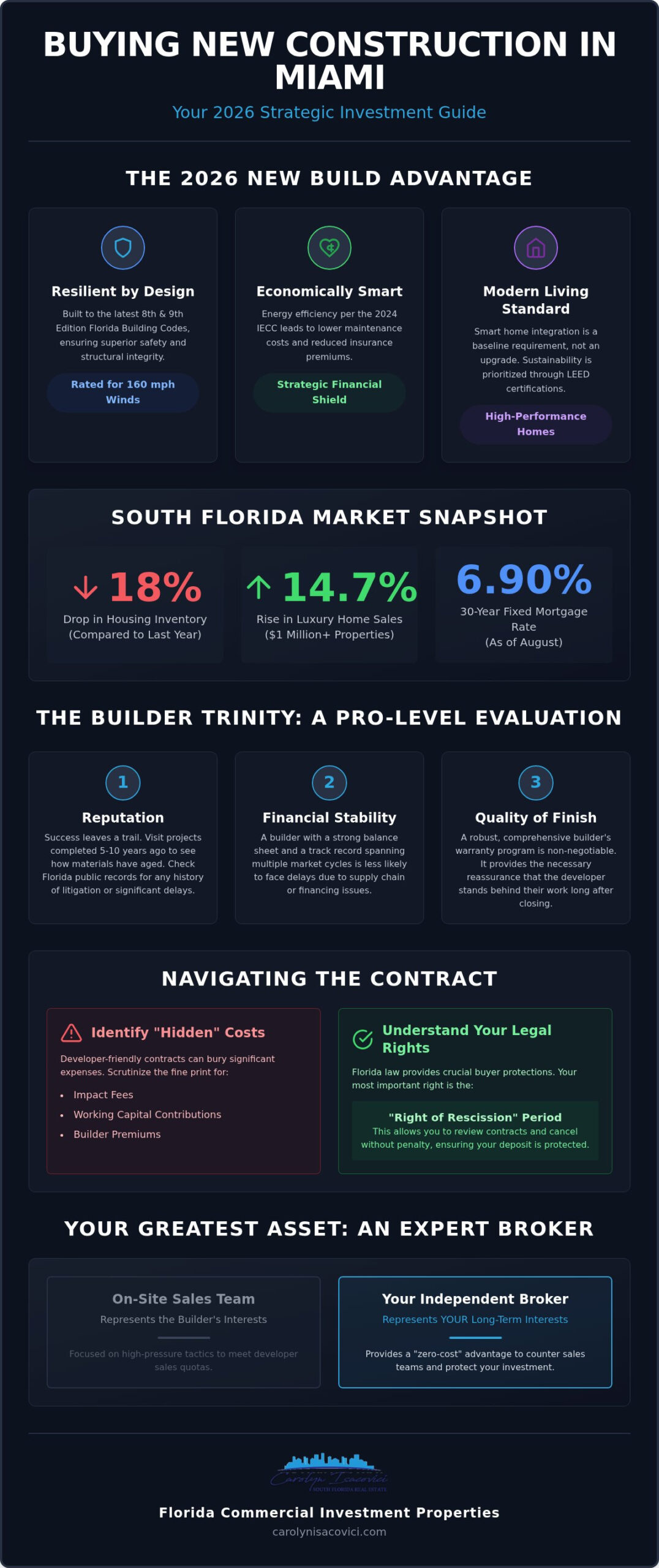
Miami’s urban footprint is expanding vertically and into carefully curated master-planned communities. When we discuss buying new construction home Miami properties in 2026, we aren’t just talking about fresh paint. We’re talking about structures built to the 8th Edition of the Florida Building Code, with an eye toward the even stricter 9th Edition arriving this December. This “New Build Advantage” is tangible. It means energy efficiency that aligns with the 2024 International Energy Conservation Code and hurricane-rated materials designed for 160 mph wind loads. Lower maintenance costs and reduced insurance premiums aren’t just perks; they’re strategic financial shields for your capital.
Why is 2026 a pivotal year? While 30-year fixed mortgage rates sit at 6.90% as of August, the real story is inventory. South Florida housing inventory has dropped 18% compared to last year. This scarcity makes new developments a sanctuary for buyers who are tired of bidding wars over aging assets. However, it’s vital to look past the “shiny object” of a designer model home. We help you evaluate the underlying investment value, ensuring the floor plan and location support long term appreciation rather than just short term aesthetic appeal. It’s about finding the intersection of lifestyle and equity.
The Appeal of Modern Florida Architecture
Miami developers are setting a global standard for contemporary design. In 2026, smart home integration is a baseline requirement, not an optional upgrade. You’ll find properties that prioritize sustainability through LEED certifications. This is a significant draw for the luxury market, where sales of $1 million-plus homes rose by 14.7% this year. These homes utilize high-performance glass and open-concept layouts to balance Miami’s tropical climate with sophisticated, indoor-outdoor living spaces.
Inventory vs. Demand in South Florida
Waterfront land in Miami Beach and Fort Lauderdale is a finite resource. This geographic reality creates a natural floor for property values. As land becomes scarcer, the value of the “new” becomes even more pronounced. Selecting a new build today is a move to secure a piece of a market that’s running out of room to grow outward. In Miami-Dade, the current absorption rate for new residential units reflects a market where demand consistently outpaces the delivery of finished inventory.
How to Evaluate Builders and Communities Like a Pro
How do you separate a glossy marketing brochure from a true architectural masterpiece? It begins with what we call the Builder Trinity: reputation, financial stability, and quality of finish. When buying new construction home Miami residences, many buyers are captivated by the renderings. However, the developer’s history is the true foundation of your investment. A builder with a strong balance sheet is less likely to face delays due to supply chain shifts or financing hiccups. We look for a track record that spans multiple market cycles, ensuring they have the resilience to see a project through to completion.
It’s also essential to distinguish between different builder categories. Tract builders operate on a large scale, offering standardized plans and efficient timelines. Spec homes are built by developers on a speculative basis, often featuring high-end finishes designed to appeal to a broad luxury market. Custom developments provide the highest level of personalization but require a more intensive oversight process. Beyond the four walls of the house, the community amenities are equally vital. In 2026, the value of a property is tied directly to its surroundings. Resort-style clubhouses, integrated green spaces, and well-managed HOAs aren’t just lifestyle perks; they’re the infrastructure that protects your property’s resale appeal in the years to come.
Vetting the Developer’s Portfolio
Success leaves a trail. We encourage our clients to go beyond the sales center and visit projects the builder completed five or ten years ago. This allows you to see how the materials have aged and how the community has matured. Check Florida public records for any history of construction defect litigation or significant delays. A robust builder’s warranty program is also non-negotiable. It provides the necessary reassurance that the developer stands behind their work long after the final walkthrough is finished.
Choosing the Right Miami Neighborhood
Miami-Dade and Broward counties offer a diverse mix of established enclaves and emerging hotspots. While an established neighborhood offers predictable stability, emerging areas often provide a higher ceiling for property appreciation. Analyze local infrastructure plans, such as new transit extensions or school district upgrades, to gauge long-term ROI. For buyers expanding their search northward, our curated roundup of new construction homes in Broward County highlights the most promising 2026 communities with strong appreciation potential. For those focusing on the financial metrics of their purchase, you can learn how to evaluate investment property Florida assets to ensure the numbers align with your goals. If you’re looking for a partner to help filter the noise, connecting with a Miami real estate advisor is a smart first step toward a confident purchase.
The Step-by-Step Process of Buying Pre-Construction
Precision is the key to a stress-free purchase. When you’re buying new construction home Miami properties, the journey begins long before the first shovel hits the dirt. The process starts with a Reservation Agreement, which is essentially a “hold” on your specific unit. This is followed by the Purchase and Sale Agreement (PSA), a comprehensive document that outlines the developer’s obligations and your rights. Unlike a standard resale contract, the PSA is a developer-drafted document, which makes professional review vital to your success.
The financial roadmap is defined by specific deposit milestones. While every project varies, a common structure includes:
- 10% at Reservation: Secures your intent and unit choice.
- 10% at Contract: Paid when the developer executes the PSA.
- 10% at Groundbreaking: Paid when the foundation work begins.
- 10% at Topping Out: Paid when the building reaches its highest structural point.
- Final Balance at Closing: Typically the remaining 50-60%, paid upon delivery.
Once the structure is underway, you’ll visit the Design Center. This is where your vision comes to life through the selection of cabinetry, flooring, and fixtures. We recommend focusing on timeless finishes that support long-term resale value rather than fleeting trends. Finally, the process concludes with the issuance of the Certificate of Occupancy and your final walkthrough, ensuring every detail meets the agreed-upon standards.
Mastering the Pre-Construction Timeline
Expectations must meet reality. A typical high-rise can take two to four years from groundbreaking to completion. To protect your interests, we look for the “outside date” in your contract, which is the drop-dead date by which the developer must deliver the unit or allow you to exit the deal. Under Florida law, buyers of new residential condominiums have a 15-day rescission period to review all documents and cancel the contract for any reason without penalty.
The Crucial Final Walkthrough
Don’t let the excitement of a new home cloud your judgment. A third-party inspector is non-negotiable, as they have the expertise to spot structural or mechanical issues that aren’t visible to the naked eye. We help you create a detailed punch list of cosmetic and functional items that the builder must address before you sign the final papers. It’s also critical to verify that all municipal permits are officially closed, ensuring your investment is legally sound from day one.
Navigating Contracts, Inspections, and Builder Incentives
Standard residential contracts in Florida, known as FAR/BAR, are designed to be balanced between buyer and seller. Developer contracts are different. They’re written by the builder’s legal team to prioritize the project’s completion and the developer’s protection. This shift in perspective can be jarring if you aren’t prepared. When you’re buying new construction home Miami residences, you’ll encounter “hidden” costs that don’t exist in the resale market. For instance, Miami-Dade mobility fees for a single-family residence can range from $9,275 to $10,625 depending on the zone; plus a 2% administrative fee. There’s also a school impact fee of $612 per unit plus $0.918 per gross square foot. These are often passed directly to the buyer at closing.
Is the price actually fixed? Many sales agents will tell you that prices are non-negotiable. While the base price might be firm, the total value of the deal is often flexible. We focus on strategic negotiation, looking for credits toward closing costs or premium design upgrades. In the 2026 market, builders are often more willing to offer “soft” concessions that don’t lower the recorded sales price but significantly reduce your out-of-pocket expenses. This approach transforms a rigid transaction into a genuine opportunity for value. For a deeper look at how to identify the best new development homes Miami has to offer and position yourself ahead of the competition, our 2026 Strategic Buyer’s Guide provides the comprehensive framework you need.
Decoding Developer Contracts
Escalation clauses are a critical point of focus. These allow builders to increase the purchase price if material costs spike during construction. We work to cap these increases or eliminate them entirely. Another vital factor is assignability. Can you sell your right to purchase before the building is finished? This is a key strategy for many, and you can explore this further in our 2026 Investor’s Guide to New Construction. Understanding these clauses ensures you aren’t caught off guard by changing market conditions.
Maximizing Your Financial Position
Builders frequently offer incentives to use their affiliated lenders. These “preferred lender” credits can be substantial, sometimes covering 2% to 3% of the purchase price. However, don’t sacrifice a competitive interest rate for a one-time credit. Always compare these offers against independent financing. Additionally, new Florida residents should prepare for the tax implications. While the Save Our Homes cap provides long-term protection, your initial property tax bill will be based on the fully assessed value of the new structure. If you need a Miami real estate expert to review these contract nuances with you, we’re here to help.
Why an Expert Broker is Your Greatest Asset in New Development
Why would you enter a high-stakes negotiation without an advocate in your corner? Many buyers assume that walking into a sales center solo will net them a better deal. It’s a common misconception. The reality is that the friendly agent behind the desk represents the developer’s interests, not yours. When buying new construction home Miami properties, having an independent broker is your greatest strategic advantage. The best part? It’s a “zero-cost” benefit. The developer has already factored the commission into their marketing budget, meaning you receive professional guidance without any additional out-of-pocket expense.
Independent representation provides a “calm expert” to counter the high-pressure environment of a luxury sales gallery. We’ve seen various market cycles and remain unruffled by developer tactics. This perspective allows us to focus on the “inside track.” We often have access to pre-launch pricing and off-market inventory that isn’t visible to the general public. Transitioning from a curious buyer to a long-term property owner requires a partner who understands both the residential allure and the commercial metrics of the South Florida market. We’re here to ensure your capital is working as hard as possible.
The Value of Objective Advice
A developer’s job is to sell their specific building. Our job is to compare all available options across Miami-Dade and Broward counties to find the one that fits your lifestyle and financial goals. We provide a neutral analysis of different builders, comparing their past performance and current financial health. A 12 to 24 month build cycle is an emotional journey; we act as your steady hand through the highs of groundbreaking and the logistical hurdles of construction. We review every contract with an eye for your specific investment objectives, ensuring the deal remains as attractive at closing as it was at the initial reservation.
Your Next Steps in Miami Real Estate
Timing is everything in new development. If you’re ready to see these communities in person, we can coordinate site tours that give you a true sense of the project’s scale and quality. One critical rule to remember: you must register your broker during your very first visit to a community sales center. This ensures your right to independent representation is protected throughout the transaction. Ready to explore the possibilities of the 2026 market? Contact Carolyn Isacovici today to start your new construction journey with a partner you can trust.
Taking Your Next Step Toward a Miami New Build
The path to buying new construction home Miami properties is filled with opportunity for those who move with intention and expert guidance. We’ve explored how to vet developer portfolios, navigate the intricacies of pre-construction contracts, and leverage builder incentives to your advantage. By looking past the initial aesthetic appeal to the underlying investment metrics, you ensure that your new home is a foundation for long term wealth. The 2026 market favors the prepared, and you now have the roadmap to navigate it with confidence.
Success in the South Florida market requires more than just a search; it demands a strategist. Since 2006, Carolyn Isacovici has provided strategic advisory for high-value asset acquisitions across Miami, Fort Lauderdale, and the Palm Beaches. With deep expertise in both residential and commercial brokerage, she offers the insight necessary to secure your future in this evolving landscape. Are you ready to transform market uncertainty into a clear competitive advantage? Secure your Miami new construction strategy with Carolyn Isacovici today. Your vision for a modern Florida lifestyle is within reach, and we’re honored to lead the way.
Frequently Asked Questions
Is it cheaper to buy a new construction home or a resale in Miami?
Generally, the initial purchase price for new construction is higher per square foot than a resale. However, the long term ownership costs are often significantly lower. New builds feature modern energy efficient systems and hurricane rated materials that reduce monthly utility bills and insurance premiums. While a resale might have a lower sticker price, the cost of updating older systems can quickly bridge that financial gap.
Do I need a Realtor if I am buying directly from a builder in Florida?
Yes, you absolutely should have independent representation. The sales agent in the developer’s office works exclusively for the builder, not for you. Having a broker ensures that someone is looking out for your interests during contract negotiations and inspections. Since the developer pays the commission, you receive professional advisory at no additional cost when buying new construction home Miami properties.
What are the hidden costs of buying a new build in Miami-Dade County?
Buyers must account for impact fees and developer fees that are often passed down at closing. In Miami-Dade, mobility fees for single family homes can range from $9,275 to $10,625 plus administrative charges. You’ll also encounter school impact fees and working capital contributions to the HOA. These “soft costs” can add several percentage points to your final closing statement if they aren’t identified early.
How long does it typically take to finish a new construction home in Miami?
The timeline depends on the project’s complexity. A single family home typically takes 12 to 24 months from groundbreaking to completion, while high rise condominiums can take up to four years. We always check the “outside date” in your contract. This clause protects you by setting a definitive deadline for the developer to deliver the unit or return your deposit.
Can I negotiate the price of a new construction home with a developer?
While builders rarely lower the base price to protect appraisals for other buyers, they’re often flexible with incentives. You can frequently negotiate for design center credits, upgrades, or contributions toward your closing costs. In the 2026 market, these concessions are common tools that developers use to move inventory without officially reducing the recorded sales price of the community.
What happens if my new construction home is delayed beyond the contract date?
Your contract should outline specific remedies for construction delays. Most agreements include a grace period for “force majeure” events like extreme weather. However, if the builder misses the final “outside date” specified in the contract, you usually have the right to cancel and receive a full refund. It’s vital to have an expert review these clauses before you sign the agreement.
Are new construction homes in Miami built to withstand hurricanes?
Yes, they are built to some of the toughest standards in the world. Projects currently follow the 8th Edition of the Florida Building Code, with the 9th Edition taking effect in late 2026. These regulations require impact resistant glass and structural reinforcements designed for wind speeds of 160 mph. This level of protection is a primary reason why buying new construction home Miami residences is a smart safety move.
What is the 15-day right of rescission for new condos in Florida?
Florida law provides a mandatory 15 day “cooling off” period for buyers of new residential condominiums. This window begins once you’ve received the formal prospectus and all required disclosure documents. During these 15 days, you can cancel the contract for any reason and get your deposit back. It’s a critical safety net that allows you to perform final due diligence without financial risk.