Is it possible to find a high-yield asset in Miami or Fort Lauderdale without competing against a wave of institutional buyers? Many investors worry they’ve missed the boat or that rising insurance premiums will erode their ROI. It’s a common concern. However, 2026 presents a unique landscape where strategic timing is your greatest ally. Finding the best time to buy investment property in Florida isn’t about luck; it’s about understanding the rhythmic shifts of a market currently balancing 6.95% mortgage rates with an influx of new inventory.
You might feel uncertain about interest rate shifts or the new mandatory condo reserve requirements. We understand. This guide will clarify those complexities and show you exactly how to capitalize on the 2% to 4% seasonal price dips typically seen between December and January. We’ll explore the specific economic indicators defining 2026, from the repeal of commercial lease taxes to the “tax shock” resets on resale. By the end, you’ll have a clear roadmap to secure a prime property before the next major market surge.
Key Takeaways
- Identify the “secret” summer window in July and August when reduced competition allows for more aggressive negotiations and better entry prices.
- Learn how to time your purchase with the 2026 insurance renewal cycle to ensure your operating costs are fully vetted before closing.
- Determine the best time to buy investment property in Florida by contrasting residential rental rushes with commercial fiscal cycles for maximum strategic advantage.
- Discover how to leverage the late-fall inventory surge to secure high-yield assets in Miami and Fort Lauderdale before the holiday slowdown.
- Master a two-step execution strategy that aligns your 2026 hold objectives with the most favorable economic indicators and buying windows.
Decoding the 2026 Florida Investment Window
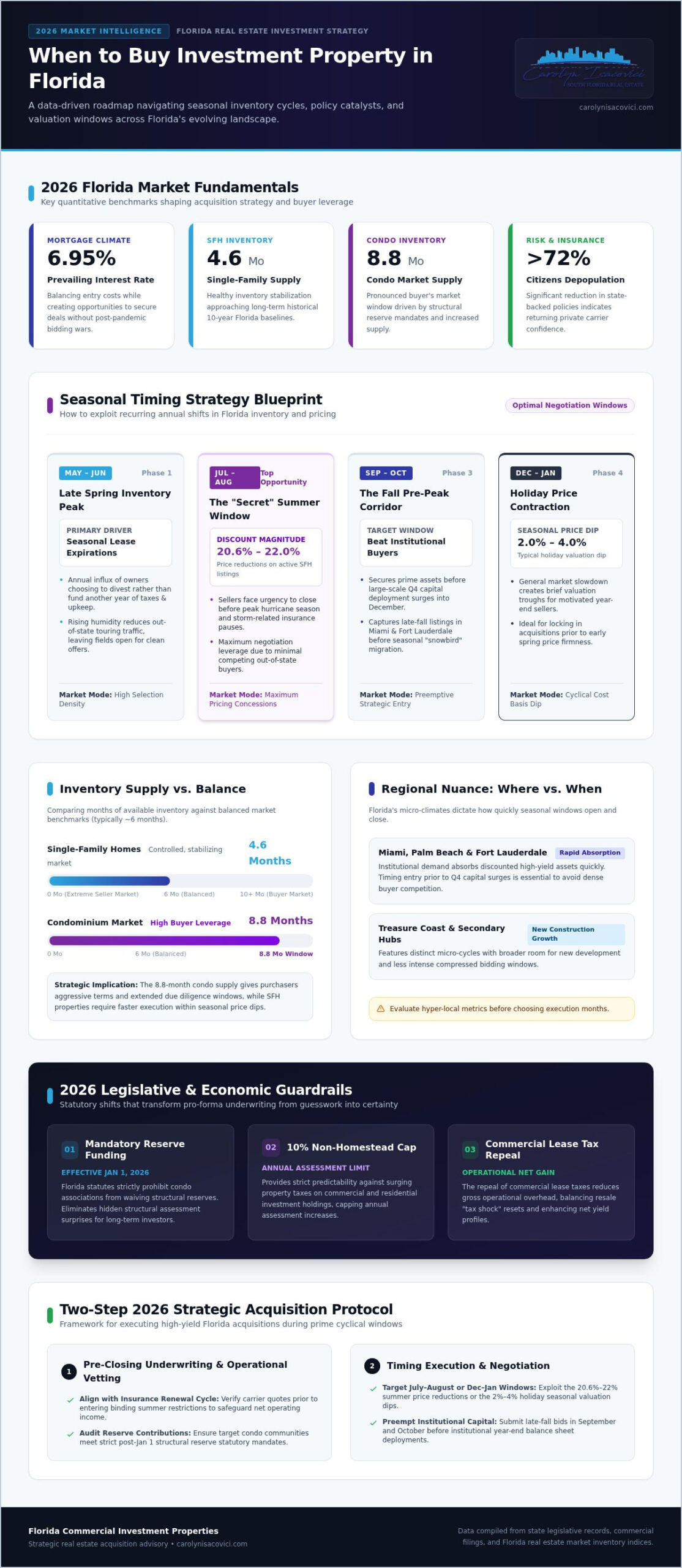
Why does timing the Florida market feel so distinct from the rest of the country? It’s because our state operates on a different rhythm. While national headlines might focus on broad cooling trends, the economy of Florida remains fueled by steady migration and business-friendly policies that keep demand resilient. In 2026, we’ve entered a phase of healthy stabilization. Inventory for single-family homes has reached a 4.6-month supply, while the condo market shows an even more pronounced 8.8-month supply. This creates a rare window for identifying the best time to buy investment property in Florida, as buyers finally have the leverage that was missing during the frantic post-pandemic years.
Is 2026 the year to act? We believe so. The current cycle isn’t defined by the volatility of the past; instead, it’s shaped by a calm market where informed investors can find value without the pressure of bidding wars. Our state remains a net-gain destination for residents, and that sustained demand provides a reassuring floor for property values even as inventory levels return to their historical 10-year averages.
Why 2026 is a Unique Year for Investors
This year marks a significant shift in the Florida landscape. By January 1, 2026, new regulations regarding condominium reserve funding became strictly mandatory, prohibiting associations from waiving structural reserves. This change, combined with the 10% annual assessment cap on non-homestead property taxes, provides a level of financial predictability we haven’t seen in years. When you’re looking for the best time to buy investment property in Florida, these legislative guardrails are your best friend. They transform the guessing game of ownership costs into a manageable pro-forma. The stabilization of the insurance market, with Citizens Property Insurance reducing its policy count by over 72%, signals a return to private carrier confidence that protects your long-term ROI.
The ‘When vs. Where’ Dilemma
Does a deal in Miami look the same as one on the Treasure Coast? Not exactly. In high-demand hubs like Miami and Palm Beach, timing your entry is critical because these markets absorb inventory faster than secondary locations. However, the 2026 market shows us that where you buy is often dictated by when you’re ready to move. For instance, the Treasure Coast offers a different micro-cycle with more room for new construction growth. Before committing to a specific zip code, you should master the art of evaluating investment property metrics to ensure the numbers align with your 2026 goals. Whether you’re targeting a high-density multifamily site or a single-family asset, understanding these regional nuances is the key to a successful acquisition.
Seasonal Strategy: The Best Months to Secure Florida Real Estate
Why do so many investors wait until the winter months to search for assets? They’re often following the seasonal migration of “snowbirds,” which inadvertently drives up competition and list prices. If you want to find the best time to buy investment property in Florida, you have to look toward the heat of the summer. July and August are often the “secret” months for savvy buyers. During this time, active single-family listings frequently see price reductions of 20.6% to 22% as sellers hope to close before the peak of hurricane season. While binding restrictions can occasionally pause insurance updates during active storms, this window provides a unique negotiation leverage that disappears once the cooler weather returns.
The Late Spring/Early Summer Sweet Spot
May and June represent a significant inventory peak that every strategist should watch. As seasonal rental agreements expire, many owners decide it’s time to divest rather than prepare for another year of maintenance and taxes. This creates a surge of motivated sellers. You can use the local climate to your tactical advantage; fewer out-of-state buyers are willing to tour properties in the Florida humidity, leaving the field open for you to negotiate better terms without a bidding war. Historical data from the Federal Reserve Bank of St. Louis House Price Index for Florida highlights how valuation cycles fluctuate, and entering during these quieter months often leads to a more favorable cost basis for your portfolio.
The Fall Pre-Peak Window
What happens if you wait until the very end of the year? You might run into the Q4 institutional surge. Large-scale firms often look to deploy remaining capital before December 31, which can crowd out individual investors and firm up pricing. Instead, targeting September and October allows you to beat that rush. This period is the “calm before the storm” for the best time to buy investment property in Florida, as it’s ideal for securing a property and getting it tenant-ready before the high-yield winter rental season begins. By closing in early fall, you’re perfectly positioned to capture peak rates from January through April. If you’re ready to explore these specific windows, our team can help you identify high-yield investment property sales that align with your strategic timing.
Economic Catalysts: Timing Your Entry Around 2026 Market Indicators
Timing your entry into the market isn’t just about watching the calendar; it’s about reading the economic engines driving South Florida’s growth. Corporate relocations to Miami and Broward continue to reshape demand, turning what used to be quiet residential pockets into high-stakes investment zones. When is the best time to buy investment property in Florida? It’s often when these wealth migration indicators align with local infrastructure milestones, such as new transit hubs or commercial expansions. Tracking these shifts allows you to enter a neighborhood with a strategic advantage, securing assets before the surrounding area’s value fully reflects its new potential.
Monitoring the 2026 Interest Rate Environment
Are you waiting for rates to drop before making your move? This “wait and see” approach can often be a trap. While 30-year fixed rates have stabilized near 6.95% in late 2026, waiting for the absolute bottom often results in missing out on the most desirable inventory. Many savvy investors are instead turning to DSCR loans to secure properties based on their cash-flow potential rather than personal income. This flexibility is vital when market conditions shift quickly. As interest rates decline, buyer competition intensifies and property prices invariably climb higher. By acting now, you lock in today’s price and maintain the option to refinance when the cycle favors it.
The Impact of Florida Insurance Reforms
Timing your entry around the insurance renewal cycle is another masterstroke for the modern investor. Performing your due diligence in the second quarter (Q2) is particularly effective for long-term ROI. This allows you to inspect roofs and implement wind mitigation features before the June 1st start of hurricane season, ensuring your property is fully insurable and protected. Research from the University of Florida’s Shimberg Center for Housing Studies suggests that household migration remains incredibly strong in inland and lower-risk zones. Locations like Palm City or Stuart offer a compelling balance of reduced risk and high tenant demand. Buying in these areas during the spring allows you to finalize your insurance underwriting with a private carrier before the peak storm window, providing a sense of security and predictable operating costs for the year ahead.
Timing by Asset Class: When to Buy Commercial vs. Residential
Does a retail storefront follow the same seasonal rules as a single-family home? Not quite. While we’ve discussed general seasonal dips, the best time to buy investment property in Florida often depends on the specific asset class you’re targeting. Residential investors often aim to close by July or August to capture the massive move-in rush that occurs before the school year and the fall business cycle begin. This ensures your property is occupied during the highest demand period, maximizing your initial cash flow. In contrast, commercial assets move to a corporate beat, where fiscal year planning and tax considerations drive seller behavior. Understanding the nuances between these sectors is essential for a balanced portfolio, and you can explore this further in our Commercial vs Residential Strategic Comparison.
Commercial Property Timing in South Florida
Q1 is frequently the most opportunistic window for commercial acquisitions. Many business owners and institutional sellers re-evaluate their portfolios at the start of the fiscal year, leading to a higher volume of motivated listings in January and February. This is a time of transition. Decisions made in boardrooms during December often result in properties hitting the market in early January. In major hubs like Miami and Fort Lauderdale, tracking lease expirations can reveal when a property might be ripe for a value-add play or a repositioning strategy. Keeping a close eye on Miami real estate market trends will help you spot these commercial openings before they become common knowledge, allowing you to secure a foothold in prime corridors.
New Construction and Pre-Construction Windows
Are you considering a fresh build? Timing is everything when dealing with new construction homes in Florida. The “Phase 1” window offers the lowest entry price, but it requires patience as you wait for the 2026 delivery dates. It’s a classic trade-off; you’re trading time for equity growth. Alternatively, the “Closeout” phase occurs when a developer has only a few units left and is eager to move on to the next project. This is when you’re most likely to secure incentives or price adjustments that weren’t available during the initial launch. Developers are often more flexible when they’re ready to break ground on their next venture.
Deciding between a stabilized residential unit and a burgeoning commercial site requires a clear-eyed look at your 2026 goals. Whether you’re chasing immediate occupancy or long-term pre-construction gains, the best time to buy investment property in Florida is when the asset’s cycle matches your capital needs. If you’re ready to find your next high-yield opportunity, contact our expert brokerage team today to start your search.
Strategic Execution: How to Leverage Timing for Maximum ROI
You’ve identified the ideal seasonal windows, but how do you turn that insight into a high-yield asset? Success in 2026 requires more than just knowing the calendar; it demands a methodical approach to execution. The best time to buy investment property in Florida is only profitable if your entry is backed by a clear strategy. First, you must define your 2026 exit or hold objectives. Are you targeting the high-density multifamily conversions supported by the Live Local Act 4.0, or are you seeking stabilized residential units for the winter rental rush? Once your goals are set, you can align your search with the summer and fall inventory windows we’ve discussed, ensuring you’re ready to act when motivated sellers emerge.
Execution also means conducting deep due diligence on Florida-specific risks. You’ll need to account for the January 1 tax assessment reset and the mandatory condo reserve deadlines that define the current cycle. To navigate these complexities, it’s vital to partner with a professional who understands strategic portfolio building. This collaboration ensures that your timing isn’t just lucky, but mathematically sound.
Building a Proactive Buying Calendar
How do you stay ahead of the competition? You build a calendar that anticipates market shifts. We recommend setting up alerts for “Days on Market” (DOM) spikes specifically during Q3. When properties sit longer in July and August, your negotiation leverage increases significantly. However, to capitalize on these windows, you must be prepared early. Being pre-approved by Q1 is critical; it gives you the flexibility to move quickly during the spring inventory surge or the summer lull. Florida Commercial Investment Properties identifies off-market timing opportunities by monitoring local zoning changes and distressed asset indicators before they reach public platforms.
The Role of a Specialized Florida Broker
Why is a local guide essential? The Florida market is a collection of distinct micro-cycles that generalists often miss. Carolyn Isacovici navigates these nuances for both institutional and individual investors, providing a steady hand through complex negotiations. By working with a specialist, you gain access to “pocket listings” that don’t follow the public seasonal cycle, offering a path to high-yield acquisitions without the noise of a bidding war. Ultimately, the best time to buy investment property in Florida is the moment you have the right data and a trusted partner by your side. With a clear plan and expert guidance, you can transform 2026 market volatility into your greatest strategic advantage.
Seize Your 2026 Strategic Advantage
Are you ready to transform market uncertainty into a clear path for growth? We’ve explored how the summer inventory surge and the Q1 commercial fiscal shifts create specific windows of opportunity for the prepared investor. By aligning your search with these seasonal rhythms and economic indicators, you’re not just buying real estate; you’re securing a future-proof asset with a calculated entry point. Finding the best time to buy investment property in Florida requires a blend of data-driven timing and local expertise that only comes from years of navigating these unique coastal cycles.
Since 2006, Florida Commercial Investment Properties has specialized in the South Florida and Treasure Coast markets, providing an advisory-led approach to both commercial and residential asset classes. Whether you’re looking for a high-yield retail space or a new construction residential holding, we’re here to ensure your ROI is maximized at every turn. You don’t have to navigate this evolving landscape alone. Ready to find your next high-yield asset? Contact Florida Commercial Investment Properties today. We look forward to helping you build a portfolio that thrives in 2026 and beyond.
Frequently Asked Questions
What is the historically cheapest month to buy a house in Florida?
December and January are historically the most affordable months to secure a property. Sellers are often motivated to close before the tax year resets on January 1, and there is less competition from seasonal buyers during the holidays. This window provides a significant advantage for those looking for the best time to buy investment property in Florida before the busy spring market begins to drive prices upward.
Is 2026 a good year to invest in Florida real estate?
Yes, 2026 represents a milestone year for strategic acquisitions as the market shifts toward stabilization. With residential inventory reaching a balanced 4.6 month supply and the condo market offering even more leverage, buyers have regained the upper hand. The implementation of the Live Local Act 4.0 and new insurance legislative guardrails provide a level of financial predictability that makes this an ideal time for securing long-term assets.
How does hurricane season affect Florida real estate prices?
Hurricane season, which runs from June through November, often creates a unique buying window in late summer. As out-of-state interest cools due to the heat and weather concerns, active listings in areas like Hollywood and Fort Lauderdale frequently see price reductions. Savvy investors use this period to negotiate better terms, though it’s essential to finalize insurance underwriting before the peak storm window triggers temporary binding restrictions.
Should I wait for interest rates to drop before buying in Miami?
Waiting for the absolute bottom of interest rate cycles is often a costly strategy that leads to missed opportunities. As rates decline, buyer competition typically intensifies, which can drive property prices higher and erase any potential savings on your monthly payments. Many investors in Miami and Palm Beach choose to lock in current prices now and utilize DSCR loans, maintaining the flexibility to refinance once the market shifts.
What is the ‘Snowbird’ effect on the Florida housing market?
The “Snowbird” effect refers to the influx of seasonal residents who arrive between January and April, significantly increasing competition for available inventory. This surge in demand often leads to firmer asking prices and faster transaction speeds across South Florida. If you want the best time to buy investment property in Florida, it’s often better to target the late fall or mid-summer months to avoid competing with this seasonal wave.
Is it better to buy new construction or existing homes for investment in 2026?
The choice depends on your timeline and cash flow goals. New construction homes in Florida offer modern building codes and lower maintenance costs, which are ideal for long-term holds. Existing homes, however, often provide immediate occupancy and established rental history. In 2026, the elevated condo inventory makes existing units in older towers a compelling value-add opportunity for investors who are prepared to navigate the new mandatory reserve requirements.
How do I calculate the best time for a 1031 exchange in Florida?
Timing a 1031 exchange requires aligning your sale with the seasonal inventory peaks in late spring or early fall. Since you have exactly 45 days to identify a replacement property, starting your search during high-inventory months like May or October increases your chances of finding a quality asset. Our team assists investors in navigating these strict timelines to ensure a seamless transition between holdings without triggering unnecessary capital gains taxes.
Does the location change the best time to buy?
Yes, local micro-cycles vary significantly across the state. Miami and Fort Lauderdale are high-velocity markets where inventory moves quickly year-round. In contrast, areas like Stuart and Palm City may see more pronounced seasonal shifts tied to local tourism and lifestyle patterns. Understanding these regional nuances is essential for success. We focus on high-value holdings from the Treasure Coast down to Miami to help you identify the precise entry point for each market.
Leave a Reply