
When evaluating an apartment building for sale Fort Lauderdale buyers should look beyond a polished listing and check whether rents are documented, expenses are complete, and building systems have been maintained. A listing is a starting point, not proof of a property’s performance.
Location and potential income matter, but a careful purchase also depends on verifying the building’s operating records, physical condition, and costs or risks that may not be obvious at first glance.
This guide explains how to review income and expenses, investigate flood exposure, insurance, maintenance needs, and zoning, and organize property documents as due diligence progresses. The goal is to help you compare opportunities using property-specific information, identify questions that need professional review, and make a more informed decision.
Key Takeaways
- Set clear criteria for an apartment building for sale Fort Lauderdale, including preferred unit mix, building condition, and how involved you can be in management.
- Check advertised income against leases, rent records, collections, and vacancy history before assessing performance.
- Separate routine operating costs from repairs and larger capital needs to build a fuller picture of the property.
- Investigate flood exposure, insurance terms, and zoning using current, property-specific information and appropriate professionals.
- Use a step-by-step due-diligence process, and consider how a Florida real estate broker can help organize your search and transaction.
Finding an Apartment Building for Sale in Fort Lauderdale: Start With Your Investment Criteria
A listing is a starting point, not a complete investment picture. Before comparing asking prices or projected income, decide what you want the property to do and how much operational involvement fits your plans. Clear criteria help you focus on relevant opportunities and recognize when a building’s day-to-day demands don’t match your expectations.
An apartment building differs from a single-family rental, where management centers on one household, and from a larger multifamily asset, which may involve more units, shared spaces, and operational coordination. There’s no single unit-count boundary that defines the right fit. Compare layout, tenant mix, common areas, and staffing needs alongside the building’s scale. For broader acquisition context, see this Florida commercial real estate investor guide, and review general real estate investing principles as you shape your approach.
Which Fort Lauderdale apartment building fits your investment goals?
Start by weighing three priorities: established operations, renovation potential, or longer-term ownership. Each calls for a different level of review. A renovation opportunity may require closer attention to the work needed and its effect on operations. For an occupied building, examine the leases and ask how current management handles day-to-day needs.
Be realistic about who will handle tenant communication, routine decisions, and maintenance coordination. If you plan to manage directly, consider whether the layout and common areas are practical for you to oversee. If you expect to use professional management, identify that need early and include it in your evaluation. Unit mix also matters: a range of apartment sizes may bring different tenant needs and turnover patterns than a building with more uniform units.
How to narrow a Fort Lauderdale property search
Turn your goals into filters you can apply consistently. Record preferred locations, acceptable building condition, target unit mix, tenant profile, and the documents you expect to review. Research each property and its surroundings rather than assuming demand or neighborhood character is uniform across Fort Lauderdale.
For buyers searching “apartment building for sale Fort Lauderdale,” confirm listing status and details before relying on them. Availability changes, and online descriptions may not include the full picture of a building’s condition, leases, or operating history. A Florida-market real estate broker can help organize your criteria and identify relevant opportunities. Property-specific claims still need to be checked against records and further review. A clear shortlist gives you a practical starting point for evaluating the finances and physical condition.
Evaluate Fort Lauderdale Apartment-Building Income, Expenses, and Physical Condition
Treat a listing’s income figure as a claim to verify, not a substitute for the records behind it. Compare advertised rent with the rent roll, signed leases, payment and collection history, and vacancy records. Check that listed rents match lease terms, and ask how the seller calculated occupancy and accounted for vacant units, discounts, or missed payments. A difference isn’t automatically a deal-breaker, but ask for an explanation and supporting documents before relying on projected income.
What financial records should buyers request?
Request available rent rolls, leases, operating statements, utility records, and maintenance history. Check the period each record covers, then look for gaps, unusual changes, or expenses that appear to be missing. For broader evaluation methods, consult this Florida investment-property evaluation guide.
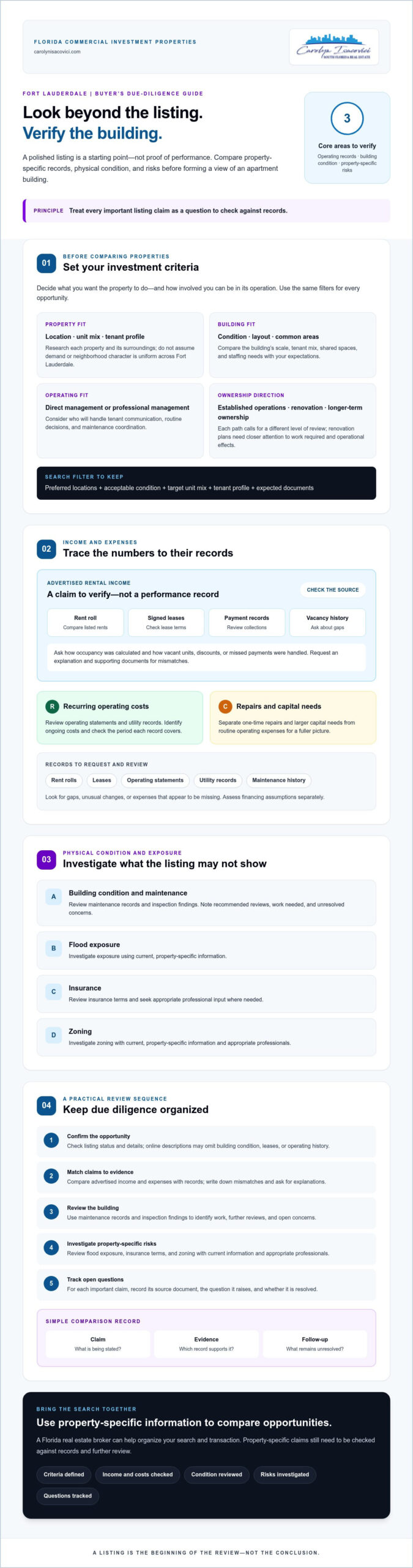
Keep a comparison record for each property. For every important listing claim, note the source document, the question it raises, and whether the issue is resolved. For example:
- Claim: Advertised rental income. Check: Rent roll, leases, and collection records. Follow up: Clarify any mismatch or unexplained vacancy.
- Claim: Operating expenses. Check: Statements and utility records. Follow up: Separate recurring costs from one-time repairs.
- Claim: Building condition. Check: Maintenance records and inspection findings. Follow up: Record recommended reviews and unresolved concerns.
Keep recurring operating expenses separate from repairs and larger capital needs. Assess financing assumptions separately, since terms depend on the buyer and transaction. A listing projection or preliminary calculation doesn’t guarantee a particular return. Base conclusions on verified, property-specific information.
How can a buyer assess building condition?
Arrange appropriate professional inspections and review available records before drawing conclusions about the building. Ask about the roof, plumbing, electrical and structural systems, and deferred maintenance. An inspection can identify areas that need further review, but qualified specialists should answer questions about a system’s condition rather than relying on a listing description.
Water-related history also warrants follow-up. Broward County’s Fort Lauderdale flood zone data can inform initial research, but mapping alone doesn’t establish a particular building’s condition or insurance terms. Review property-specific information and ask appropriate professionals about open questions. When comparing an apartment building for sale Fort Lauderdale, track each finding, the source or specialist needed to address it, and any unresolved item. Buyers refining their investment-property criteria can discuss the search with Florida real estate broker Carolyn Isacovici.
Fort Lauderdale Apartment-Building Risks: Flood Exposure, Insurance, and Zoning
Flood exposure, insurance terms, and permitted use can vary from one property to the next, even within the same area. For an apartment building for sale Fort Lauderdale buyers are considering, verify the parcel itself rather than relying on a neighborhood label or listing summary. Local risk checks apply to the specific parcel, not just its neighborhood.
How to investigate flood exposure and insurance
Start with current official mapping, including the FEMA Flood Map Service Center, and check the map information for the property’s exact location. Treat a flood-zone designation as one research input, not a complete measure of a building’s risk or a substitute for professional advice. FEMA’s Risk Rating 2.0 also considers property characteristics such as elevation and distance from a flooding source, so a map category alone may not determine a particular premium.
Fort Lauderdale’s canals, storm-surge exposure, and changing flood conditions make property-specific review useful. Ask for available disclosures and records relating to water intrusion, flood damage, and storm-related repairs. If records are incomplete or an answer is unclear, note the gap and seek appropriate follow-up rather than assuming there’s no issue.
Request insurance information directly from qualified providers. Ask them to assess the specific building and explain available coverage, exclusions, deductibles, and requirements. Terms and availability vary by property, so confirm coverage details before relying on assumptions in your evaluation.
Where to check Fort Lauderdale property and zoning information
Use Broward County Property Appraiser records to review parcel details, then confirm relevant information independently. Contact the City of Fort Lauderdale with questions about zoning, building records, and the property’s documented history. Online records can guide your research, but may not establish whether a particular use is currently permitted or whether past work received the required approvals.
Before moving forward, clarify the building’s permitted use, review accessible records for additions or renovations, and ask about unresolved notices or open issues. Have qualified local professionals help interpret technical or regulatory questions. Don’t assume the existing use, a prior owner’s description, or a neighboring property establishes what’s allowed for this parcel.
- Flood: Check current mapping, disclosures, and property-specific information.
- Insurance: Obtain terms and requirements directly from qualified providers.
- Zoning and records: Confirm details with the county, city, and relevant professionals.
Keep a record of the source, answer, and follow-up needed for each property. This makes it easier to compare buildings using verified details rather than relying on memory.
A Practical Due-Diligence Checklist for Buying an Apartment Building in Fort Lauderdale
A clear process turns a promising listing into a set of questions you can answer. Use this checklist to organize your research and identify where a qualified professional or public agency should provide guidance. It’s a framework, not a substitute for reviewing the specific transaction, its documents, and applicable deadlines.
What should buyers verify before making an offer?
- Revisit your criteria. Compare the property with your documented goals, preferred level of involvement, and risk tolerance. Decide which trade-offs are acceptable before becoming attached to a listing.
- Confirm the property and listing details. Verify the building’s identity, current listing status, and the accuracy of the information provided. Availability and property details can change, so confirm them directly before relying on a listing.
- Review operating information. Request available leases, rent records, operating statements, and maintenance history. Note missing documents or differences between listing claims and source records, then ask for clarification.
- Identify property-specific concerns. List open questions about physical condition, flood exposure, insurance, zoning, title, and building records. Direct each question to the professional or public agency best placed to address it.
- Arrange appropriate reviews. Coordinate inspections and specialist input based on the building and the questions raised. Record findings, recommended follow-up, and unresolved items before deciding how to proceed.
- Track documents and next steps. Keep a log of each open question, supporting record, responsible person, and follow-up status. Confirm transaction dates and legal requirements with the appropriate professionals, since these depend on the property and transaction.
This sequence can help buyers assess an apartment building for sale Fort Lauderdale without treating assumptions as confirmed facts. Before making an offer, compare what you’ve verified with your original goals. If key records remain unavailable or a material question is unresolved, understand what further review may be needed before proceeding.
Which professionals may support the purchase process?
Each professional has a distinct role. A real estate broker can help organize the property search and sales process. An attorney can advise on legal and title questions, an inspector can assess physical condition, an insurance professional can discuss property-specific coverage, and a lender can explain financing options. Public agencies can answer questions about records within their remit.
Brokerage does not include legal services or mortgage lending. Confirm each professional’s qualifications, scope of work, and engagement terms directly, and clarify who is responsible for each follow-up. Buyers refining their search can discuss their Fort Lauderdale property criteria with Carolyn Isacovici as part of organizing the sales process.
Plan Your Fort Lauderdale Apartment-Building Search With a Florida Real Estate Broker
A focused search starts with clear criteria. A Florida real estate broker can help refine what you’re looking for, identify relevant opportunities, and organize the sales process around your priorities. That guidance can help you compare properties and direct questions to the right people. It can’t guarantee that a particular building will be available or predict a transaction’s outcome.
For an apartment building for sale Fort Lauderdale search, start with your goals, not just a list of listings. Consider what you want the property to do, which building characteristics matter, and which questions still need answers. Carolyn Isacovici specializes in the Florida market and can discuss a buyer’s property criteria.
What information should you prepare before contacting a broker?
You don’t need every detail settled. A concise outline can make the conversation more useful and give the broker a clearer picture of what may fit.
- Target property: Share preferred locations, unit mix, building condition, and any features or constraints that matter to you.
- Investment goals and intended use: Explain whether you’re focused on current operations, renovation potential, or longer-term ownership.
- Timing and decision-makers: Note your general timeframe and who will participate in evaluating opportunities and making decisions.
- Questions and known constraints: Bring questions about available property documents, the sales process, or local research needs. Share known limitations, while leaving financing advice to a lender and legal guidance to an attorney.
Even a short list is a solid start. It helps distinguish essential requirements from preferences and guides discussion about practical next steps.
How to take the next step with confidence
A productive conversation can clarify your criteria, identify information needed to evaluate a property, and outline how to proceed with the search. Listing status and property details still need current verification. Financial, legal, insurance, and building-condition questions may call for other qualified professionals. A broker supports the property search and sales process, but doesn’t replace those specialists.
Bring your Fort Lauderdale target locations, investment goals, and open questions. You can discuss your Fort Lauderdale property search with Carolyn Isacovici and consider how your criteria can shape the next steps. A careful, well-organized search helps you see both the opportunities and the questions still to resolve.
Move Forward With a Clearer Property Search
A thoughtful purchase starts with clear criteria and verified information. As you evaluate an apartment building for sale Fort Lauderdale, compare documented income and expenses with the building’s physical condition. Then investigate flood exposure, insurance, zoning, and records for the specific property. Keep unresolved questions visible and bring in the appropriate professionals before relying on assumptions.
The next step can be straightforward. Florida Commercial Investment Properties provides brokerage for residential, commercial, and investment property sales, with service coverage that includes Fort Lauderdale. Its Florida service coverage also includes Miami, Miami Beach, Hollywood, Palm Beach, Palm Beach Gardens, Stuart, Jupiter, Palm City, Port Saint Lucie, Fort Pierce, Vero Beach, and Melbourne. Confirm current availability and service scope as you plan your search. Carolyn Isacovici can discuss your property criteria and help organize the search and sales process.
Discuss your Fort Lauderdale apartment-building search and clarify which opportunities may fit your goals. With a measured approach and the right information, you can move forward with greater confidence.
Frequently Asked Questions
What should I check before buying an apartment building in Fort Lauderdale?
Compare the property with your investment goals, then verify its income, expenses, leases, vacancy history, and physical condition. Review available maintenance records and arrange appropriate inspections. Check the specific parcel’s flood exposure, insurance information, zoning, and building records with relevant sources and professionals. Keep unanswered questions and supporting documents together so you can assess the building using verified details, not just listing claims.
How do I evaluate the income of an apartment building for sale?
Compare advertised income with the rent roll, signed leases, and collection records. Check vacancy history and clarify any gap between scheduled rent and what tenants actually paid. Review operating statements and utility records to understand recurring expenses, then identify repairs and larger capital needs separately. Keep buyer-specific financing assumptions distinct from property operations. Any projection depends on accurate, property-specific information and shouldn’t be treated as a guaranteed return.
Can I check whether a Fort Lauderdale apartment building is in a flood zone?
Yes. Search the exact property location using current FEMA flood mapping, such as the FEMA Flood Map Service Center, and consult Broward County flood information. Treat maps as one research input, not a complete assessment of a building’s exposure or insurance needs. Review available disclosures and records for prior water intrusion or storm repairs, and ask qualified insurance and property professionals to assess questions specific to the parcel.
What records should I request when buying an apartment building?
Ask for available rent rolls, leases, operating statements, utility records, and maintenance history. Also request accessible building records and disclosures relevant to condition, renovations, water intrusion, or storm-related repairs. Available documents vary by property, so note what’s missing and ask why. Track each listing claim alongside its source document, follow-up question, and status to make comparisons clearer and identify issues that need professional review.
How can I verify zoning for an apartment building in Fort Lauderdale?
Contact the City of Fort Lauderdale to ask about zoning, permitted use, and accessible building records for the specific property. Broward County Property Appraiser records can help confirm parcel details, but they aren’t a definitive zoning determination. Verify the building’s existing use and relevant history with appropriate local sources and qualified professionals, especially if you’re considering a change in use or relying on prior additions or renovations.
Do I need a property inspection before buying an apartment building?
Arrange appropriate professional inspections so the building’s condition can be assessed beyond what a listing or walkthrough reveals. Ask about the roof, plumbing, electrical and structural systems, and deferred maintenance. An inspector may recommend additional specialist review. Record those follow-up items and seek advice from qualified professionals rather than diagnosing concerns remotely. Inspection findings can help you understand the property, but they don’t replace review of records, finances, or other due diligence.
Can a real estate broker help me find an apartment building in Fort Lauderdale?
Yes. A real estate broker can help refine your property criteria, identify relevant opportunities, and organize the sales process. Florida Commercial Investment Properties provides brokerage for commercial, residential, and investment property sales, with service coverage that includes Fort Lauderdale. Confirm current availability and service scope directly. A broker doesn’t replace an attorney, lender, inspector, or insurance professional, and can’t guarantee a particular listing, return, negotiation result, or transaction outcome.