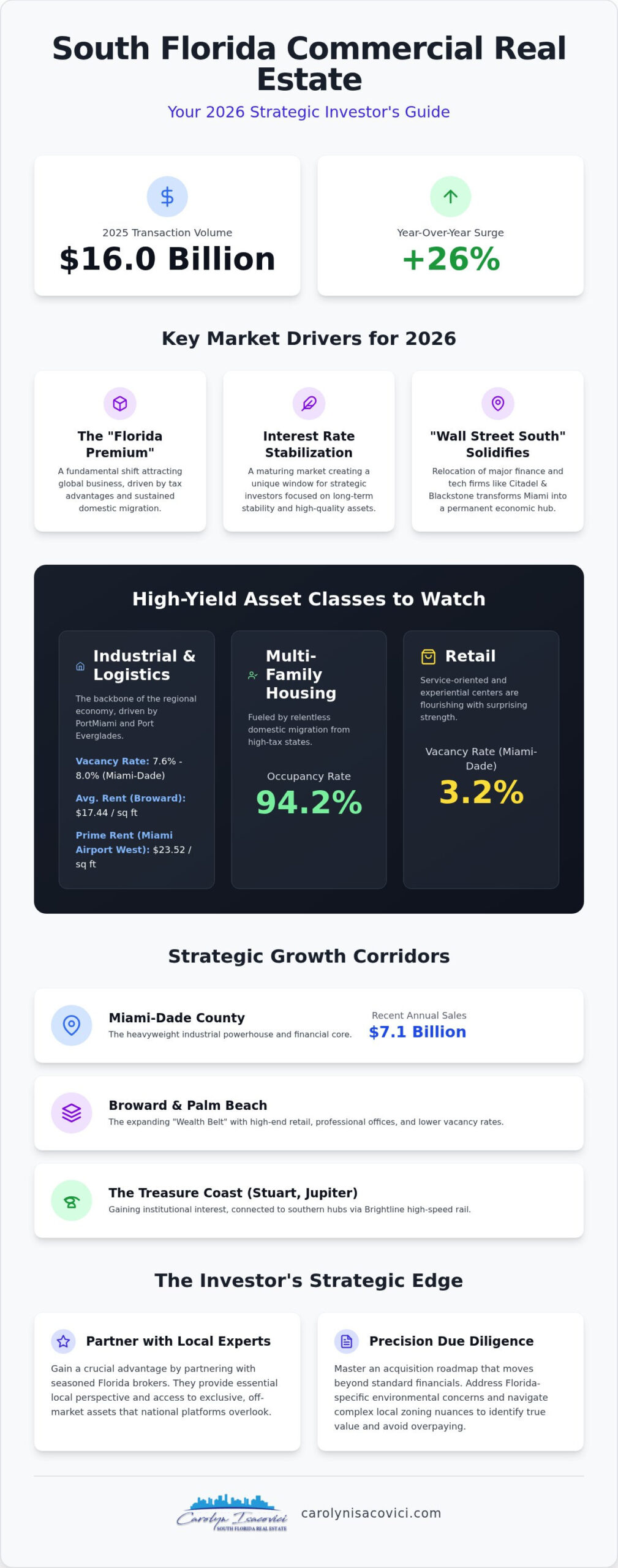
What if the secret to enduring wealth isn’t about timing the market perfectly, but about building a structure that thrives regardless of the cycle? It’s a question many investors are asking as they look at a landscape where median home prices sit at $405,000 and insurance costs remain a primary conversation piece. You likely feel the tension between the desire for high-yield growth and the need for a protective shield against volatility. Successful Florida real estate portfolio building requires more than just capital; it demands a strategic eye that can see the potential in a Miami commercial space just as clearly as a new construction home in Melbourne.
You deserve a strategy that treats diversification as your greatest defense. We’re going to move past the noise of fast-paced due diligence to provide you with a clear, actionable roadmap for 2026. This guide shows you how to scale a diversified property portfolio that balances sustainable cash flow with long-term capital appreciation. We’ll examine the specific geographies showing the most resilience and the exact steps needed to transition from a single asset to a robust, multi-sector collection of properties across the Sunshine State.
Key Takeaways
- Successful Florida real estate portfolio building relies on creating synergy between diverse asset classes; it’s about seeing the big picture rather than an isolated transaction.
- Can you blend high-yield commercial assets with low-maintenance residential anchors? We show you how to create a balanced mix for maximum resilience in any market cycle.
- Scale your holdings with confidence by establishing a clear investment thesis and assembling a localized team of experts to guide your strategic due diligence.
- How do you mitigate the “Florida Premium”? Learn to manage insurance costs and capitalize on zoning shifts in high-growth hubs like Port Saint Lucie and Vero Beach.
- Gain a competitive edge through a dedicated brokerage partner who provides direct entry to exclusive off-market commercial and residential opportunities.
Defining Florida Real Estate Portfolio Building in 2026
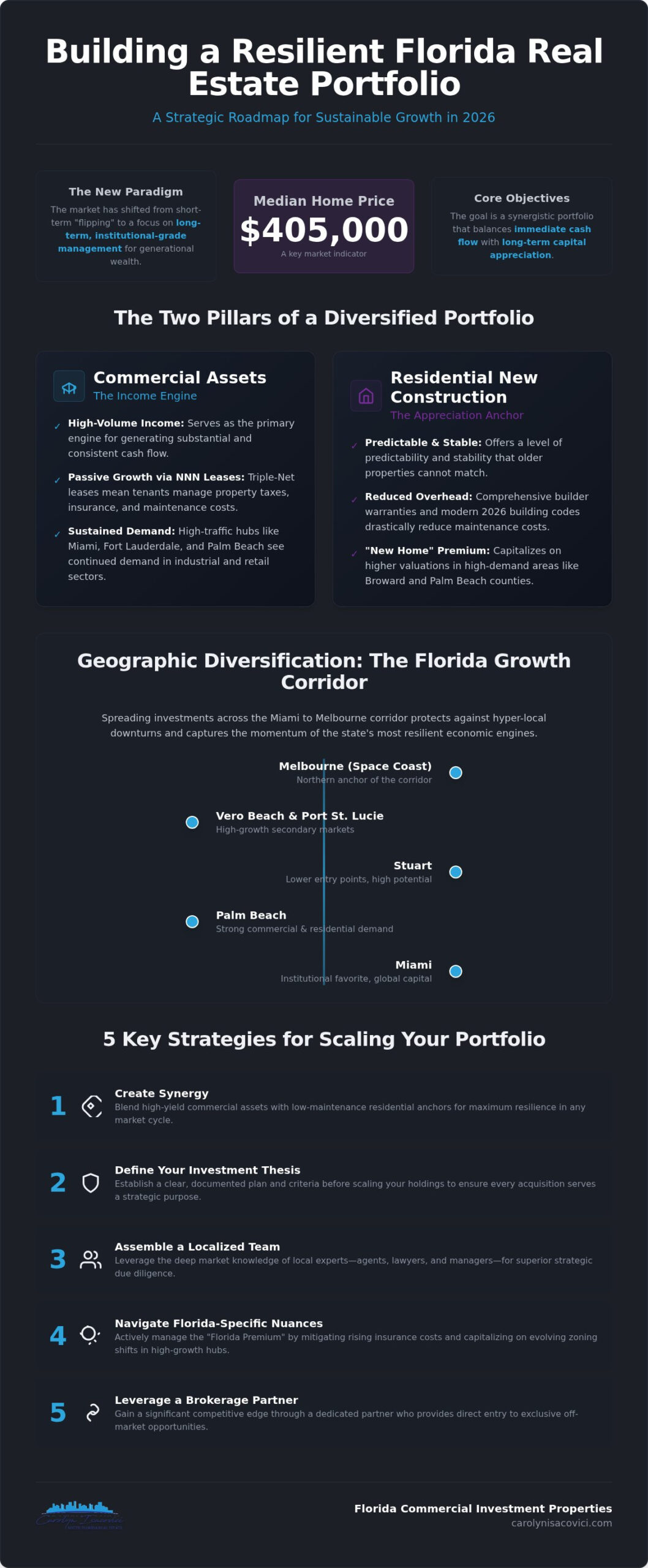
What does it mean to build a portfolio in the current climate? It’s no longer just about buying a single property and hoping for the best. Instead, Florida real estate portfolio building in 2026 is the art of curating a synergistic collection of residential and commercial assets. Each piece must serve a purpose. We’ve moved past the frenetic, speculative “flipping” cycles of the early 2020s. Today, the focus has shifted toward institutional-grade management and long-term stability.
The migration waves between 2021 and 2025 reshaped our economy. Now that the dust has settled, we’re seeing a more mature market. It’s a pivotal moment. Investors are prioritizing Florida real estate portfolio building as a tool for generational wealth rather than quick wins. For instance, does your commercial holding in Miami benefit from the residential growth in the surrounding suburbs? This interconnected thinking is what separates a collection of buildings from a true, high-yield portfolio.
The Core Objectives of a Florida Portfolio
Why pursue this path? The goals are clear: balancing immediate cash flow with the promise of capital appreciation. By engaging in real estate investing through a strategic lens, you unlock benefits that single-asset owners often miss. This includes Florida’s favorable tax environment and the natural inflation hedge provided by tangible land. Structures in high-demand zones don’t just sit; they grow in value while paying you to hold them. It’s about creating a machine that generates revenue while protecting your principal from market fluctuations.
Why Diversification Within Florida is Essential
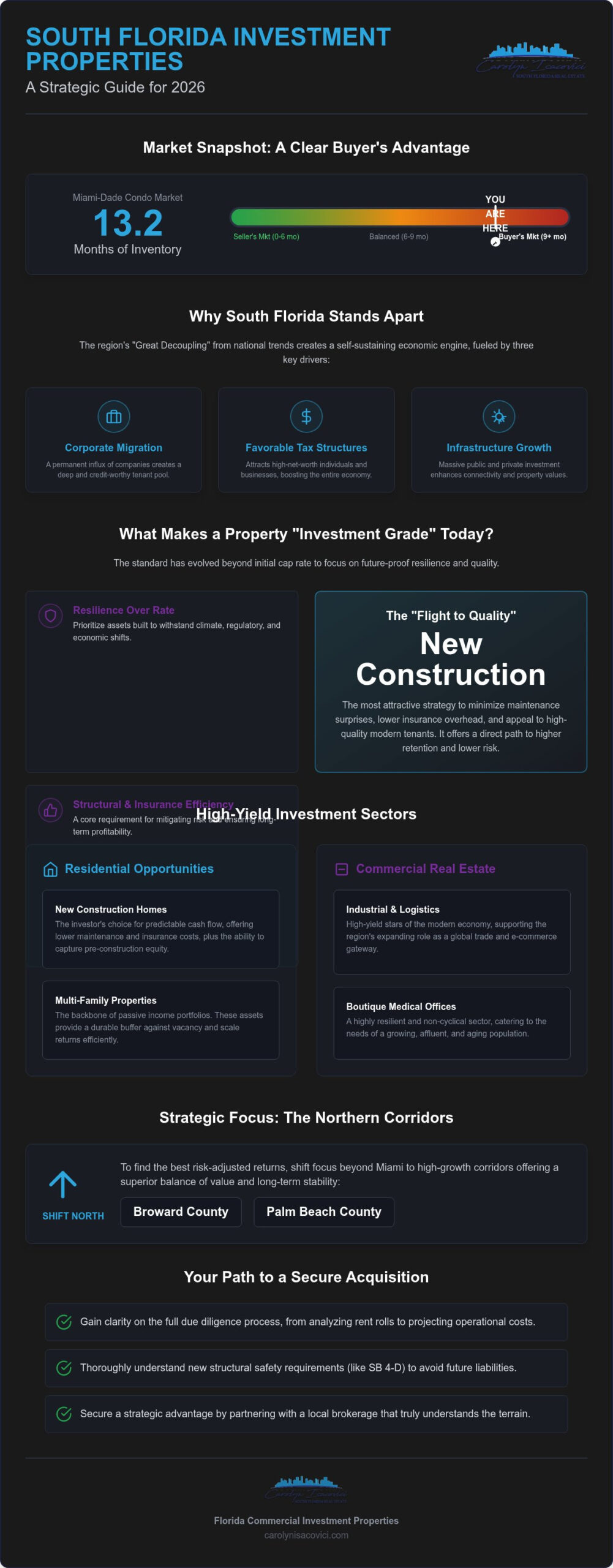
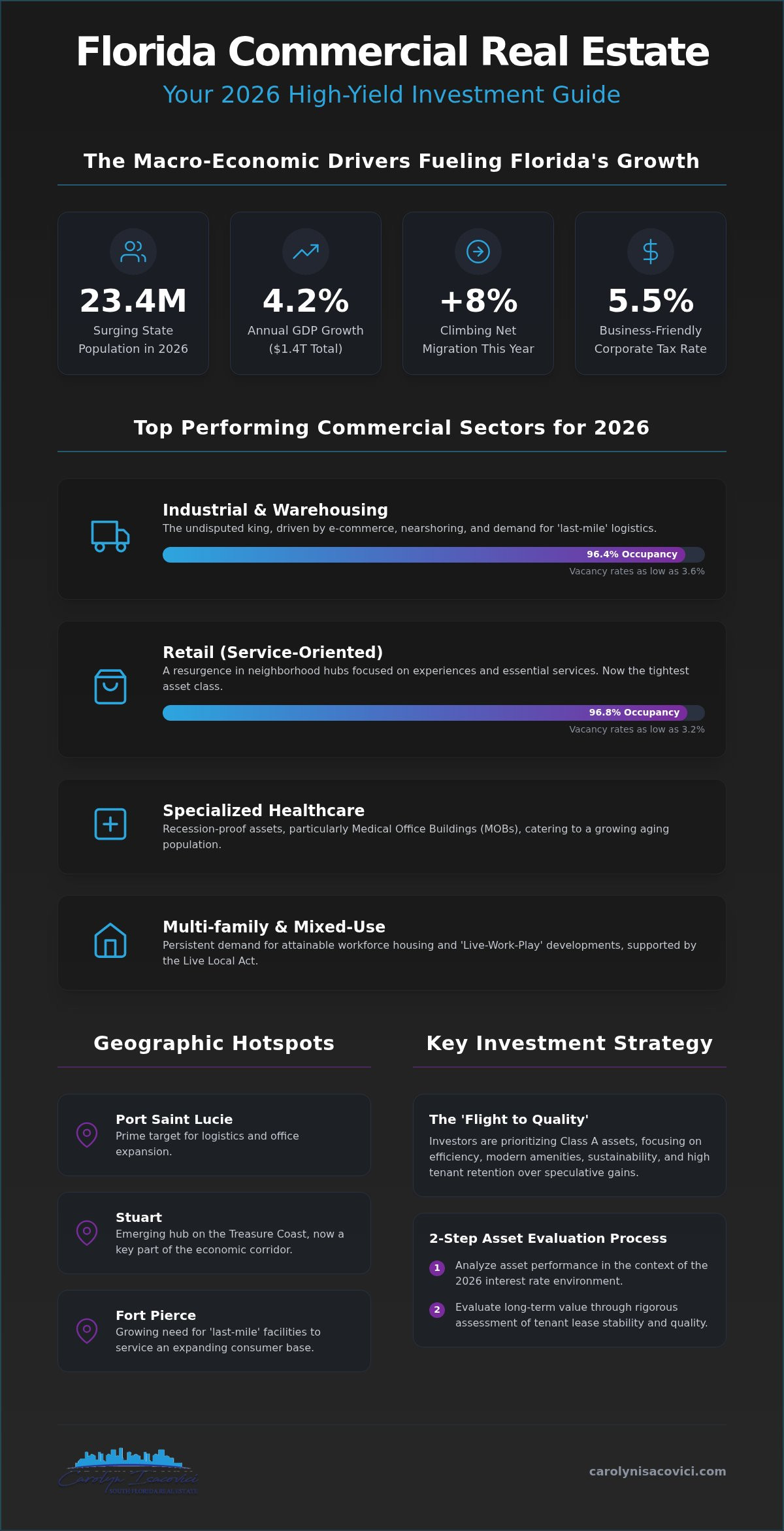
Concentration is a risk you don’t need to take. Spreading your interests across the Miami to Melbourne corridor protects you from hyper-local downturns. Secondary markets like Stuart and Port Saint Lucie have emerged as powerful anchors, offering lower entry points with high growth potential. The Florida Growth Corridor is the region stretching from Miami all the way to the Space Coast. By diversifying within this belt, you capture the momentum of the state’s most resilient economic engines. You aren’t just buying real estate; you’re buying a stake in Florida’s continued expansion.
Selecting High-Yield Asset Classes: Commercial vs. Residential
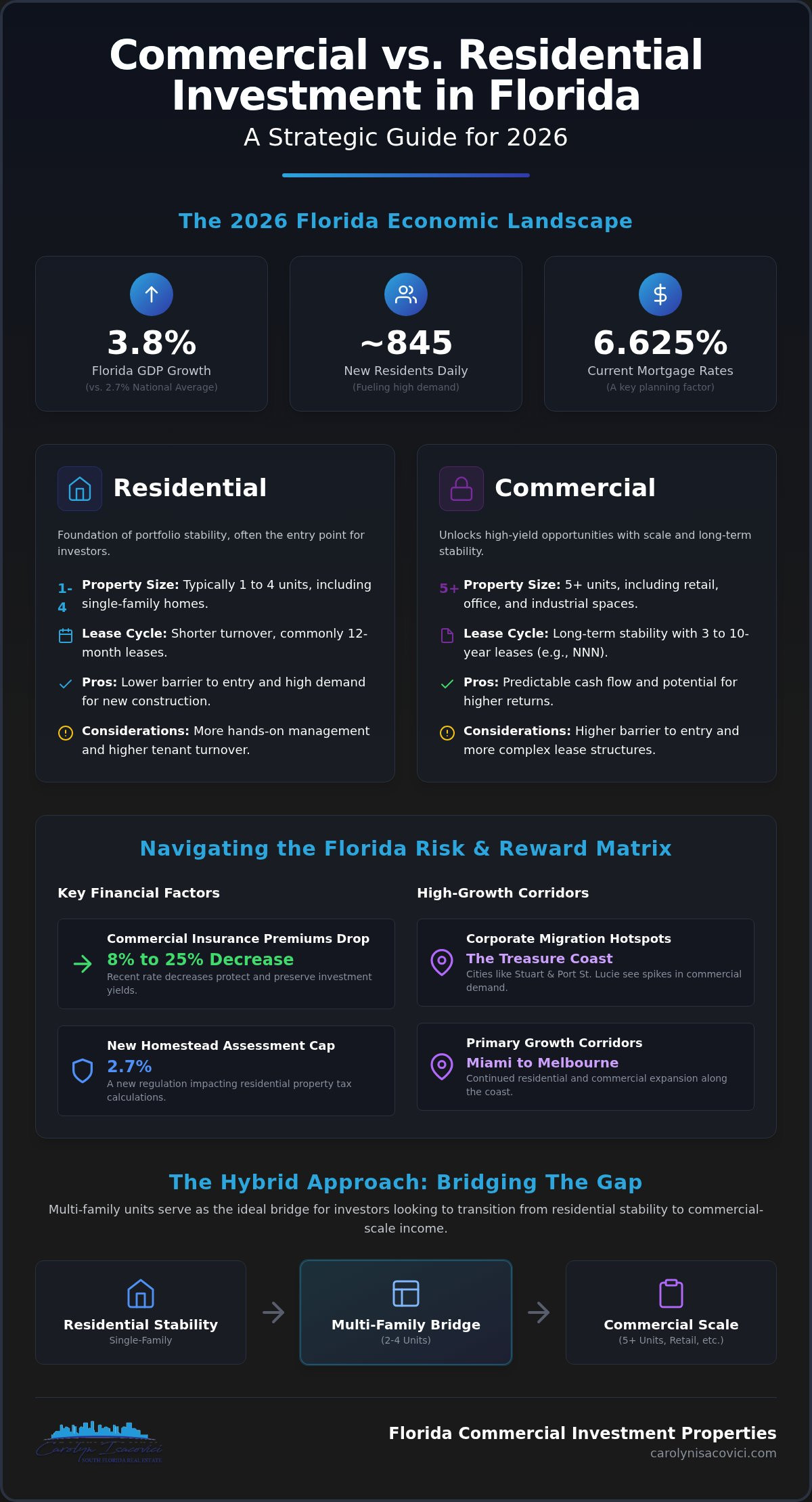
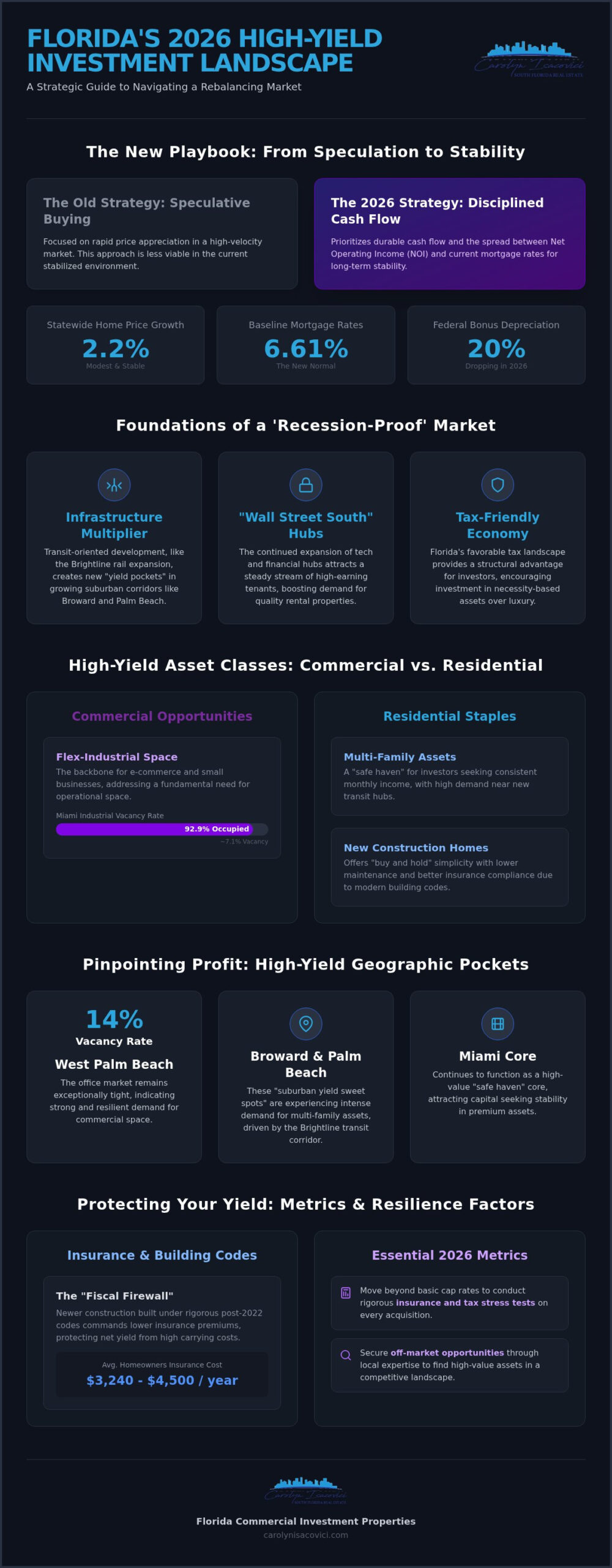
How do you decide where to place your next capital allocation? The choice between commercial and residential assets often feels like a fork in the road. It isn’t. In a sophisticated Florida real estate portfolio building strategy, these two classes work in tandem to provide both defensive stability and aggressive growth. While residential properties often offer a more intuitive entry point, commercial real estate South Florida serves as the primary engine for high-volume income generation.
Commercial Assets: The Income Engine
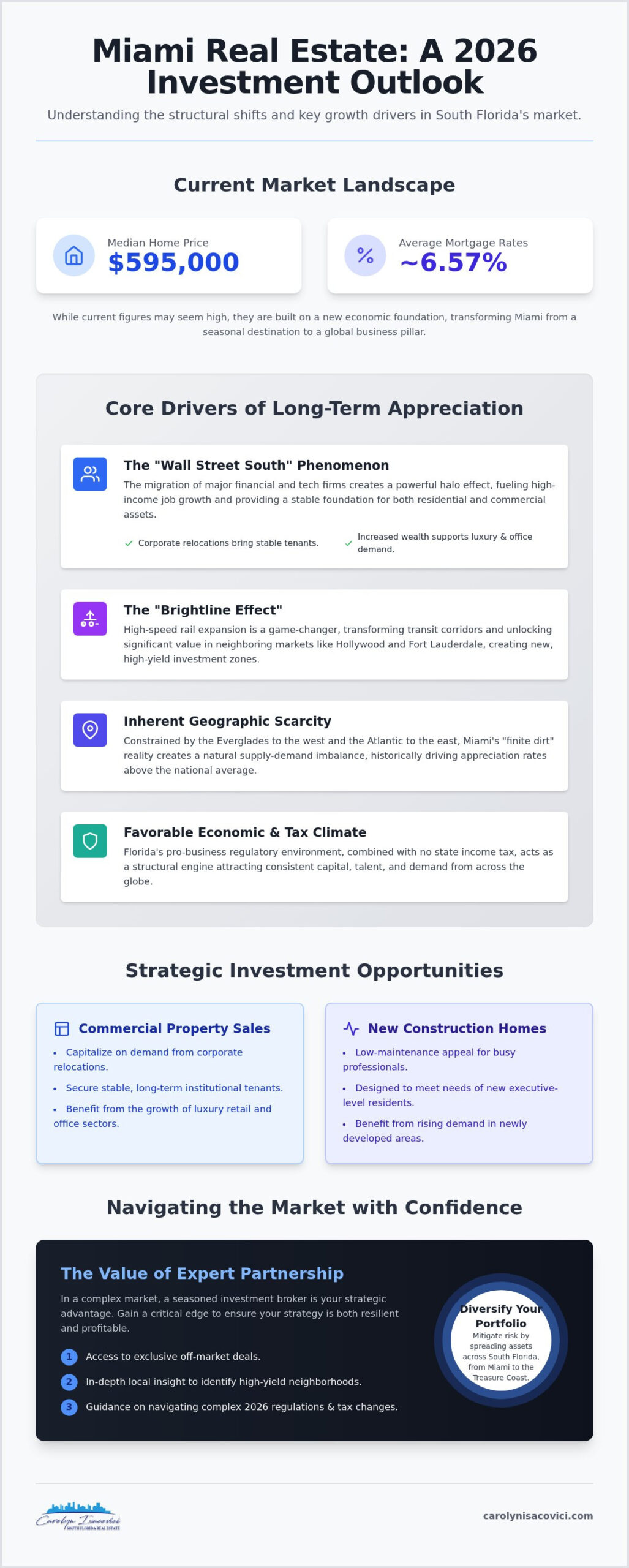
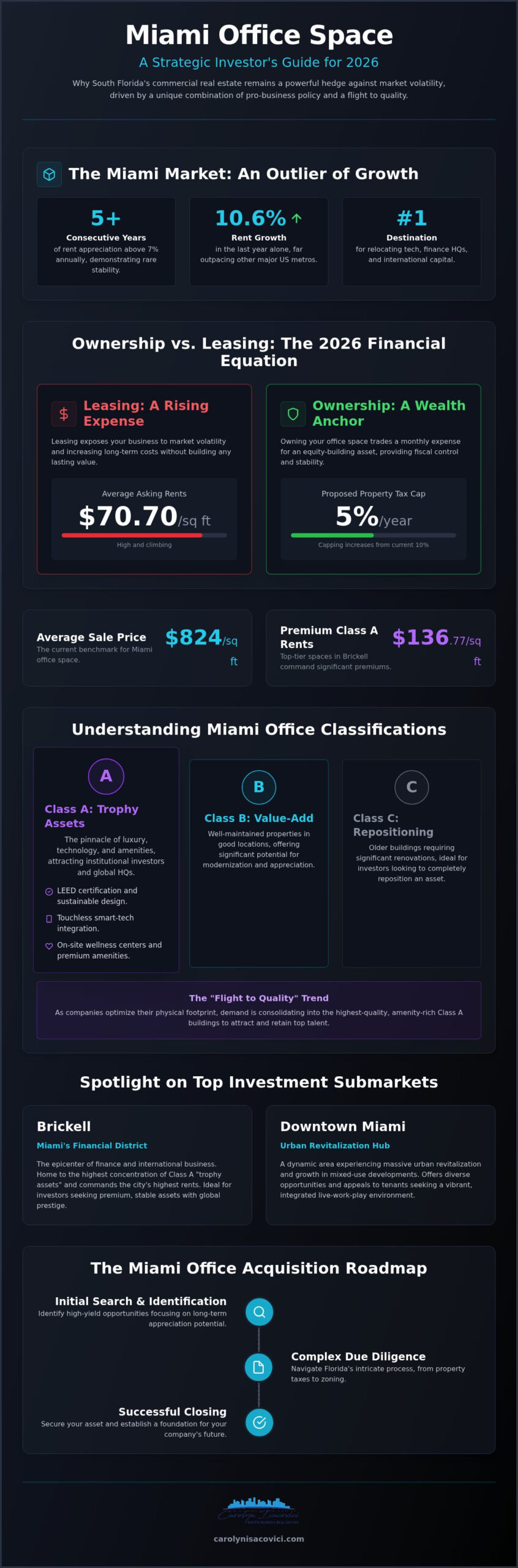
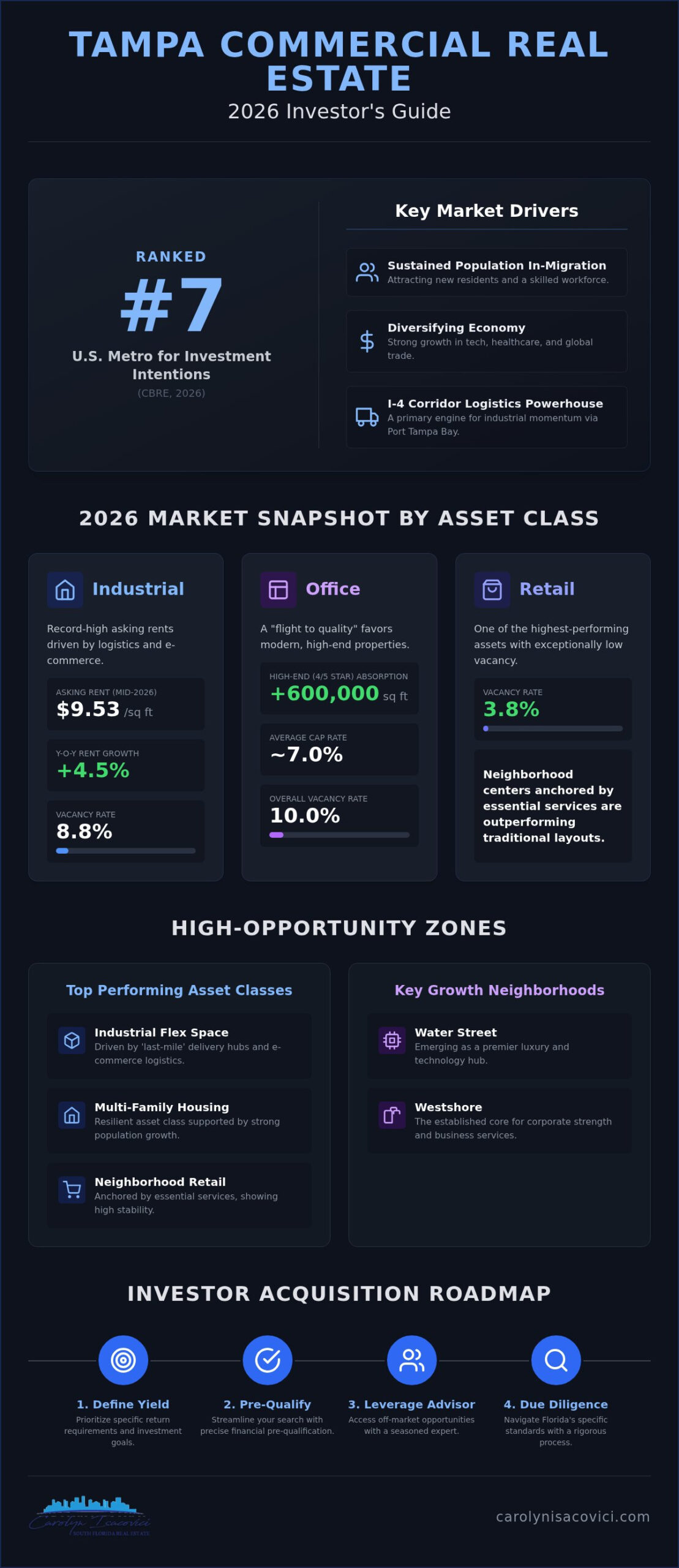
Commercial property is the bedrock of professional cash flow. Why is this the case? It’s because the lease structures are fundamentally different. Triple-net (NNN) leases are a particular favorite in 2026 for those seeking passive portfolio growth. These agreements allow you to collect rent while the tenant manages the property taxes, insurance, and maintenance costs. In high-traffic hubs like Fort Lauderdale and Palm Beach, industrial and retail spaces are seeing sustained demand as the state’s logistics infrastructure expands. Miami remains the institutional favorite, offering competitive Cap rates and a Net Operating Income (NOI) profile that continues to attract global investment capital. For investors focused specifically on maximizing returns in the urban core, exploring income producing properties Miami offers a detailed look at how NNN lease structures and asset quality drive superior yields in this market.
Residential New Construction: The Appreciation Play
If commercial is the engine, new construction homes Florida are the anchor. They offer a level of predictability that older “fixer-uppers” simply cannot match. When you invest in new construction investment property Florida, you’re buying peace of mind through comprehensive builder warranties. This drastically reduces the maintenance overhead that can otherwise erode your monthly returns.
There’s also a clear financial “New Home” premium in Broward and Palm Beach counties. Modern building codes are the silent hero here. Because these homes are built to the most recent 2026 standards, they often qualify for better insurance assessments. This is a significant advantage considering that the average annual homeowners insurance premium in Florida is approximately $8,200. Multi-family units in Miami act as the perfect bridge, combining the high demand of residential housing with the scalability of a commercial asset. If you’re ready to explore these high-yield opportunities, connecting with a strategic investment partner can help you identify the precise mix needed to reach your financial milestones.
5 Steps to Scale Your Florida Real Estate Holdings
How do you move from owning a single rental to managing a high-performance collection? Scaling isn’t just about adding more units; it’s about adding better units. Successful Florida real estate portfolio building follows a disciplined sequence that turns initial equity into a diversified empire. It requires a shift in mindset from simply “buying a house” to executing a repeatable, data-driven system. It’s about looking at your assets as a unified machine rather than isolated parts.
Step 1 & 2: Strategy and Team Building
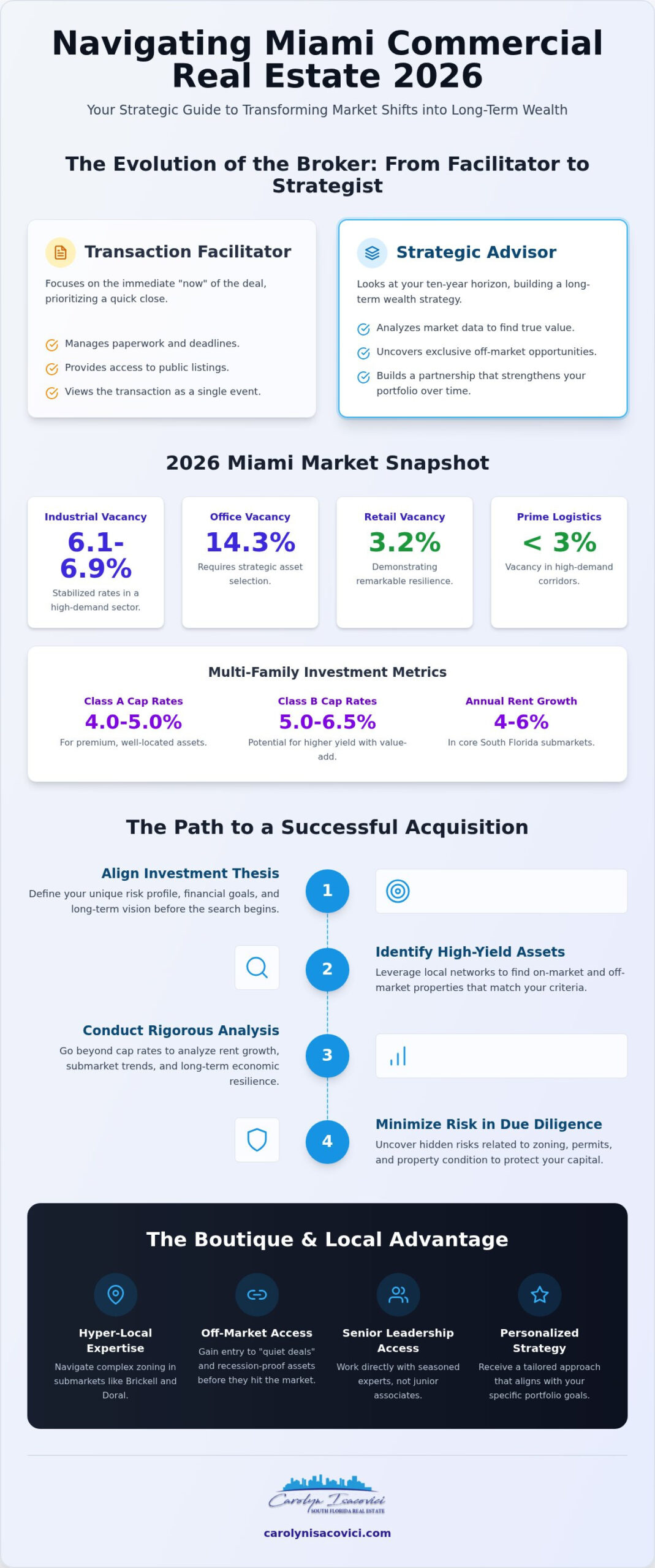
Your journey begins with a firm investment thesis. You must establish a clear “Buy Box” that defines your preferred geography, asset type, and risk tolerance. This process starts with evaluating investment property Florida metrics like cap rates and cash-on-cash return to ensure every acquisition fits your long-term goals. Do you have the right people in your corner? You can’t do this alone. You need a specialized power team that understands the nuances of both residential and commercial sectors. The ideal Florida investment broker acts as a market navigator rather than just a transaction agent, steering you away from pitfalls and toward high-growth corridors.
Steps 3 to 5: Acquisition and Optimization
Once your strategy is set, identify your first “Anchor Asset.” This is typically a high-liquidity residential or multi-family property that provides immediate cash flow. As this asset appreciates, you can implement a 1031 Exchange strategy. This allows you to defer capital gains taxes while “trading up” into larger commercial holdings or industrial spaces. Executing due diligence in 2026 means looking beyond the surface. You must account for Florida-specific environmental laws and zoning shifts that could impact your future land use. For non-homestead properties, remember that your annual assessment increase is capped at 10%, which provides a level of predictability for your tax liabilities.
Optimization doesn’t stop at the closing table. You must continuously audit your holdings against current Miami real estate market trends to ensure your portfolio remains balanced. A healthy portfolio requires annual rebalancing to maintain diversity across sectors and geographies. This ensures that a shift in one local market doesn’t compromise your entire financial foundation. Leveraging the equity from your initial gains allows you to fund larger acquisitions without depleting your cash reserves, turning a series of purchases into a resilient wealth engine. To understand exactly what yields to expect from each asset type, reviewing detailed cash flow investment property Florida examples and analysis can sharpen your acquisition criteria significantly.
Navigating Florida-Specific Market Nuances and Risk
How do you account for the unique variables that come with a coastal economy? It’s a question every serious investor must answer. Successful Florida real estate portfolio building requires more than just picking high-growth spots; it means mastering the “Florida Premium.” This involves a clear-eyed look at insurance and taxes. While the average homeowners insurance premium sits at approximately $8,200, there’s a light on the horizon. Effective July 1, 2026, Citizens Property Insurance implemented a statewide average rate decrease of 8.8% for multiperil policies. This shift signals a stabilizing market where proactive mitigation becomes a competitive advantage.
Are you watching the land use shifts in Port Saint Lucie and Vero Beach? These rapidly growing areas are redefining the state’s residential and commercial boundaries. For out-of-state and international investors, Florida’s tax policies remain a primary draw. The 10% annual assessment cap on non-homestead properties provides a vital shield against runaway holding costs in high-valuation environments. This predictability allows for more accurate long-term cash flow modeling, ensuring your strategy remains grounded in reality rather than speculation.
Environmental and Regulatory Due Diligence
Flood zone designations are not just checkboxes; they are indicators of long-term asset value. You should prioritize “Wind Mitigation” in any residential new construction purchase. These structural enhancements don’t just protect the building; they significantly lower your insurance overhead. In areas like Palm Beach Gardens, staying aligned with local municipality growth plans ensures your acquisition remains a part of the city’s future, not an outlier. It’s about buying into a vision that the local government is already funding.
Financial Risk Management
How do you balance the current interest rate environment with your growth goals? With 30-year fixed rates hovering between 6.48% and 6.95% in August 2026, liquidity planning is essential. You must ensure your portfolio can withstand cycles without forcing a premature sale. One of the most effective ways to manage this is through diversifying across the commercial vs residential investment Florida spectrum to balance volatility. This blend provides the steady income of commercial assets alongside the liquidity of residential holdings. If you need a specialized brokerage partner to evaluate these localized risks, our team is ready to provide the insight you need.
Executing Your Strategy with Expert Brokerage Support
What is the most valuable asset in your collection? It isn’t the brick and mortar or the land beneath it. It’s the specialized insight that guides your next move. In the complex world of Florida real estate portfolio building, a dedicated broker serves as your primary strategist. They provide the clarity needed to transform a vision into a high-yield reality. While many investors rely on public listings, a seasoned partner opens doors to off-market commercial opportunities in Miami and Fort Lauderdale that never reach the general public. This access is the difference between following the market and leading it.
Carolyn Isacovici brings a unique advantage to this process. With brokerage expertise dating back to 2006, she offers a perspective that spans the entire Miami to Melbourne corridor. This multi-city reach is essential for investors looking to expand across different economic hubs. Unlike working with a single developer who only shows you their own inventory, an independent broker evaluates the entire landscape. They prioritize your specific financial outcomes over a single transaction. This partnership ensures that every acquisition, whether it’s a new construction home or a retail space, strengthens the synergy of your overall holdings.
The Value of Localized Insight
How do you find the “Path of Progress” before prices peak? It starts with identifying neighborhoods on the verge of revitalization. Localized insight allows you to spot these trends early. Expert negotiation also plays a critical role here. Whether it’s securing builder incentives for residential new construction or favorable lease terms for a commercial asset, these small wins compound over time. Consider the transition from a few residential units to a diversified commercial holding. This shift requires a deep understanding of zoning and tenant profiles that only a local expert can provide. They help you navigate these complexities with a steady, confident hand.
Your Next Steps in Florida Real Estate
Are you ready to move from planning to execution? Your first 2026 acquisition begins with preparation. You can start by organizing your financial documentation for Florida investment property sales to ensure you’re ready to act when a high-value opportunity arises. We recommend setting up a customized market alert system for Miami and surrounding areas to stay ahead of the competition. The most impactful step you can take today is scheduling a strategic portfolio review. This consultation allows us to align your current assets with your long-term wealth goals, providing a clear path forward in this fast-paced market. Let’s turn your investment potential into a sustainable legacy.
Step Into Your Next Phase of Growth
The path to sustainable wealth in 2026 is paved with intentionality. You’ve seen how the synergy between residential new construction and high-yield commercial assets creates a foundation that resists market volatility. By focusing on the high-growth corridor from Miami to Melbourne, you aren’t just buying property; you’re investing in the continued expansion of Florida’s economic engine. Strategic Florida real estate portfolio building is about more than just transactions. It’s about having a partner who understands the nuances of local zoning, insurance mitigation, and off-market opportunities.
Are you ready to transform these insights into a tangible roadmap? With expertise in commercial, residential, and new construction sales since 2006, Carolyn Isacovici provides the steady hand you need to navigate this fast-paced market. It’s time to move from planning to action with a strategist who is deeply invested in your long-term success. Start Building Your Florida Portfolio with Expert Guidance Today. The opportunities are waiting for you, and the right moment to begin is now.
Frequently Asked Questions
Is it better to start a Florida portfolio with residential or commercial property?
Starting with residential property provides a high-liquidity anchor for your collection, especially with new construction homes that offer lower maintenance. However, commercial assets are the true income engine for professional cash flow. Most successful strategies in Florida real estate portfolio building involve a blend of both. You might begin with a residential multi-family unit in Miami to learn the market before scaling into larger industrial or retail spaces.
How much capital is typically required to begin building a Florida real estate portfolio?
While entry points vary, you should prepare for down payments typically ranging from 20% to 25% for investment properties. With Florida’s median home price at $405,000 as of early 2026, an initial residential investment might require around $80,000 to $100,000 in liquid capital plus closing costs. Commercial acquisitions generally demand higher reserves. Your capital strategy should also include a buffer for holding costs like the $8,200 average annual insurance premium.
What are the best cities in Florida for real estate portfolio growth in 2026?
The “Path of Progress” currently highlights the corridor from Miami to Melbourne as the premier growth zone. Miami remains the institutional favorite for commercial stability, while Port Saint Lucie and Vero Beach offer high-growth residential opportunities. Don’t overlook secondary markets like Stuart, which provide lower entry points with significant appreciation potential. These cities benefit from the ongoing migration shifts that have redefined the state’s economic landscape over the last five years.
Can I build a Florida property portfolio if I live out of state or abroad?
You can absolutely build a robust portfolio from anywhere in the world by leveraging a localized “power team.” A specialized Florida broker acts as your eyes and ears on the ground, identifying off-market opportunities you won’t find on public portals. Digital closing processes and professional property management make it easier than ever to manage Florida real estate portfolio building remotely. Your success depends on having a trusted partner who understands local zoning and market nuances.
What is the role of a 1031 Exchange in scaling a real estate portfolio?
A 1031 Exchange is a powerful tax-deferral tool that allows you to sell an investment property and reinvest the proceeds into a “like-kind” asset. This strategy is vital for scaling because it keeps your capital working for you instead of losing a portion to immediate taxes. It’s the primary mechanism investors use to “trade up” from smaller residential holdings into larger, more complex commercial properties without depleting their equity.
How does new construction differ from existing homes for Florida investors?
New construction offers a superior maintenance profile and builder warranties that existing homes simply cannot match. In the 2026 market, these properties also qualify for significant insurance savings due to modern wind mitigation and building codes. While existing homes might offer lower initial price tags, the hidden costs of aging roofs or outdated systems can quickly erode your returns. New homes provide a level of predictability that is essential for sustainable scaling.
What are the main risks of investing in Florida real estate right now?
The primary risks involve navigating the “Florida Premium” of insurance and managing interest rate sensitivity. While Citizens Property Insurance recently implemented a rate decrease, coverage remains a significant line item in your budget. You must also account for climate-related risks by focusing on properties with high-elevation designations or modern storm protection. Diversifying across different geographies and asset classes helps mitigate these risks and ensures your portfolio remains resilient through various cycles.
How do I choose the right Florida real estate broker for an investment portfolio?
Look for a broker who demonstrates deep expertise in both the commercial and residential sectors. You need a “market navigator” who understands the synergy between different asset classes rather than just a transaction agent. Ensure they have a proven track record in the specific regions you are targeting, from Miami to Melbourne. A broker who acts as a strategic partner will prioritize your long-term financial outcomes over a quick sale.