Commercial property due diligence in Florida is the buyer’s opportunity to investigate a property before completing the purchase. It typically covers title, permitted land use, building condition, environmental risks, and, for an income-producing property, leases and operating records. Commercial real estate contracts often allow a due diligence period of 30 to 60 days, giving buyers time to assess findings and decide how to proceed.
It’s natural to focus on the building and purchase price, but the land, records, and intended use matter just as much. Zoning, access, utilities, drainage, and existing tenant obligations can affect whether a property suits your plans and what it will take to operate or develop it.
This guide explains what commercial property due diligence in Florida covers, which land-use and building issues deserve attention, and how the process moves from document review and inspections to a purchase decision. The scope depends on the property and your plans, so an organized review helps turn open questions into practical next steps.
Key Takeaways
- Look beyond a standard title review: investigate easements, access, and other conditions that could affect how much of the site is usable.
- Compare the property’s zoning and development rules with your intended use, including permitted activities, parking, setbacks, and utility capacity.
- Assess the building’s major systems and safety compliance before closing so inspection findings can inform your purchase decisions.
- Use the due diligence period to gather records, arrange inspections, and evaluate findings; commercial contracts often allow 30 to 60 days.
What is Commercial Real Estate Due Diligence?
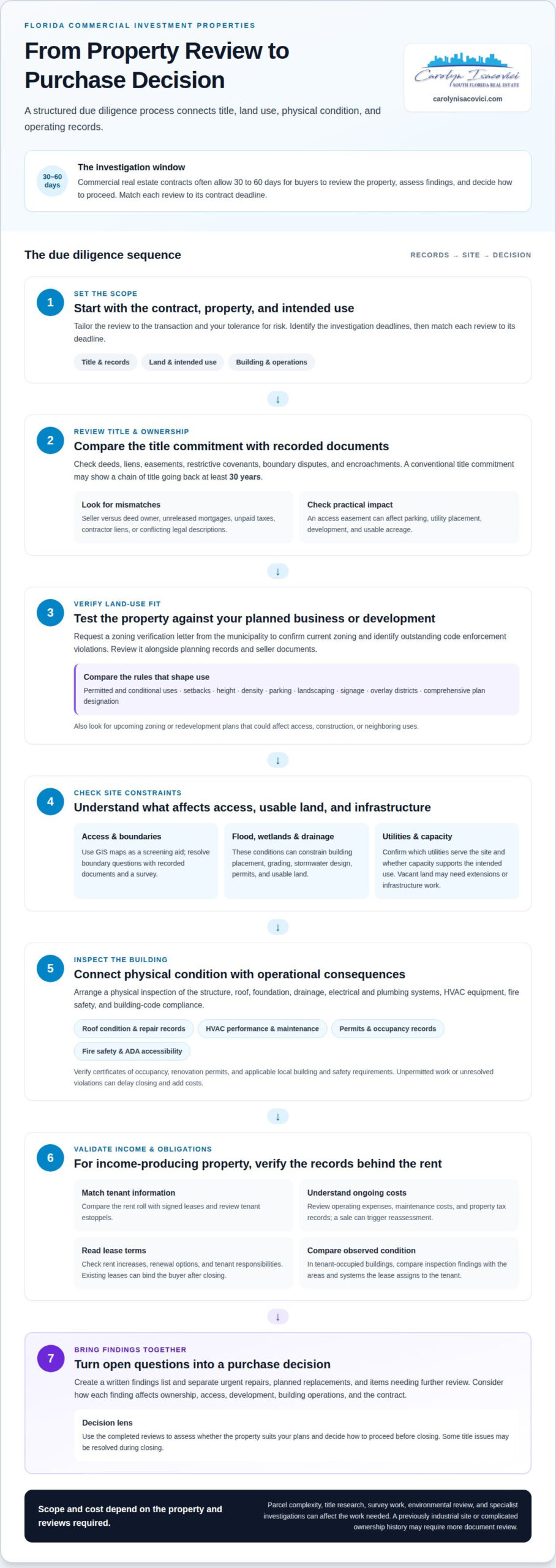
Commercial property due diligence is the buyer’s structured review of title, records, land, and intended use before closing. In Florida, the purchase agreement may set a defined investigation period. Match each review to its deadline, and tailor the scope to the transaction and your tolerance for risk.
A standard title commitment summarizes ownership and exceptions found through a title search. A conventional commitment may show a chain of title going back at least 30 years. Enhanced investigation compares it with recorded deeds, liens, easements, restrictive covenants, boundary disputes, and encroachments. An access easement, for example, can limit parking or utility placement and reduce usable acreage.
Organize the commitment, deeds, tax records, and recorded instruments by parcel and date. A digital title plant can make indexed records easier to search. GIS mapping can help compare parcel lines with roads, nearby uses, and mapped easements. Treat maps as a screening aid, then resolve boundary questions using recorded documents and a survey.
Look for mismatches between the deed’s owner and the seller, unreleased mortgages, unpaid taxes, contractor liens, conflicting legal descriptions, or easements missing from marketing materials. Liens may attach to the property, and some title issues can be resolved during closing. Before accepting an exception, consider its effect on ownership, access, development, and the contract.
Financing, insurance, and closing requirements vary by deal structure. A commercial lender may require a thorough title search before approving a mortgage. Title insurance may still be needed and is typically issued at closing to protect against certain ownership disputes. Florida real estate sales must use written contracts to transfer title, and commercial contracts are often individually negotiated.
Due diligence costs depend on parcel complexity and the reviews required, including title research, survey work, environmental review, and specialist investigations. A previously industrial site or a complicated ownership history may require more document review than a straightforward parcel.
Florida land use, zoning, and development restrictions
A parcel’s zoning determines which uses local rules permit, so compare its classification with your planned business. A zoning verification letter from the municipality can confirm current zoning and identify outstanding code enforcement violations. Review it alongside the purchase agreement, seller documents, and local planning records before closing.
Check permitted and conditional uses, setbacks, height limits, density, parking, landscaping, signage, and overlay districts. Compare the property’s comprehensive plan designation with its zoning, since they may affect future development differently. Look for upcoming zoning or redevelopment plans that could influence access, construction, or neighboring uses. A use that seems compatible with nearby businesses must still comply with applicable local and state regulations.
Flood zones, wetlands, and drainage can constrain building placement, grading, stormwater design, permits, and usable land. Review mapped conditions alongside site information. Wetlands may require permitting or mitigation, while floodplain conditions can shape construction methods and insurance considerations.
For an occupied property, compare the rent roll with signed leases, then review tenant estoppels, operating expenses, maintenance costs, and property tax records. Confirm lease terms for rent increases, renewal options, and tenant responsibilities. Existing leases can bind the buyer after closing.
Compare property tax records and assessments with the property’s income and operating costs. A sale can trigger reassessment, so future taxes may exceed the seller’s current bill. Confirm which utilities serve the site and whether their capacity supports your intended use. Vacant land may need utility extensions or infrastructure work.
For a transaction involving income-producing real estate, organized review of leases, zoning records, and utility information helps clarify fit before signing or closing. Explore commercial property sales as a next step when evaluating a Florida acquisition.
Commercial building, HVAC, and roof inspections
Arrange a physical inspection covering the structure, roof, foundation, drainage, electrical and plumbing systems, HVAC equipment, fire safety, and building-code compliance. Ask the inspector to connect visible defects with likely operational consequences. Roof damage, for example, may threaten interior finishes, while poor drainage can affect the foundation or site access. These findings help you assess the property’s condition before buying.
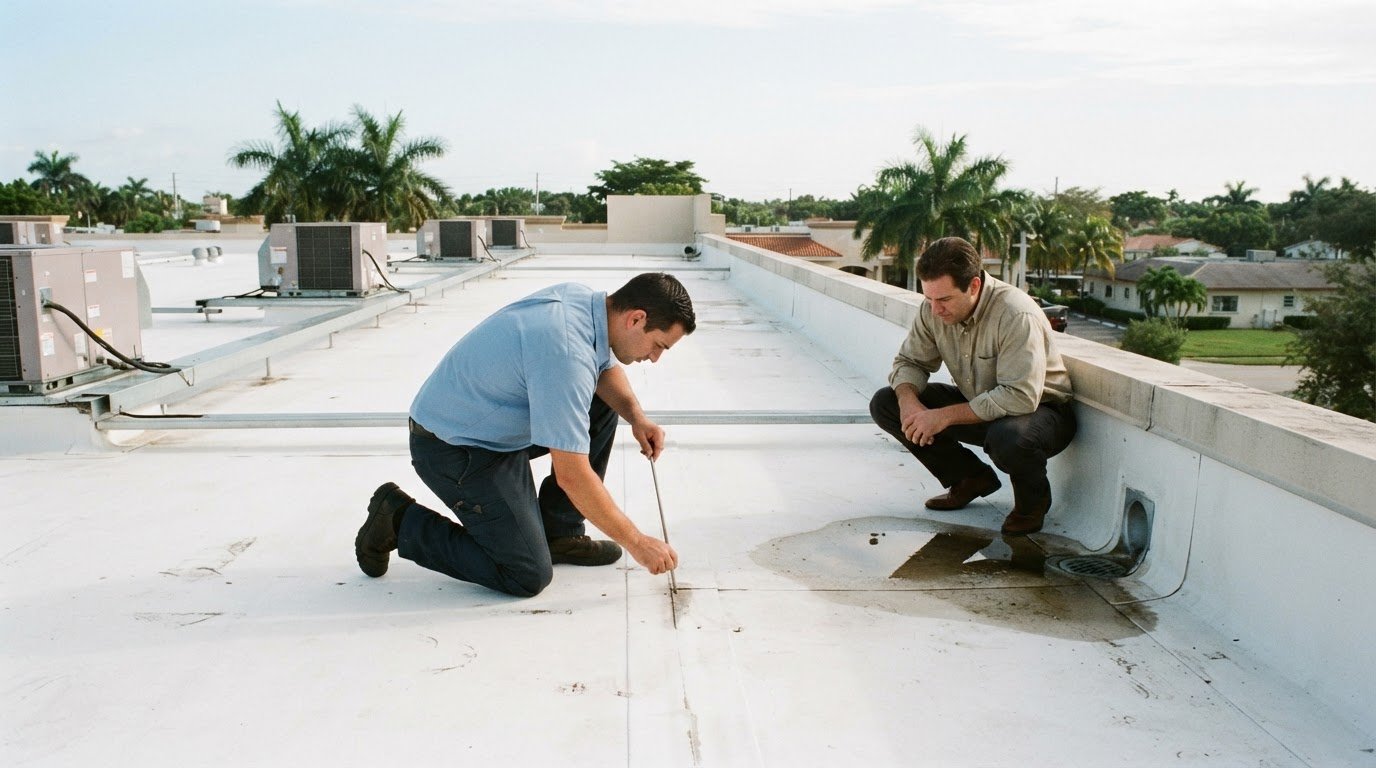
Give the roof and HVAC systems particular attention. Review available maintenance and repair records, note visible deterioration, and compare equipment condition with the building’s current use. An HVAC system that struggles to maintain comfortable conditions may affect daily operations and tenant satisfaction. Document roof leaks, damaged surfaces, and recurring repairs clearly, since unresolved problems can lead to future work or interruptions.
Check permits and occupancy records alongside the physical inspection. Verify certificates of occupancy, renovation permits, fire-safety compliance, required ADA accessibility, and local building and safety regulations. Unpermitted work or unresolved violations can delay closing and add costs for the buyer. In a tenant-occupied building, compare observed conditions with the areas and systems the lease makes the tenant responsible for maintaining.
Use a written findings list to separate urgent repairs, planned replacements, and items needing further review. Florida purchase agreements may address how physical inspections and non-physical reviews are conducted, so track deadlines and access terms. An architect, engineer, or contractor can help assess structural or system concerns; an attorney can advise on contract language. Consider inspection results alongside environmental due diligence and survey easements, since site constraints may affect repair access or future work. Before closing, findings may support negotiating repairs, credits, or price adjustments. Tell the lender about credits, major repairs, or scope changes because they can affect underwriting and closing documents.
Commercial property due diligence process
Start by turning the signed purchase agreement into a deadline-driven review plan. Commercial real estate contracts often allow a due diligence period of 30 to 60 days, but the agreed schedule controls. List each document request, inspection, and decision date so buyers can address findings before closing. The intended use should guide which reviews happen first.
What’s included? Buyers typically review title and ownership records, survey details, zoning and development restrictions, building condition, environmental risks, and, for income-producing properties, leases and operating records. Add utility capacity, access, flood conditions, and site constraints when they affect the proposed use. Record each finding, its source, and the question it raises.
Environmental review is a key step. Buyers may order a Phase I Environmental Site Assessment, which can involve historical records, interviews with knowledgeable parties, and site reconnaissance. Commercial lenders usually require some form of environmental due diligence. If the initial assessment identifies potential concerns, additional testing may be recommended, including soil or groundwater sampling.
Coordinate the reviews instead of treating them as separate checkboxes. A surveyor’s access finding, for example, may affect site plans; an environmental concern may change development timing. Gather records from public sources, utility providers, and local governments, then discuss technical findings with relevant professionals. The goal is to verify that the property supports your intended use and identify possible liability before closing.
Once findings are organized, decide whether to proceed as agreed, negotiate repairs, credits, a price reduction, or more time, or walk away under the contract’s terms. Tell the lender about major repairs, credits, or scope changes because they may affect underwriting and closing documents. Explore commercial property opportunities as you assess your next Florida acquisition.
Florida Commercial Investment Properties: Commercial Property Sales
Florida Commercial Investment Properties offers commercial and investment property sales for buyers exploring opportunities in Florida. Once you have defined your intended use and completed due diligence on a prospective property, the next step may be identifying assets that fit your acquisition goals. The firm helps buyers navigate commercial and investment property acquisitions, connecting the search with the practical considerations that shape a purchase.
Turn to Florida Commercial Investment Properties when you’re ready to assess commercial properties for a potential purchase or investment. A clear picture of zoning, condition, income, and site constraints can focus your search and inform your evaluation of opportunities. For buyers also considering a home purchase, the firm offers residential real estate sales and new construction homes.
To discuss a Florida property purchase, contact Florida Commercial Investment Properties.
Set Your Next Acquisition in Motion
Before pursuing another opportunity, write a brief that captures what the investment needs to make possible. Define the role the property should play in your business, the flexibility you want over time, and the trade-offs you’re prepared to consider. These priorities create a useful decision framework, keeping a compelling listing from distracting you from the purpose behind the purchase. They also keep conversations focused as you compare opportunities and refine your plans. A deliberate next step makes commercial property due diligence in Florida a tool for choosing with intention, not simply a hurdle before closing.
With those priorities in hand, move forward at a pace that leaves room for careful judgment. The right acquisition is one that supports your objectives and fits your broader plans. If you’re ready to discuss what you’re looking for, connect with Florida Commercial Investment Properties. A clear starting point can make the next opportunity easier to evaluate and help you approach the search with confidence.
Frequently Asked Questions
What Happens if Due Diligence Uncovers a Problem?
A buyer can use a finding to negotiate, proceed under revised terms, or decide not to continue, subject to the purchase contract. A newly identified repair need, for example, may prompt a request for a credit or more time to assess the work. Before discussing a change with the seller, record the issue, its likely effect on the property, and the response you’re seeking.
What Is Due Diligence?
Due diligence is the investigation a buyer conducts to make an informed purchase decision. It helps determine whether the property’s records, condition, income, and intended use align with the buyer’s plans. For commercial property due diligence in Florida, think of it as a decision process: identify important assumptions, gather evidence, and decide which findings affect the transaction.
How long is the due diligence period in a Florida commercial property purchase?
Commercial real estate contracts often allow a due diligence period of 30 to 60 days, but the signed agreement sets the actual deadline. Buyers should work backward from that date, scheduling reviews that need site access or outside records early. If a finding needs more investigation, a written extension request should be addressed before the contractual period expires.
What Florida zoning and land-use rules should buyers verify?
Verify the parcel’s zoning, permitted and conditional uses, development limits, and applicable overlay rules with the local jurisdiction. A proposed Miami storefront, for example, should be assessed against the zoning for that specific parcel, not assumptions based on nearby businesses. Compare the intended use with the comprehensive plan designation and any pending planning changes.
How can buyers check Florida property title, liens, easements, and surveys?
Compare the title commitment, recorded deeds, lien records, and survey, paying close attention to consistent parcel descriptions and access rights. A commercial ALTA/NSPS survey can show boundaries, easements, rights-of-way, encroachments, utilities, and access points. If a survey feature conflicts with a recorded document, resolve the discrepancy before relying on the site layout for building, parking, or operations.
What building inspections and code-compliance checks are needed in Florida?
Arrange a physical inspection of the structure and major systems, then compare the findings with permits, occupancy records, and safety documentation. Look for signs of water intrusion, drainage problems, or equipment issues that could disrupt operations. Verify renovation permits, certificates of occupancy, fire-safety measures, required accessibility, and local building compliance, especially if the current use differs from your intended use.