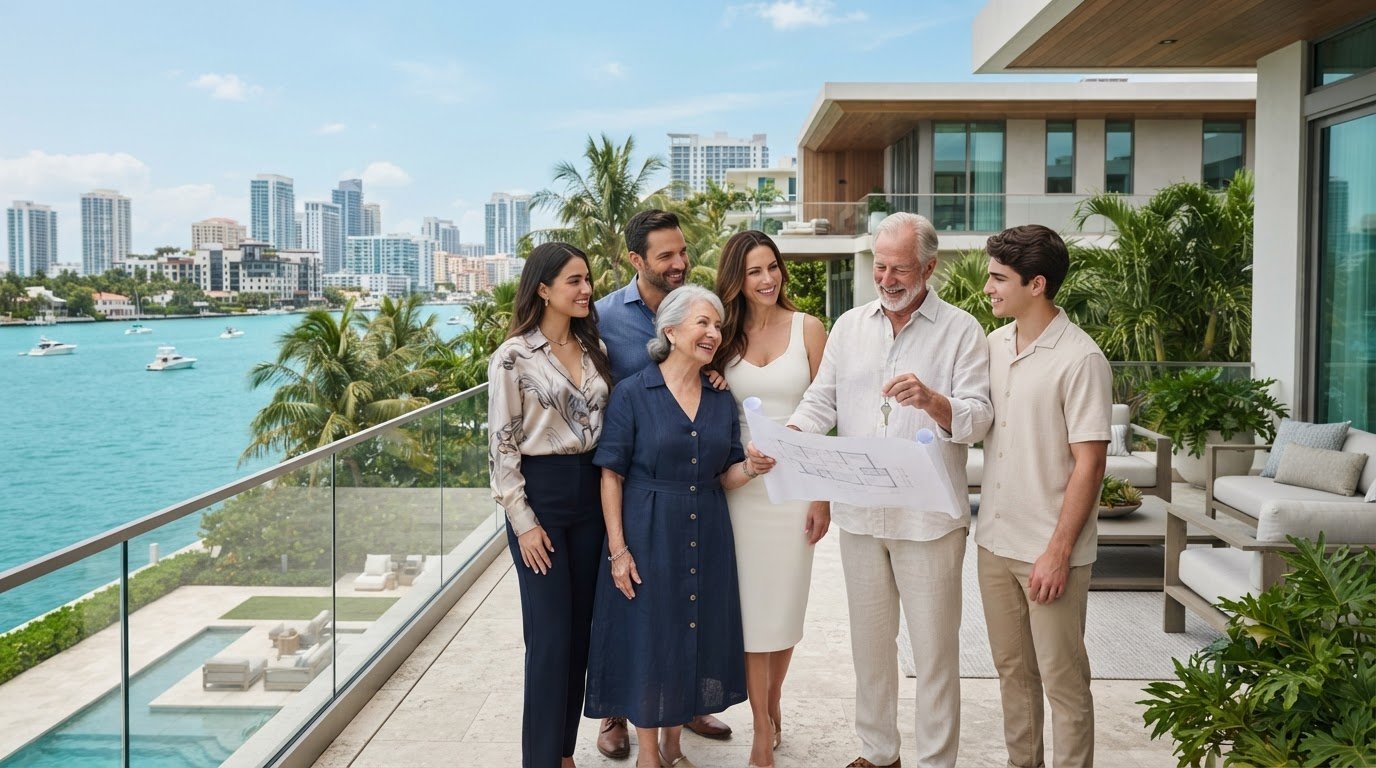
What if your first Florida property could become more than an investment for you? Building generational wealth with Florida real estate starts with a long-term plan, not a promise of quick returns. To begin, decide what you want property to do for your family, what responsibilities you can take on, and how long you expect to hold an asset. Those choices help narrow the search before you compare listings.
Property can become a family asset to acquire, care for, and eventually pass on. This guide covers the stages involved, how to compare residential, new-construction, and investment properties, and how ownership and succession planning fit into the bigger picture. Real estate may support a wealth strategy, but results depend on property-specific decisions, ongoing costs, and changing market conditions.
Florida markets vary from Miami, Miami Beach, Hollywood, and Fort Lauderdale to Palm Beach, Palm Beach Gardens, Stuart, Jupiter, Palm City, Port St. Lucie, Fort Pierce, Vero Beach, and Melbourne. Rather than choosing a location based on reputation alone, compare the property, its intended use, and its ongoing responsibilities. Local brokerage guidance can help you assess opportunities across these communities and make informed choices for the long term.
Key Takeaways
- Building generational wealth with Florida real estate calls for a long-term family plan. Equity, rental income, and appreciation are possibilities, not guarantees.
- Set family goals and assess readiness before choosing a property. Owning a home isn’t the only way to participate in real estate investing.
- Compare property types by intended use, management needs, and ongoing responsibilities, not just by location or potential returns.
- Make property-specific due diligence and consistent recordkeeping part of ownership, including attention to insurance, flood exposure, zoning, and condition.
- Local brokerage guidance can help connect your goals to property opportunities and support comparisons across Florida markets.
What Building Generational Wealth with Florida Real Estate Actually Means
Building generational wealth with Florida real estate is a long-term goal: using property to develop assets and opportunities that may benefit future generations. It isn’t a promise that a purchase will produce profit or lasting security. A useful definition is simple: generational wealth is value a family aims to build, preserve, and pass forward, while recognizing that outcomes depend on decisions and circumstances. For a broader foundation, explore understanding generational wealth.
Property can contribute value in different ways, and those components shouldn’t be confused. Equity is the portion of a property’s value that belongs to its owner after accounting for debt. It may change as debt is paid down or the property’s market value shifts. Rental income is money received from tenants, but the amount remaining after expenses can vary, and vacancies may interrupt it. Appreciation is an increase in market value over time. It’s uncertain and isn’t realized until a sale or other transaction.
Each potential benefit comes with responsibilities. Owners must account for ongoing costs, repairs, maintenance, and management, as well as risks that can affect the property or its use. Debt adds another obligation. A realistic family plan considers both what an asset could contribute and what it will take to maintain, rather than treating ownership itself as proof of wealth.
How Florida real estate can fit into a family wealth plan
A home may meet a family’s housing needs and, depending on future choices, become an asset to pass on. A rental property may be intended to generate income, while a commercial property may serve a business or investment purpose. These roles aren’t interchangeable. Local market conditions, property characteristics, and the family’s goals all shape what an asset can realistically do.
Long-term ownership means considering how a property could fit into family plans over time, including its costs and care. Short-term speculation focuses more on a near-term change in value or a quick transaction. Neither label guarantees an outcome, and no single approach suits every family. A property search becomes more purposeful when you define its intended role before comparing locations or property types.
Why one property does not automatically create generational wealth
A purchase is a starting point, not a complete plan. Carrying costs continue even when a property isn’t producing income. Vacancies can reduce rental receipts, repairs require attention and money, and debt payments affect how much value an owner retains. These pressures don’t mean property can’t support family goals; they mean the plan needs to account for the full experience of ownership.
Appreciation varies with the property, location, and market conditions, so a past increase doesn’t establish what will happen next. Owners also make ongoing decisions about maintenance, use, expenses, and whether to retain or sell an asset. Assess these responsibilities alongside the potential benefits. That distinction turns a broad ambition into a practical wealth-building goal without presenting a financial outcome as certain.
How Florida Property Wealth Develops: From First Asset to Long-Term Stewardship
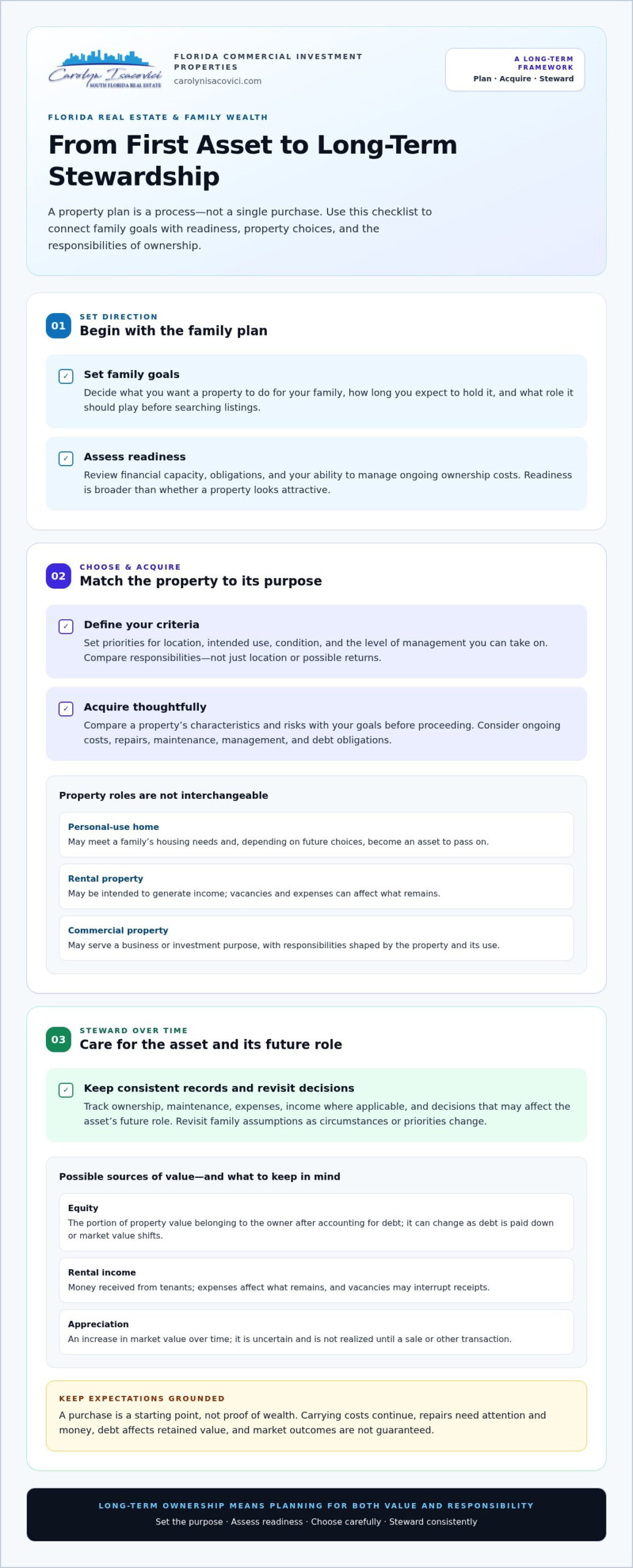
A family property plan doesn’t have to begin with a purchase. Start with a clear goal, a realistic view of resources and responsibilities, and an understanding of what role real estate might play. Building generational wealth with Florida real estate is a process, not a single transaction. Ownership, stewardship, and transfer planning are distinct stages: acquiring an asset begins the work, caring for it sustains its usefulness, and preparing for continuity helps the family consider what comes next.
Use this sequence as a framework, not a rigid formula. Families may enter at different stages, and homeownership isn’t a requirement for every wealth plan.
- Set family goals. Identify the intended purpose and time horizon before looking at listings.
- Assess readiness. Review your financial capacity, obligations, and ability to manage ongoing ownership costs. Readiness is broader than whether a particular property looks attractive.
- Define criteria. Set priorities for location, property use, condition, and the level of management you can take on.
- Acquire thoughtfully. Compare the property’s characteristics and risks with your goals before proceeding.
- Steward over time. Track ownership, maintenance, expenses, income where applicable, and decisions that affect the asset’s future role.
Set a family goal before searching for a property
What should the asset do for your family? A personal-use home may meet a housing need, while a rental property or commercial asset may be considered for investment or business purposes. Each choice comes with different demands. Clarify your time horizon, intended use, and willingness to oversee maintenance or management. Write down your assumptions, including what would make the property a good fit, then revisit them when family circumstances or priorities change.
Keep financial readiness distinct from the property search. A listing can prompt useful questions, but it shouldn’t replace a careful review of the resources and obligations involved in ownership. General educational guidance can help frame decisions. Financing and tax questions depend on individual circumstances and call for advice suited to those circumstances, and exploring mortgage solutions at smarthomeloans.net can help buyers evaluate residential or commercial loan options.
Move from acquisition to stewardship and future continuity
Once a property is acquired, organized records make ongoing decisions easier. Keep ownership documents and a clear history of maintenance, repairs, expenses, income, and major choices together. These details can help family members understand how the property has been managed and what responsibilities may continue. Review the records periodically, especially when the property’s use changes or a new generation becomes involved.
Continuity planning begins with conversation, not assumptions. Who understands the property’s role? Who may be involved in future decisions? What would family members need to know to care for it? These are planning prompts, not legal instructions. Ownership structure, estate questions, and tax considerations vary by individual circumstances, so don’t treat a general article as a substitute for advice tailored to your situation.
As goals turn into a search, local brokerage guidance can help you compare Florida opportunities against your intended use and priorities. Explore Florida property search guidance as you shape those criteria.
How to Compare Florida Locations and Property Types for Family Wealth
Which Florida property is right for a family’s long-term plan? Start with fit, not a city’s reputation or a broad market narrative. A market name can suggest where to look, but property-level facts and your ownership goals show whether an opportunity fits. Compare intended use, local conditions, due diligence, and the responsibilities you can sustain when building generational wealth with Florida real estate.
Compare South Florida and Atlantic Coast markets thoughtfully
Miami, Miami Beach, Hollywood, Fort Lauderdale, Palm Beach, and Palm Beach Gardens offer South Florida starting points for research. Stuart, Jupiter, Palm City, Port St. Lucie, Fort Pierce, Vero Beach, and Melbourne add Atlantic Coast communities to the comparison. These locations aren’t blanket recommendations. Conditions can differ by neighborhood and property, so look beyond regional descriptions. Consider access, condition, insurance factors, and applicable local requirements for the specific property and its intended use.
Use a comparison like the one below to organize questions, then investigate the individual opportunity rather than assuming a city or property category tells the whole story.
| Location | Property type | Intended use | Due diligence | Ongoing responsibilities |
|---|---|---|---|---|
| Miami | Residential | Personal use or rental | Review condition, access, insurance considerations, and permitted use | Maintenance, operating costs, and tenant or household needs |
| Fort Lauderdale | Multifamily | Housing for multiple households or rental investment | Assess each unit, shared areas, access, and local requirements | Building upkeep, tenant needs, and coordination across units |
| Palm Beach | Commercial | Business use or commercial investment | Evaluate condition, access, intended use, and applicable requirements | Property operations, maintenance, and business or occupant needs |
| Stuart | New construction | Residential use or investment | Review plans, specifications, location, and expected responsibilities | Ongoing care, operating costs, and future maintenance |
| Melbourne | Residential or multifamily | Personal use or rental | Compare property condition, access, insurance, and intended use | Maintenance and, where relevant, tenant and shared-space management |
Match property type to ownership goals and capacity
Residential property may serve personal housing needs or a rental purpose. Multifamily ownership adds shared spaces and coordination across households. Commercial property brings its own operational and use considerations. None is inherently superior; the right comparison depends on the family’s goals, resources, and management capacity.
New construction calls for attention to plans, specifications, location, and how the finished property is expected to serve its owners. Existing properties require close review of present condition and ongoing needs. Compare both against the same family priorities, and assess each opportunity on its own merits.
Local market knowledge can help narrow a search across South Florida and Atlantic Coast communities. Keep the final comparison specific: the property, location, intended use, and responsibilities together determine whether an opportunity aligns with a family plan.
How to Reduce Risk and Prepare Florida Property for the Next Generation
Property stewardship is ongoing. Due diligence doesn’t end at closing because a building’s condition, its use, family needs, and local circumstances can change. A practical approach to building generational wealth with Florida real estate keeps those changes visible, documents decisions, and prepares family members to understand the responsibilities attached to the asset. These steps can strengthen decision-making, but they can’t eliminate market or ownership risk.
Keep property-level risks visible throughout ownership
Maintain an organized record of the property’s condition, repairs, routine maintenance, operating costs, occupancy, and significant ownership decisions. A clear history can help reveal recurring issues and give future decision-makers useful context. Revisit the record when the property changes use, requires major work, or no longer fits the family’s original plans.
Florida properties can have different insurance and flood considerations, even within the same community. Review current, property-specific information rather than relying on general descriptions of an area. Zoning and other local requirements also matter to how a property may be used. Let the property’s location, condition, and intended purpose inform due diligence, and revisit assumptions when conditions change.
A working checklist can keep reviews practical:
- Update records of maintenance, repairs, property condition, and operating costs.
- Review occupancy and whether the current use still matches family goals.
- Revisit insurance and flood exposure using current information for the specific property.
- Keep relevant property documents and decision records organized for family continuity.
- Note open questions about zoning, local requirements, or changes in property use for appropriate follow-up.
No checklist removes uncertainty. Its purpose is to help owners notice changes early, make informed choices, and avoid relying on outdated assumptions. A change in family circumstances may also affect whether the property remains suitable, even if the building itself hasn’t changed.
Make future ownership conversations part of the plan
Continuity starts with shared understanding. Discuss the property’s intended role, who is involved in its care, how decisions are made, and what responsibilities may carry forward. These conversations can surface different expectations before a transition is needed. They’re prompts for planning, not a substitute for formal documents or individualized guidance.
Questions about ownership structure, estate planning, and tax treatment depend on the family’s facts and circumstances. Arrangements such as LLCs or trusts may be relevant in some situations, but no structure or transfer method is right for everyone. Consulting wealth and tax planning advisors, such as Timothy Roberts & Associates, LLC, can help families coordinate these elements within a broader financial plan rather than adopting a one-size-fits-all solution.
For the property side of a long-term plan, explore Florida property opportunities with brokerage support across residential, commercial, new-construction, and investment property sales.
How Florida Real Estate Brokerage Can Support a Long-Term Family Plan
A long-term property goal can feel abstract until it becomes a focused search. Brokerage support connects that goal to real estate options and transaction decisions, whether you’re considering a residential home, new construction, an investment property, or a commercial asset. It’s a practical link between family priorities and a property search, not a promise of future appreciation, income, or wealth transfer.
Turn long-term goals into a focused Florida property search
Start with what you want the property to do, how long you expect to own it, and what responsibilities fit your plans. Those answers help shape search criteria such as location, property type, intended use, and features that matter to your family. A personal-use home and an investment acquisition call for different comparisons, even if they’re in the same community.
Local market knowledge can help put opportunities in context across Miami, Miami Beach, Hollywood, Fort Lauderdale, Palm Beach, Palm Beach Gardens, Stuart, Jupiter, Palm City, Port St. Lucie, Fort Pierce, Vero Beach, Melbourne, and nearby Florida communities. Rather than treating a region as one uniform market, compare specific properties against your intended use and priorities. The Florida real estate portfolio-building guide offers another perspective on how property choices can fit into a broader plan.
Florida Commercial Investment Properties provides brokerage for residential, commercial, new-construction, and investment-property sales. The firm can help identify and compare relevant opportunities and support the transaction through a sale or purchase. Brokerage is distinct from lending, legal advice, tax planning, and ongoing property management. Keeping those responsibilities separate helps families understand what brokerage guidance contributes while addressing other questions through advice tailored to their circumstances.
Take a measured next step with an experienced Florida broker
Bring a few useful starting points to the conversation: your goals, timeline, preferred locations, property type, intended use, and management capacity. You don’t need every detail settled before beginning. A focused discussion can help clarify which criteria are firm, which are flexible, and what kinds of opportunities may be worth comparing.
Good decisions take careful evaluation. Consider a property in light of its characteristics, location, intended use, and fit with the family’s plans, not pressure to act quickly. Brokerage guidance can support the search and transaction process, while outcomes remain subject to market conditions and ownership responsibilities.
If you’re ready to discuss your Florida property goals and possible next steps, start a conversation about Florida real estate.
Give Your Family’s Property Plan a Clear Next Step
Building generational wealth with Florida real estate begins with a decision your family can make thoughtfully: define what you want a property to contribute, then explore options that fit your goals and capacity. The next move doesn’t need to be a purchase. It can be a focused conversation that turns a broad ambition into useful search criteria.
Florida Commercial Investment Properties provides brokerage support for commercial, residential, new-construction, and investment-property sales across South Florida and Atlantic Coast communities. That local perspective can help you consider opportunities in context while weighing the needs of your long-term plan. Property remains one possible wealth-building tool, not a guaranteed financial outcome.
Bring your priorities, preferred property type, and questions about location to the conversation. A measured search gives you room to compare possibilities and decide what aligns with your family’s direction. Explore Florida investment property opportunities and take a thoughtful first step toward a plan built around your goals.
Frequently Asked Questions
Can Florida real estate guarantee generational wealth?
No. Florida real estate can’t guarantee family wealth or a successful transfer. Potential appreciation and rental income are uncertain, and outcomes also depend on purchase decisions, financing, property condition, operating costs, market changes, and family circumstances. For example, a change in who can oversee repairs may affect whether keeping a rental remains practical. Treat property as one possible asset within a broader plan, and assess the risks before committing.
Is one rental property enough to build generational wealth?
One rental property may become a meaningful family asset, but the number of properties alone doesn’t determine its value to a family. Consider whether its condition, income potential, carrying costs, and future responsibilities align with your goals. A single property that fits the family’s capacity may be more appropriate than expanding into a portfolio that’s difficult to manage. Focus on sustainable ownership and the role the asset could serve over time.
How can someone start building real estate wealth with limited experience?
Start by outlining what you want property to accomplish, how long you may hold it, and how much involvement you’re prepared to take on. Learn how location, property type, condition, and operating costs affect ownership before making a decision. Your first step doesn’t have to be a purchase. Researching options and having a focused conversation about Florida properties can help clarify priorities and identify what you still need to learn.
What Florida property risks should families consider before buying?
Risks depend on the specific property and its location. A careful review may include the building’s condition, insurance considerations, flood exposure, zoning, operating costs, and applicable local requirements. For instance, a property’s intended use may make zoning questions especially relevant. Use current information tied to the property rather than assuming nearby properties share the same conditions. A checklist can support review, but it can’t remove risk; legal, insurance, and tax questions need advice tailored to your situation.
Can commercial real estate help build generational wealth in Florida?
Commercial real estate may suit some family plans, but its fit depends on the asset, intended use, owner’s capacity, and market conditions. A commercial property may involve different operating and occupancy considerations than a home, so compare the actual responsibilities rather than assuming one category performs better. Families exploring commercial opportunities in places such as Miami, Fort Lauderdale, or Palm Beach can assess each property’s characteristics and timeline without relying on broad return or demand predictions.
What happens to a Florida property when its owner dies?
What happens depends on how the property is owned, the owner’s circumstances, and any relevant planning documents. There isn’t one outcome that applies to every family. Heirs may need to understand the property’s ongoing costs, condition, and intended use as they consider their next steps. Include succession questions in long-term planning, and seek individualized legal guidance to understand how ownership and planning documents apply to your circumstances.
Does Florida real estate make sense for every family wealth plan?
No. Property ownership takes resources, attention, and a willingness to accept risks that vary by asset and market. A family weighing options in Miami, Stuart, or Melbourne should look beyond the city name and consider whether a particular property, its obligations, and its timeline fit their priorities. Florida offers a range of real estate opportunities, but location by itself doesn’t establish suitability. It’s reasonable to decide another asset or approach better fits your family.
Leave a Reply