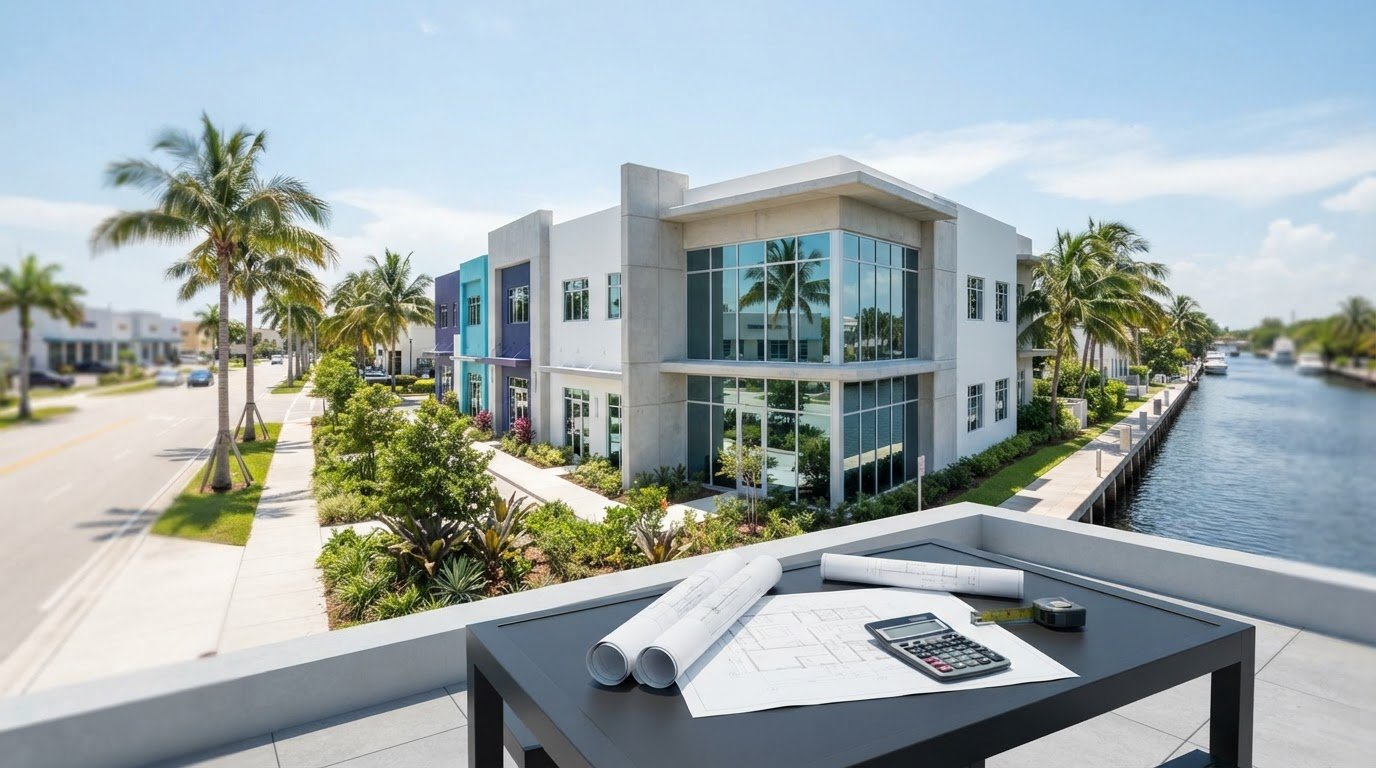
What if the lowest-priced listing becomes the most expensive choice over time? Finding affordable commercial property Fort Lauderdale buyers can put to work means looking beyond the asking price to condition, permitted use, insurance, taxes, and ongoing operating costs. A low price is a sound opportunity only when the full ownership picture fits your plan.
That can be difficult to judge because office, retail, industrial, and multifamily properties come with different considerations, and costs vary by location and building. The key question is whether a listing is genuinely affordable for your needs, not simply less expensive upfront. Start with your budget, intended use, and ability to manage the property over time.
This 2026 buyer’s guide shows you how to define affordability, compare Fort Lauderdale properties using consistent criteria, and identify what to verify before moving forward. You’ll see how condition, zoning, location, and operating obligations can affect value, and where commercial brokerage guidance may help clarify your search and purchase process. Asking focused questions can help you avoid mistaking a low asking price for a good fit.
Key Takeaways
- Define affordability by how a property’s price, condition, intended use, and ongoing obligations fit your plan.
- Compare office, retail, industrial, and multifamily options against your business needs and location priorities.
- Use the same criteria to assess affordable commercial property Fort Lauderdale listings rather than relying on asking price alone.
- Separate your initial screening from property inspections and document review, and verify details for each candidate.
- Set clear criteria and prepare focused questions. Commercial brokerage guidance can help you navigate the search and purchase.
What makes commercial property affordable in Fort Lauderdale?
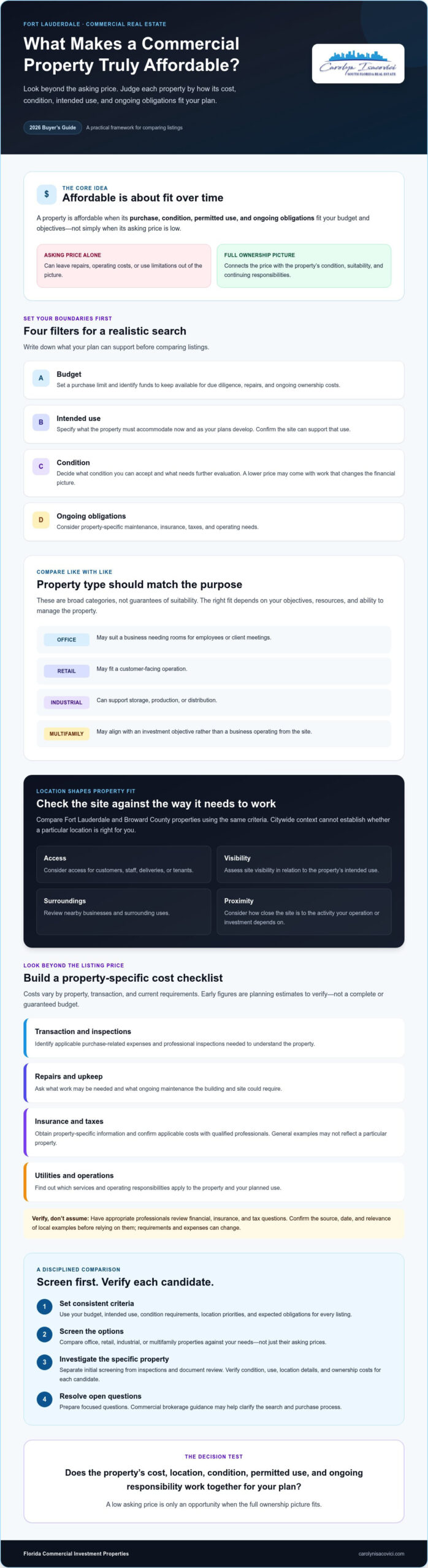
A manageable asking price is only the starting point. To decide whether a property is affordable, consider how the purchase fits your available budget, whether the property suits your intended use, what condition it’s in, and what obligations you’ll have after purchase. A less expensive building may need work or ongoing spending that changes the financial picture. A higher-priced option may be a better fit if it aligns more closely with your plan.
Affordable commercial property is a property whose purchase, condition, permitted use, and ongoing obligations fit a buyer’s budget and objectives over time.
Set your boundaries before browsing listings. Define the maximum amount you can commit to the acquisition, then decide what funds you need to keep available for due diligence, repairs, and ongoing ownership costs. Write down your intended use and nonnegotiable features. This gives you a more useful filter than asking price alone and helps you recognize when a listing would require trade-offs your plan can’t support.
- Budget: Set a purchase limit and identify funds to reserve beyond the acquisition.
- Use: Specify what the property needs to accommodate now and as your plans develop.
- Condition: Note what you can accept and what needs further evaluation.
- Ongoing obligations: Consider maintenance, insurance, taxes, and operating needs specific to the property.
Which commercial property types might fit your plan?
Start with the purpose of the purchase. Office space may suit a business that needs rooms for employees or client meetings. Retail property may fit a customer-facing operation, while industrial space can support storage, production, or distribution. Multifamily assets may align with an investment objective rather than a business operating from the site. These are broad categories, not guarantees of suitability. The right choice depends on your objectives, resources, and ability to manage the property.
Which Fort Lauderdale factors shape property fit?
Location affects how well a property works for its intended use. Consider access for customers, staff, deliveries, or tenants; site visibility; nearby businesses and surrounding uses; and proximity to the activity your operation or investment depends on. Fort Lauderdale’s commercial context is shaped by Fort Lauderdale’s diversified economy, but citywide context can’t establish whether a particular location is right for you.
Compare properties across Fort Lauderdale and Broward County using the same criteria. Check location-specific conditions and property details, and confirm whether each site can support your intended use before relying on a listing description. The goal isn’t simply to find the lowest asking price. It’s to identify a property whose cost, location, condition, and purpose work together.
How to assess the full cost of Fort Lauderdale commercial property
The asking price is one part of the decision, not the full cost of ownership. A useful comparison accounts for the property’s condition, work it may need, and obligations associated with your intended use. Costs vary by property, transaction, and current requirements. Treat early figures as planning estimates to verify, not as a complete or guaranteed budget.
What costs should buyers investigate beyond the asking price?
Build an investigation checklist for every candidate. It helps you identify questions to resolve before deciding whether a listing fits your budget:
- Transaction and inspections: Identify applicable purchase-related expenses and the professional inspections needed to understand the property.
- Repairs and upkeep: Ask what work may be needed and what ongoing maintenance the building and site could require.
- Insurance and taxes: Obtain property-specific information and confirm applicable costs with qualified professionals. Don’t assume a general example reflects a particular property.
- Utilities and operations: Find out which services and operating responsibilities apply to the property and your planned use.
This checklist is a starting point, not an estimate or an exhaustive list. Have appropriate professionals review property-specific financial, insurance, and tax questions. If you use local cost or tax examples in your research, confirm their source, date, and relevance before relying on them. Requirements and expenses can change.
How can you compare affordability across listings?
Use the same categories for each candidate, and label what’s confirmed, estimated, or still unknown. For example, compare two properties without assuming either is the better value:
- Intended use: Does the property appear suited to your operating or investment objective? What needs confirmation?
- Condition: What is known about its state, and what requires inspection or further review?
- Estimated obligations: Record available information about repairs, insurance, taxes, utilities, and upkeep. Mark unverified figures as estimates.
- Flexibility: Consider whether the property can accommodate your plans and what constraints could affect that fit.
This method turns a stack of listings into a consistent decision process. For broader context on evaluating commercial opportunities in Florida, explore this Florida commercial real estate investor’s guide. The Greater Fort Lauderdale Alliance can also provide regional economic-development context, but it can’t replace property-level checks or establish a specific site’s costs.
Before advancing a candidate, resolve the most important unknowns and keep a written record of what you’ve verified. Buyers who want help clarifying their intended use, budget parameters, and preferred Fort Lauderdale locations can discuss their commercial property search with a brokerage professional.
How Fort Lauderdale location and property type affect value
A property’s usefulness depends on what you plan to do with it and where it sits. Proximity to customers may matter most for a retail business, while access for employees, suppliers, or deliveries may carry more weight for an office or industrial operation. In Fort Lauderdale and across Broward County, compare each candidate with your own priorities rather than relying on broad neighborhood labels or assumptions about value.
How should you compare commercial property types?
Start with the buyer’s objective. Office, retail, industrial, and multifamily properties support different operating or investment plans, and none is automatically more flexible or easier to maintain. The table offers a starting framework, not a substitute for property-specific review.
| Property type | Possible use | Location considerations | Condition questions and verification |
|---|---|---|---|
| Office | Workplace or client-facing business | Access for staff and clients; proximity to relevant business activity | Assess layout and building condition; confirm intended use and any restrictions |
| Retail | Customer-facing business | Visibility, customer access, and nearby uses that relate to the business | Review the space and site; verify that the planned use is permitted |
| Industrial | Storage, production, or distribution | Access for suppliers and transport routes; suitability for deliveries | Evaluate the building and access needs; check use limitations and property details |
| Multifamily | Residential investment objective | Access to the services and destinations relevant to intended occupants | Review the property’s condition and confirm applicable use and restrictions |
Before comparing candidates, identify what your plan requires and what you could adapt. Confirm permitted use and property-specific restrictions with qualified professionals. A listing description alone may not resolve those questions.
Which local location questions should buyers ask?
Make location practical. How will customers or employees reach the site? Can suppliers and deliveries access it as needed? Are transport routes convenient for the operation? Port Everglades and Fort Lauderdale-Hollywood International Airport can serve as regional reference points, but proximity to either doesn’t prove that a particular property will perform well. Check actual access and travel needs for the people and goods connected to your plans.
Visit each candidate and evaluate it in context. Consider surrounding uses, access conditions, and relevant local plans, then verify details that could affect your intended use. This consistent comparison helps buyers assess affordable commercial property Fort Lauderdale options based on fit, not just location names or listing descriptions.
What to verify before buying an affordable Fort Lauderdale property
A low asking price alone doesn’t establish that a property is affordable or suitable. Repairs, restrictions, access limitations, or ongoing obligations may change how well it fits your plans. A careful review helps you distinguish promising candidates from properties that need more investigation before you decide.
What should you check during initial property screening?
Begin with a practical comparison against your intended use. Treat listing details as information to confirm, not verified facts. Record what’s clear, what appears uncertain, and which questions need answers before you commit time and resources to deeper review.
How can due diligence uncover affordability risks?
Use a staged process. Initial screening helps identify questions; professional inspections and document review help investigate them. Repairs, operating obligations, or limits on how you can use a property may affect your assessment, but their significance depends on the specific site and your plans.
- Screen the listing: Compare its description, layout, access, and stated use with your practical requirements. Note visible condition concerns and unanswered questions without treating photographs or listing claims as confirmation.
- Request relevant information: Ask what property records, reports, and other documents are available, and what further review may be needed. Confirm details about access, operating responsibilities, and intended use.
- Arrange property-specific inspections: Engage appropriate inspection and engineering professionals to evaluate condition and identify issues that may need further attention.
- Review use and requirements: Have qualified zoning and legal professionals assess permitted use, restrictions, and applicable local requirements. Confirm insurance questions with an insurance professional and tax questions with a tax professional.
- Reassess your assumptions: Update your comparison when verified details become available. For an investment purchase, test your own assumptions with qualified help rather than relying on a projected return.
This sequence keeps early screening distinct from expert review. It also creates a clear record of what you know, what remains an estimate, and which questions must be resolved before deciding whether an affordable commercial property Fort Lauderdale listing fits your objectives. For another framework to consider as you evaluate an investment, read this Florida investment property evaluation guide.
For help clarifying your property criteria and navigating a commercial purchase, discuss your Fort Lauderdale commercial property search with a brokerage professional.
Moving from Fort Lauderdale Property Search to Purchase
A clear search makes the next steps easier. Before contacting a broker, organize what you’re looking for and what you’re prepared to consider. Your criteria don’t need to be perfect; they should give the conversation a useful starting point and help you assess opportunities consistently.
What information should you prepare before contacting a broker?
Write down the essentials first: intended use, preferred property category, Fort Lauderdale locations that suit your plans, and budget boundaries. Separate must-haves from negotiable preferences. For example, access or a particular layout may be essential, while other features could be acceptable trade-offs if the property otherwise fits.
- Purpose: Explain how you expect to use the property or what investment objective you’re pursuing.
- Property type and location: Identify the categories and areas you want to consider, along with access or proximity needs.
- Budget parameters: Share your acquisition boundaries and any limits that may shape your search.
- Questions: Prepare questions about current availability, property information, the sale process, and what needs independent verification.
This preparation keeps conversations focused without assuming a particular property is available or suitable. It also makes it easier to compare candidates against your priorities rather than changing your criteria with every new listing.
How can brokerage guidance support your search?
A commercial brokerage can help clarify search criteria, identify and pursue commercial property opportunities, and guide you through the real estate sale process. Florida Commercial Investment Properties provides commercial property sales and brokerage support, including in Fort Lauderdale. The firm also serves buyers and investors in Miami, Miami Beach, Hollywood, Palm Beach, Palm Beach Gardens, Stuart, Jupiter, Palm City, Port St. Lucie, Fort Pierce, Vero Beach, and Melbourne. Brokerage support can help with the search and transaction, but it doesn’t guarantee inventory, financing, an outcome, or a property’s future performance.
Keep specialist questions with the right professionals. Consult a qualified legal professional about legal matters, a lender about lending questions, a tax professional about taxes, and appropriate inspectors or engineers about property condition. Zoning, insurance, and other property-specific matters may also call for qualified expertise. Coordinating these reviews helps you make decisions using verified information while keeping each question within the relevant professional’s scope.
The path from search to purchase is a sequence: define your criteria, review candidates, verify property details, and prepare focused questions as you evaluate each opportunity. If you’re considering affordable commercial property Fort Lauderdale buyers can assess against a clear plan, discuss your Fort Lauderdale commercial-property goals with Florida Commercial Investment Properties. A conversation about your intended use, budget parameters, and preferred locations can help clarify where to focus your search.
Take Your Fort Lauderdale Property Search Forward
A sound purchase starts with a clear plan, not simply the lowest asking price. Define your budget around the full ownership picture, compare properties by intended use and location, and verify condition, access, and property-specific obligations before deciding. These steps can help you identify an opportunity that fits your objectives rather than stretching your resources or relying on unconfirmed listing details.
Finding affordable commercial property Fort Lauderdale buyers can evaluate with confidence takes careful comparison and timely questions. You don’t have to resolve every detail alone. Florida Commercial Investment Properties provides commercial property sales and investment brokerage support in Fort Lauderdale and across its Florida markets. The firm can help clarify search criteria and navigate a real estate sale. For legal, lending, tax, insurance, and inspection matters, consult the appropriate qualified professionals.
Ready to discuss your intended use, budget parameters, and preferred locations? Discuss your Fort Lauderdale commercial property goals with Florida Commercial Investment Properties and take the next step with a clearer direction.
Frequently Asked Questions
What counts as affordable commercial property in Fort Lauderdale?
Affordable commercial property fits your acquisition budget, intended use, property condition, and ongoing obligations. A low asking price alone doesn’t make a building affordable if repairs, operating needs, or use restrictions make it unsuitable for your plan. Set a purchase limit, identify funds to reserve for other costs, and compare properties using the same criteria. The right fit depends on your objectives and the specific property, not a general price benchmark.
How do I find affordable commercial property in Fort Lauderdale?
Start by searching for affordable commercial property Fort Lauderdale listings that match your intended use, preferred property type, location needs, and budget boundaries. Decide which features are essential and where you can make trade-offs before comparing candidates. Treat listing details as information to verify, then investigate condition, access, permitted use, and ongoing obligations. A commercial real estate broker can help clarify search criteria and navigate a purchase, while qualified specialists address technical or professional review questions.
Is a low-priced commercial property always a good investment?
No. A low asking price doesn’t establish that a property suits your needs or investment objectives. The building may require repairs, have restrictions that affect your intended use, or involve operating obligations that change your assessment. Verify property details and consider the full ownership picture before deciding. If you’re assessing an investment, test your assumptions with qualified professionals rather than relying on a listing description or assuming the property will produce a particular return.
What types of commercial property can I buy in Fort Lauderdale?
Common categories to consider include office, retail, industrial, and multifamily properties. Office space may suit a workplace, retail may support a customer-facing business, industrial space can accommodate uses such as storage or distribution, and multifamily property may fit a residential investment objective. These are broad examples, not confirmation that a particular property is available or suitable. Compare each option with your goals, then verify permitted use and any property-specific restrictions.
What costs should I consider when buying commercial property?
Look beyond the asking price. Investigate transaction expenses, inspections, repairs, insurance, taxes, utilities, maintenance, and other operating obligations that may apply. Relevant costs vary with the property, transaction, intended use, and current requirements, so a general example may not fit your situation. Ask appropriate professionals to review property-specific financial, insurance, and tax questions, and distinguish verified figures from estimates or details that still need confirmation.
Do I need a commercial real estate broker to buy in Fort Lauderdale?
You don’t necessarily have to use a broker, but brokerage guidance can help clarify your criteria, identify and pursue commercial property opportunities, and navigate a sale. Florida Commercial Investment Properties provides commercial property sales and investment brokerage support in Fort Lauderdale. A broker doesn’t replace qualified legal, lending, tax, insurance, or inspection professionals. Consider what support would be useful to your search, then decide how you want to approach the purchase.