
What if the first step in buying a Florida rental isn’t choosing a city or touring a property, but agreeing with your co-investor on what success looks like? If you’re researching how to buy a rental property in Florida, that conversation can help you avoid pursuing a home that doesn’t fit your shared budget, timeline, or comfort with risk.
It’s reasonable to feel unsure where to begin. Florida offers a wide range of markets and property types, and insurance, taxes, maintenance, and vacancies can all affect whether a rental fits your financial plan. Partners may also have different ideas about how much uncertainty they’re willing to accept. A practical process helps you address these questions before they become obstacles.
This guide will help you align on an investment plan, compare properties using consistent criteria, and understand the key purchase and due-diligence steps before making an offer. You’ll assess a property’s location, rental potential, condition, and ongoing costs, then move through the transaction with a clearer sense of what to review and when. With agreed priorities and Florida market guidance, you can search with purpose and make a considered decision together.
Key Takeaways
- Agree on shared goals, budget, timeline, and risk tolerance before searching so you can assess properties against the same plan.
- Follow a clear process for how to buy a rental property in Florida, from planning and financing through due diligence and closing.
- Compare locations and properties consistently, weighing rental fit, condition, operating demands, and unresolved risks.
- Test your assumptions against vacancies, repairs, insurance changes, and delays before deciding whether a property suits your household.
- Local acquisition guidance can help organize your search and transaction around your investment priorities.
Before you buy a rental property in Florida, align on the investment plan
A rental purchase can shape household finances, free time, and future plans long after closing. Before comparing Florida listings, make sure you and your co-investor agree on what the property is meant to do. Is the priority rental income, long-term ownership, possible future personal use, or diversification across investments? Different aims can point toward different locations, property types, and levels of hands-on involvement.
You don’t need to settle every detail right away. Start by separating must-haves from preferences. You might require a property within a defined area or one that can be managed with limited involvement, while a particular architectural style or extra bedroom may simply be desirable. Learning about real estate investing strategies can help frame your options, but your shared goals should determine which approaches are worth considering.
How to discuss a Florida rental purchase with your spouse
Ask each partner to name their main concern before comparing properties. One person may worry about unexpected repairs; the other may focus on location or the time needed to oversee tenants. Turn each concern into a question you can investigate: What happens if rent is lower than expected? How much work are you both willing to take on? What options would you consider if you later wanted to sell or use the property?
Agree to review evidence together, not just optimistic projections. This makes it easier to discuss assumptions calmly and spot gaps before they influence an offer.
Set a realistic investment boundary before searching
Write a short decision brief that records your shared goals, available funds, reserve approach, risk tolerance, responsibilities, and conditions for walking away. Don’t assume a particular financing outcome. Your options and qualifications depend on the buyer and lender. Instead, agree on the financial boundaries you can control and list the questions that still need answers.
Make the plan practical by defining acceptable maintenance demands, vacancy scenarios, and time commitment. For example, decide whether a property needing substantial work is outside your comfort zone, or whether you’d consider it only if the workload and costs are understood. Assign who will review the numbers, coordinate property visits, and track unanswered questions.
- Goals: income, long-term ownership, future use, or diversification.
- Preferences: location, property type, and level of management involvement.
- Boundaries: risk limits, responsibilities, reserve expectations, and walk-away conditions.
Keep the brief visible as you search. An appealing listing can tempt partners to revise their standards on the spot; written criteria provide a steady reference. This alignment is a practical first step in how to buy a rental property in Florida. It also gives local brokerage guidance a clear purpose: comparing properties with the plan you made together.
How to buy a rental property in Florida step by step
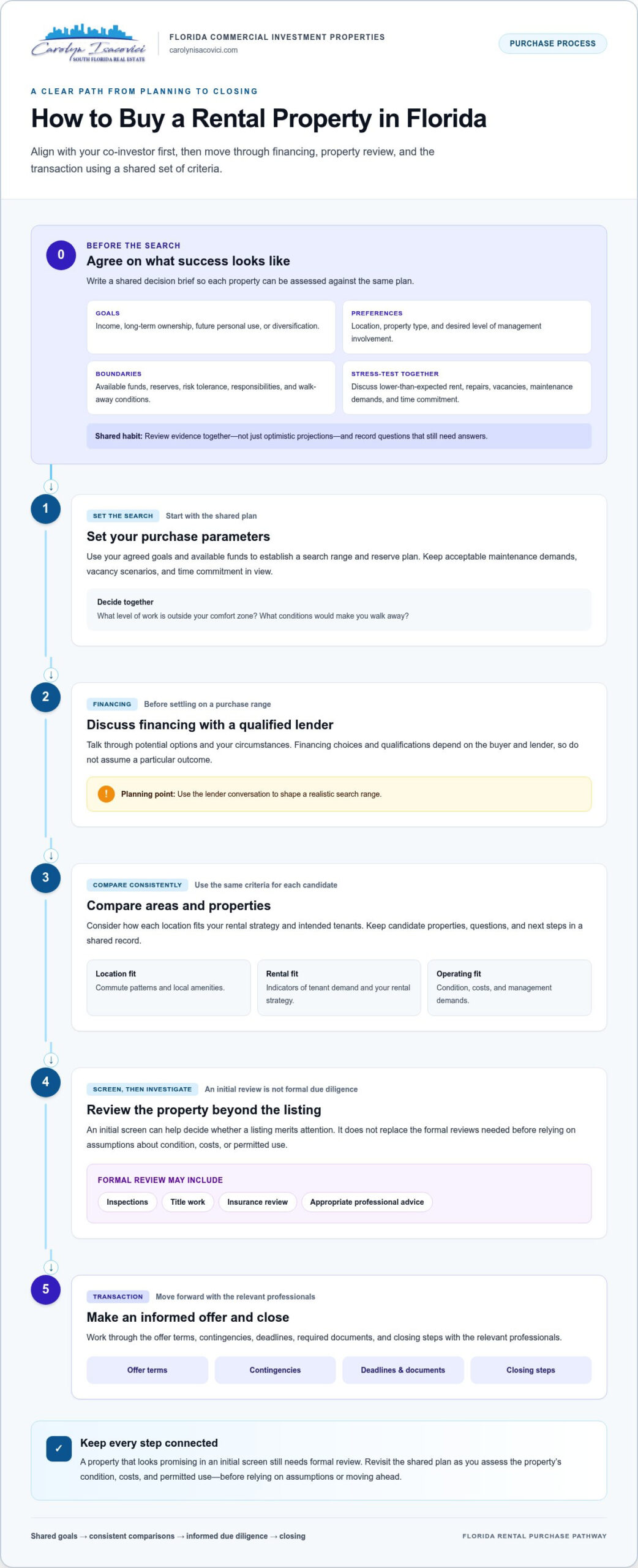
Once you and your co-investor have a shared plan, turn it into a repeatable purchase process. Knowing how to buy a rental property in Florida means more than finding a promising listing. Financing, property evaluation, contract deadlines, and closing all need to fit together.
- Set your purchase parameters. Use your agreed goals and available funds to establish a search range and reserve plan.
- Discuss financing. Talk with a qualified lender about potential options and your circumstances before settling on a purchase range. Financing choices and qualification depend on the buyer and lender.
- Compare areas and properties. Consider commute patterns, indicators of tenant demand, and how each location fits your rental strategy. For a deeper metrics framework, see this guide to evaluating investment property in Florida.
- Screen, then investigate. An initial review helps you decide whether a listing merits attention. It doesn’t replace formal inspections, title work, insurance review, or advice from the appropriate professionals.
- Make an informed offer and close. Work through offer terms, contingencies, deadlines, required documents, and closing steps with the relevant professionals.
Keep the steps connected. A property that appears to fit your rental plan during an initial screen still needs formal review before you rely on assumptions about its condition, costs, or permitted use.
Prepare your finances and define the search
Before touring properties, discuss funding with a qualified lender and use that conversation to shape a realistic search range. Then compare candidate areas against your intended tenants and rental strategy. Commute patterns may matter to some renters; access to employment, services, and other local amenities may also inform your research. Use the same criteria for every candidate rather than letting an appealing listing redefine the plan.
Florida Commercial Investment Properties provides brokerage guidance to help organize a property search around your priorities. Keep a shared record of candidate properties, questions, and next steps so both partners can assess the options on the same basis.
From offer acceptance to closing
After an offer is accepted, put inspection, financing, title, insurance, and document deadlines in one shared checklist. Each offer should include contingencies and timelines suited to the property and transaction. Have contract terms reviewed by appropriate real estate and legal professionals, and consult the Florida Landlord and Tenant Law as a reference for the state’s landlord-tenant framework.
Revisit your decision if inspection findings, insurance terms, or other due-diligence results materially change your original assumptions. Florida real estate brokerage guidance can help keep the search and transaction organized around your agreed criteria as you consider the next step.
Compare Florida rental properties by risk, location, and operating demands
A city name or attractive rent estimate can’t tell you whether a particular property fits your investment plan. Compare each candidate against the same criteria, using current, property-level evidence and clearly dated assumptions. This makes trade-offs easier to see and helps you avoid treating projected rent or appreciation as a promise.
| Criterion | What to compare | Questions to resolve |
|---|---|---|
| Location | Neighborhood access, commute patterns, amenities, and evidence of tenant demand | Does this specific area suit your intended renter and rental strategy? |
| Property condition | Age, visible condition, inspection findings, and likely maintenance needs | What needs attention now, and what may affect future upkeep? |
| Rental fit | Property layout, target tenant, and applicable local rental or association restrictions | Can the property be rented as you intend, and under what conditions? |
| Operating needs | Insurance terms, ongoing maintenance, and expected management involvement | Do the demands fit your budget, time, and comfort with risk? |
| Unresolved risks | Flood exposure, insurance availability, incomplete records, and unanswered questions | What evidence or professional review is still needed before an offer? |
Compare Florida locations without relying on broad stereotypes
Compare neighborhoods and properties, not just citywide headlines. South Florida and the Treasure Coast each include varied locations, so assess every candidate against your rental strategy rather than assuming a whole region has one demand profile. Florida Commercial Investment Properties assists with residential and investment property sales across markets including Miami, Miami Beach, Hollywood, Fort Lauderdale, Palm Beach, Palm Beach Gardens, Stuart, Jupiter, Palm City, Port St. Lucie, Fort Pierce, Vero Beach, and Melbourne. Look for current evidence relevant to the specific property, including access to local amenities, likely tenant needs, and operating expenses. Record when rent or appreciation estimates were gathered, and treat them as assumptions to test, not guaranteed outcomes.
Which property risks deserve closer review?
Coastal exposure and flood risk can influence insurance terms and availability, while a property’s age and condition may affect maintenance needs. Treat these as due-diligence questions, not reasons to assume every coastal or older property carries the same risk. Review property-specific information and seek appropriate professional input where needed. Rental rules, zoning, and condominium or homeowners association restrictions can also vary by location and property, so verify what applies to each candidate.
If you’re weighing a different asset class rather than comparing rental homes, review commercial and residential investment differences in Florida. Otherwise, keep your comparison focused on residential options that match your plan. This disciplined approach to how to buy a rental property in Florida helps reveal which assumptions are supported and which still need investigation before you move forward.
Use a shared due-diligence checklist to test the rental property plan
Due diligence turns a promising listing into a decision you can support with evidence. Keep one shared checklist so both partners review the same records, use the same assumptions, and can see which questions remain open. This step in how to buy a rental property in Florida helps you assess whether the property still fits your plan when you account for uncertainty, not just the expected outcome.
- Property: Review inspection findings, property disclosures, permits, title matters, and the condition of major components with qualified professionals.
- Financial: Compare documented purchase and operating costs with your assumptions. Test how the plan changes if repairs cost more than expected, rent is delayed, or the property sits vacant.
- Insurance: Review available terms, exclusions, deductibles, and renewal details. Consider how a change in coverage or cost would affect your reserve plan.
- Legal and permitted use: Confirm applicable rental permissions, zoning considerations, and condominium or homeowners association rules for the specific address. Have legal questions and contract matters reviewed by an appropriate legal professional.
- Operating: Estimate the time and coordination needed for maintenance, repairs, and getting the property ready to rent. Check whether planned work could delay the intended rental timeline.
For related evaluation concepts, consult the Florida investment property evaluation guide. Use it alongside this checklist, not as a substitute for property-specific investigation.
Verify the property and its intended use
Inspection findings can change your repair assumptions, while permit or title questions may require additional review. For a condominium or home governed by an association, check the rules that apply to the specific property and your intended rental plan. If improvements are needed before tenants can move in, include the work and possible delay in your planning. Record the source and date of each important document, along with any follow-up needed.
Make the decision together
Once you’ve gathered the evidence, compare verified costs and conservative scenarios against your shared decision brief. Ask each partner to review the same documents independently, then discuss differences and record unresolved questions. What happens if repairs take longer, vacancy lasts beyond your initial assumption, or insurance terms change? If a key issue involving condition, coverage, or rental use remains unresolved, pause before treating the property as a fit.
A clear checklist won’t remove every unknown, but it can help you distinguish manageable questions from assumptions that could reshape the plan. Florida Commercial Investment Properties offers brokerage guidance to help organize a Florida property search and acquisition. Learn more through Florida acquisition guidance.
Move from a shared Florida rental plan to a confident purchase
A confident offer doesn’t require certainty about every future outcome. It requires agreement on the goal, a property that fits your written criteria, assumptions supported by current evidence, and due diligence thorough enough to understand the major trade-offs. If key facts about condition, insurance, permitted rental use, or operating demands remain unclear, take time to resolve them before moving ahead.
When is a Florida rental property ready for an offer?
Use a simple go-forward test. Do both partners agree that the property suits the plan and understand its trade-offs? Have material questions about condition, insurance, rental use, and operating assumptions been addressed? Do you understand the proposed offer timeline and have a plan to meet applicable contract deadlines? If the answers are yes, you’re better prepared to make an informed decision, not simply a quick one.
Before proceeding, confirm that you and your co-investor have:
- Rechecked the property against your shared goals and must-have criteria.
- Reviewed the evidence behind important income and expense assumptions.
- Discussed how you would respond if costs, timing, or rental readiness differ from expectations.
- Identified remaining questions and who will resolve them before relevant deadlines.
Florida Commercial Investment Properties provides brokerage guidance for Florida residential and investment property acquisitions. The firm can help organize the search, compare properties against your priorities, and guide the sales process. Carolyn Isacovici’s Florida brokerage guidance can help you assess residential and investment property opportunities in context, without treating a projected return as a promise. If this purchase is part of a broader strategy, consider how a potential acquisition fits your longer-term aims.
Prepare for the next stage of your Florida property search
Bring a concise brief to your next property discussion: target locations, preferred property type, investment goals, budget boundaries, management preferences, and the conditions that would make you walk away. This gives your search a clear starting point and keeps it connected to the plan you developed together.
Ready to discuss your acquisition goals and potential next steps? Explore Florida investment property guidance and move forward with a clearer framework for your search.
Take the next step with a plan you share
A thoughtful rental purchase starts with agreement, not a listing. Align on what the investment should achieve, compare properties against consistent criteria, and use due diligence to test the assumptions behind your decision. If material questions about condition, insurance, rental use, or operating demands remain, resolve them before you commit.
That’s the practical path to understanding how to buy a rental property in Florida: move from shared goals to a suitable property, then make an offer based on evidence rather than optimism alone. Florida Commercial Investment Properties provides brokerage guidance for residential and investment acquisitions across South Florida and the Treasure Coast, helping you organize the search and sales process around your priorities.
Ready to discuss your goals and possible next steps? Explore Florida investment property guidance. Start your search with a clear plan and focused local brokerage support.
Frequently Asked Questions
How do I convince my spouse to buy a rental property in Florida?
Start with a conversation about shared goals, not a pitch for a particular listing. Ask what concerns your spouse most, then examine those concerns using current property-level evidence and conservative assumptions. Agree on responsibilities, acceptable risks, and conditions that would make you walk away. Florida Commercial Investment Properties can provide brokerage guidance as you assess acquisition options in markets such as Miami or Stuart, but the decision should reflect both partners’ priorities.
Is buying a rental property in Florida a good investment?
It depends on the property, location, purchase terms, rental rules, insurance, operating needs, and your financial goals. Florida isn’t one uniform market: a property in Fort Lauderdale may have different considerations from one in Vero Beach. Potential income or appreciation isn’t guaranteed. To assess how to buy a rental property in Florida, use current evidence, realistic expense and vacancy assumptions, and qualified professional advice, then compare the risks with your financial capacity and timeline.
What should I check before buying a rental property in Florida?
Review the property’s condition, title matters, disclosures, insurance availability and terms, flood exposure, rental permissions, association restrictions, and expected operating requirements. Check the rules that apply to the specific address, since requirements can differ by city, county, and property type. A condo in Miami Beach and a home near Palm City may raise different questions. Have qualified professionals review matters within their expertise, then confirm the findings still fit your investment plan.
How much money do I need to buy a rental property in Florida?
There’s no single amount that applies to every buyer or property. Required funds depend on the purchase, financing terms, closing expenses, insurance, immediate repairs, and reserves for ongoing costs or vacancies. Discuss your financing position with a qualified lender and build a property-specific budget from current estimates. Avoid relying on a general online figure instead of assessing a particular opportunity, whether you’re considering Palm Beach or Port St. Lucie.
Can non-Florida residents buy a rental property in Florida?
Buyers who live elsewhere may consider Florida property, but they’ll still need to understand local rules, property operations, insurance, taxes, and travel or management demands. Financing and tax considerations depend on individual circumstances and should be reviewed with qualified professionals. Before purchasing, decide how you’ll handle maintenance, tenant communication, inspections, and urgent issues from a distance. A clear operating plan is especially useful when considering markets from Miami to the Treasure Coast.
Should I buy a condo or a single-family rental in Florida?
Neither option is automatically better. Compare purchase terms, condition, association rules and fees, maintenance responsibilities, insurance, rental permissions, and suitability for your intended tenants. A condo association may affect leasing or property decisions, while a single-family home can involve different upkeep demands. Check current documents and local requirements for each candidate, whether it’s in Miami Beach, Jupiter, or another market, then compare the options against your shared goals.
Do I need a property manager for a Florida rental property?
Not always. The decision depends on your location, available time, experience, and willingness to coordinate leasing, tenant communication, maintenance, and compliance responsibilities. Owners who live far from a property may prefer local operational support, while hands-on owners may choose to manage directly. Compare the responsibilities and arrangements relevant to your property before purchase, and include your decision in the household plan. Consider how distance could affect oversight in markets such as Fort Pierce or Melbourne.
Leave a Reply